Blood Of the Vampires (1966)
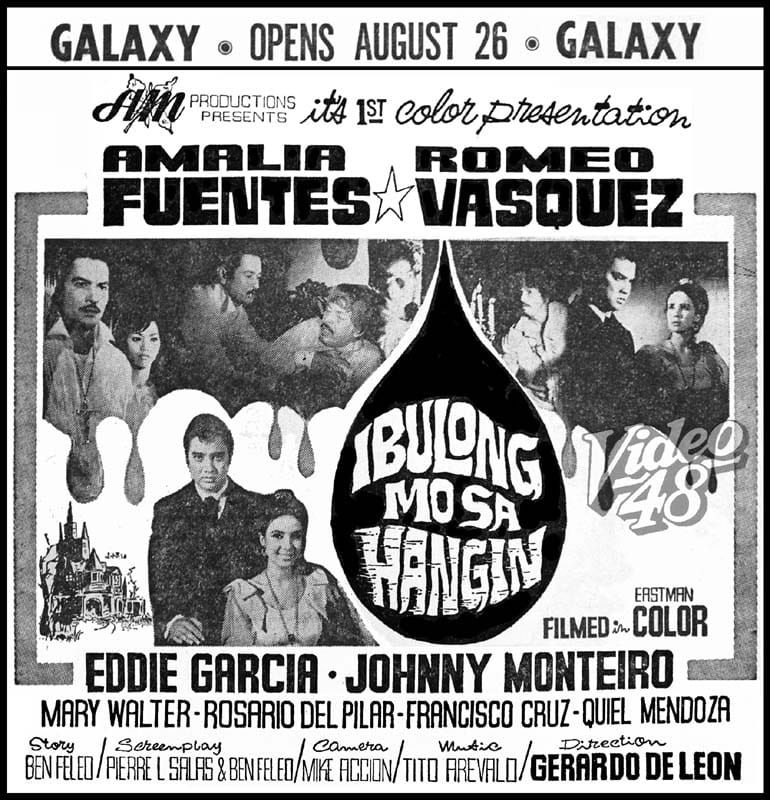
Plot: dying aristocrat infects sleepy Méxican village with a terrible malediction.
Ibulong mo sa hangin (or Whisper it in the wind, released across of the English-speaking world as either Blood Of the Vampires or Curse Of The Vampires) stands forever enshrined as the greatest Pinoy gothic horror ever produced. The Blood Drinkers (1964) was a monumental effort in filmmaking. For this sequel all principal players in front and behind the camera made their due return and it eschewed much of the camp that plagued the original installment. Thus was born the Philippines first multi-part vampire epic and now fully in color. Blood Of the Vampires is as good as any Italian, Spanish, or Méxican gothic horror of the day and it is every bit as portentous, pompous, religiously impaired, and melodramatic as you’d expect horror from this part of the world. Is this a doomed gothic romance or a melodramatic vampire horror? Blood Of the Vampires certainly makes a valid case for both. Let’s not forget, the Blood Island saga still two years in the future. This was the first true Pinoy horror franchise.
Gerardo de León was no stranger to horror when he was asked to helm Blood Of the Vampires. As a matter of fact he had been at the forefront since the very beginning and de León was considered somewhat of a pioneer when he directed Terror Is a Man (1959) - a fairly conservative (and semi-faithful) big screen adaptation of H.G. Wells’ The Island Of Dr. Moreau – in the twilight years of the preceding decade. Now he was actively in the process of making history once again by doing a sequel to the Philippines first partially colored horror feature. For this full color sequel producer Amalia Fuentes and her production company AM Productions forged an allegiance with writer, producer, and director Cirio H. Santiago while Hemisphere Pictures handled distribution at home and abroad. As early as 1966 la doña Fuentes (the "Elizabeth Taylor of the Philippines" as she would come to be known) was the Queen of Philippine Movies and as such she had the liberty to choose who she worked with and for. In 1965 she was wedded to her frequent romantic co-star Romeo Vasquez, although the union would last only to 1969. In a career spanning six decades Fuentes’ forays into horror were strictly limited to merely a handful of titles. She received nine FAMAS (Filipino Academy of Movie Arts and Sciences) Award for Best Actress nominations, including one for Blood Of the Vampires.
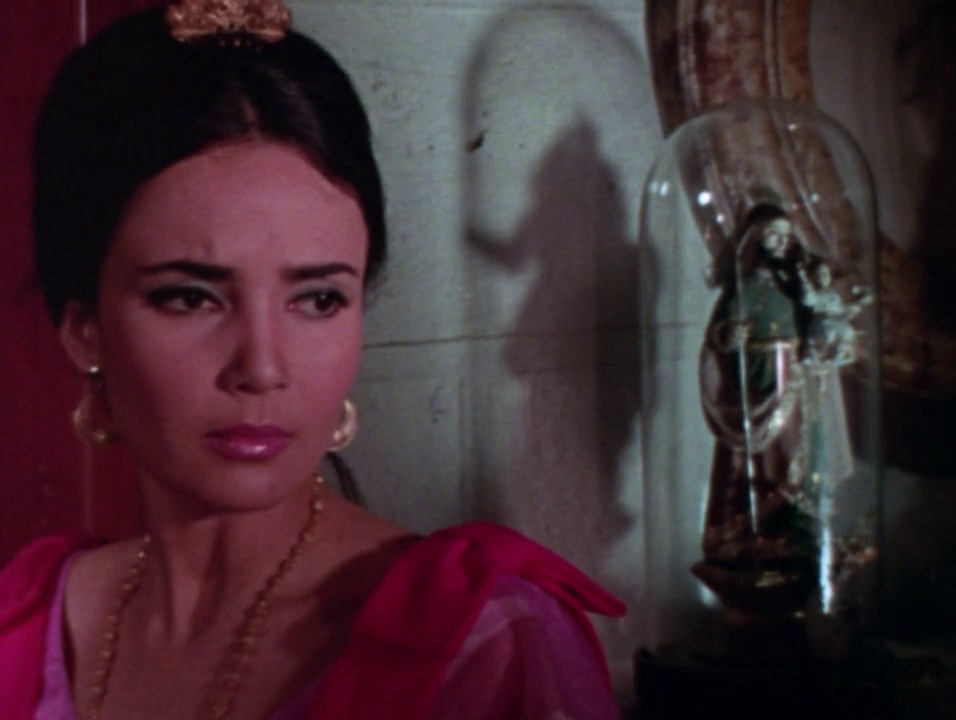
Later she starred in Pinoy versions of Jesus Christ Superstar (1972), Anna Karenina (1976), and the bomba film Mortal Sin (1983). She was one of the top draws at the Pinoy box office all through the 1960s and 70s. On top of that, Amalia was one of the richest Filipino actresses in history as well as a member of the Movie and Television Review and Classification Board (MTRCB). While it claims to be set in México it was filmed in a turn-of-the-century rustic Spanish hacienda in the Philippines with a Filipino cast and crew. As a priority release it had the good fortune of having an all-star cast including doña Fuentes, Eddie Garcia, and mestizo silent cinema monument Mary Walter, and composer Tito Arevalo. Blood Of the Vampires was set to expand upon what The Blood Drinkers (1964) had done so memorably just two years earlier. This would finally put the Philippines on the map as a genuine competitor to Europe and Latin America in terms of early gothic horror. As with many of the former Spanish colonies this too is draped in overt Catholicism but here it’s a bewildering and sometimes opaque hybrid of local superstition with some uniquely Filipino religious iconography. To top things off, some twenty odd years later Johnny Monteiro concluded his career with Wilfredo Milan’s equally legendary post-nuke sub-classic Clash of the Warlords (1985).
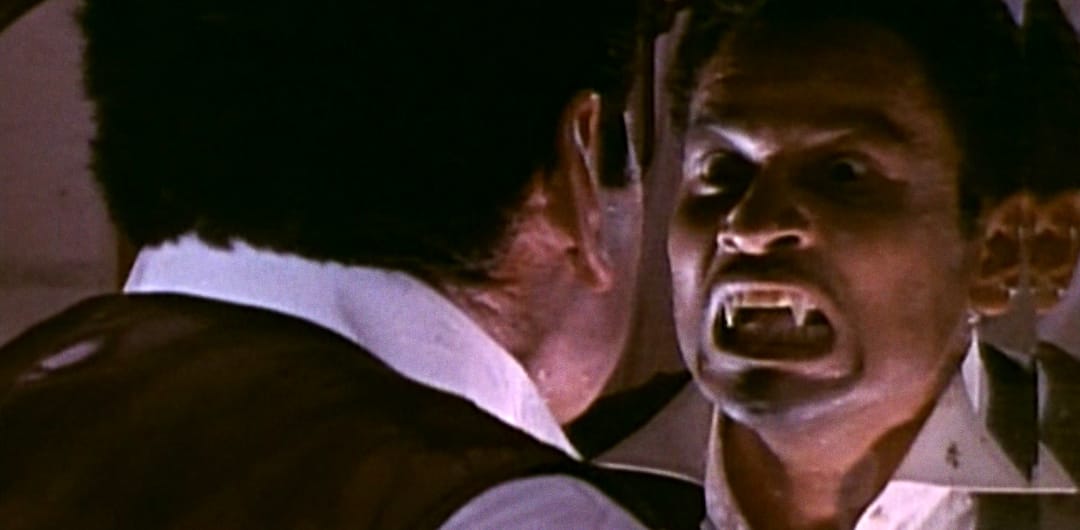
Leonor (Amalia Fuentes) and her older brother Eduardo Emilio Escudero (Eddie Garcia) have been summoned to the desiccating and deteriorating ancestral seat for what is promised to be an event of special magnificence. Long has the Escudero dynasty held sway and dominion over these lands. Among the invitees are Daniel Castillo (Romeo Vasquez) and his younger sister Christina (Rosario del Pilar) and the evening is to be opened by a lush ballroom dance. As the evening progresses the couples engage in romantic nightside strolls around the opulent hacienda. Daniel, a man of honor, expresses his intentions to ask the hand of Leonor, something which the old patriarch Don Enrique Escudero (Johnny Monteiro) strictly and vehemently forbids on some vague moral grounds. When the pater familias suffers a heart attack and collapses during the festivities he summons his notary. He instructs him to change his last will and testament and summarily orders the entire Escudero estate be burned to the ground posthumously. One night Eduardo finds a hidden passageway leading to an underground dungeon where Leonor and him are mortified to find their geriatric mother doña Consuelo Escudero de Victoria (Mary Walter) chained to a wall and being whipped into submission by their old father. The discovery forces their ailing padre to reveal a long-hidden secret: the bloodline is cursed with the malady of vampirism. Unable to see his mother in such state Eduardo releases her from bondage and is bitten and exsanguinated in return. His nightly prowls lead the aristrocrat to attack innocent Christina who he later turns into his submissive vampire bride. The spate of nightly attacks and bloodless bodies has the village in a state of total and utter panic. When their father finally passes the sickly ambitious Eduardo assumes the paternal role of running the Escudero household and managing the estate. Unbound in his bloodlust and romantic desire Eduardo covets to possess both Christina and Leonor. As the village is devoured by the undead a mob of angry townsfolk brandishing torches descend on the Escudero estate. What will it take to stop this eldritch threat?
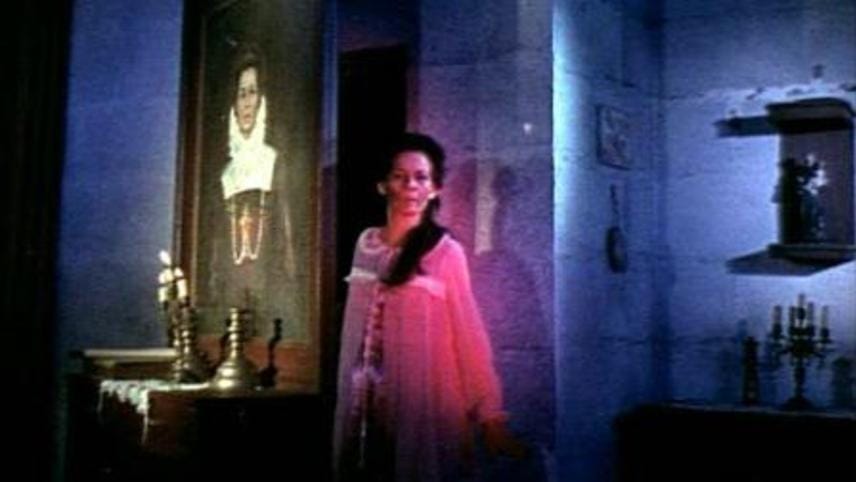
Given that Blood Of the Vampires was a priority release it comes with all the pomp and pageantry you’d expect. The Blood Drinkers (1964) already made it clear that de Léon had studied the oeuvre of Mario Bava but here the full color treatment allows him to go all in with the blue/red/green hues. Director of photography Mike Accion beautifully captures the candlelit stone ornate hallways, fog-enshrouded landscapes, and heaving bosoms in deeply cut dresses in loving detail. Clearly the aim was to try to pass this off as Méxican to sell it in the Spanish markets. There’s enough familial dysfunction, unrequited love, incestual longing, and amorous complications to contend with the median telenovela. In fact change a few of the minor details around and this is not all that different from Rafael Baledón’s The She-Wolf (1965) (which was, arguably, more female-centric). Had this actually been made in México it probably would have starred Marga López and Norma Lazareno opposite of somebody like Joaquín Cordero. The hacienda is as much a palace as it is a mausoleum with the waning trappings of a fading and failing colonial presence looming large over its architecture. The most telling sign of the times (and its most damning relic) is probably the overly cheery slaves in black-face who appear happy to be in bondage to their white masters. Blood Of the Vampires was, and is, as much a response to the Hammer gothics of the day as well as European – and Latin American imitations as The Slaughter of the Vampires (1962), Terror In the Crypt (1964), Blood Of the Virgins (1967), Malenka, Niece of the Vampire (1969), and The Dracula Saga (1973) with all of which it shares plot similarities. The score from Tito Arevalo is suitably bombastic, portentious, and creaky. Music from the opening credits (at least in the English-language version) would later be recycled for the international trailer for Beast of Blood (1970). What’s more Filipino than faith, family, and fealty and the unyielding belief that good always will trump evil, that love truly does conquer all - even death? If you wonder where Bram Stoker’s Dracula (1992) derived its “love never dies” idea from, this is probably a good place to look.
This is a rather accomplished exercise in the decade that the gothic horror reigned supreme. Everything you’d want from such subgenre is present and accounted for and delivered with all the gusto you’d expect from seasoned professionals. Even within its historical framework Blood Of the Vampire was a landmark effort. The Blood Drinkers (1964) got there first but was somewhat kitschy in its 1950s science fiction trappings. Blood Of the Vampires goes, both figuratively and quite literally, for the jugular and is so much better for it. While Terror Is a Man (1959) laid the necessary groundwork and functioned more as a spiritual forefather Blood Island as a loose franchise wouldn’t truly take off until de León directed the duo of Brides of Blood (1968) and Mad Doctor of Blood Island (1969) for Hemisphere Pictures after this Fuentes vampire epic. Eddie Romero would conclude the saga with his Beast of Blood (1970). México had its own long and proud tradition of gothic horror and vampires and what better way to access that fertile market than to pretend to be part of it? It’s not difficult to see how something like this would shape Paul Naschy’s The Mark Of the Wolfman (1968) some two years later. Whether the original Filipino title is meant to sell this as a vampire Gone With the Wind (1939) is anybody’s guess, but it’s entirely within the realm of possibility. Regardless of to whom it was specifically marketed and whatever coattails were ridden Blood Of the Vampires has endured and remains a monument.