Cookies (1975)
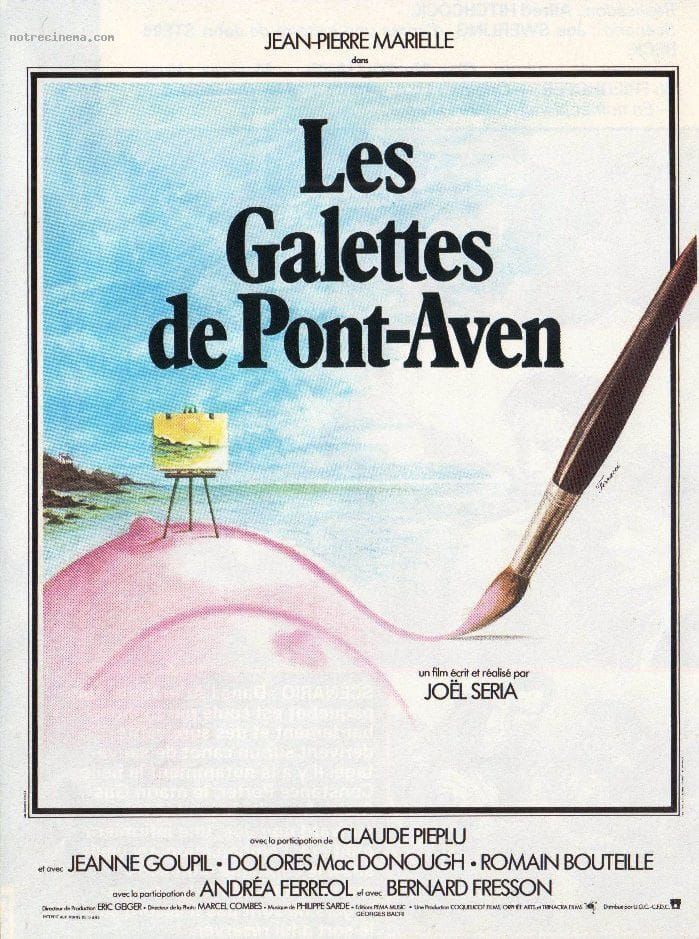
Plot: forty-something umbrella salesman has a midlife crisis. Hilarity ensues!
It speaks to the infinite wisdom and incredible foresight of Joël Séria as a filmmaker that he never so much as attempted to top his subversive Don’t Deliver Us From Evil (1971). Such a thing was simply not possible. His controversial debut laid fire upon the Catholic church and organized religion at large and relished in exposing its many hypocrisies, both great and small. Instead of continuing in the horror genre Séria found that comedy lend itself better to delivering his scathing socio-political commentary and from Charlie and His Two Chicks (1973) onward it became his preferred vehicle. With Charlie and His Two Chicks (1973) Séria took to questioning the establishment and examining the socially accepted classicist economic constructs segregating the rich from the poor. Before venturing forth with his very peculiar idea of romance that was Marie, the Doll (1976) and the dopey As the Moon (1977) Séria directed Jean-Pierre Marielle in Les Galettes de Pont-Aven (or The Cookies of Pont-Aven, for those who don’t speak French, and understandably shortened to just Cookies internationally), a light-hearted comedy loosely inspired by the life of Post-Impressionist painter Paul Gauguin. Allegedly a favourite on French television still and Séria’s best known by a margin.
Cookies is very much a thematic continuation of Charlie and His Two Chicks (1973). If anything else, it first and foremost is a celebration of the good life, a valentine to les plaisirs breton and the bonvivant: the cuisine and adjacent gastronomy and, perhaps more importantly, the women. The cookies of the title are, contrary to popular belief, not a reference to Pont-Aven’s most famous export, the world-famous Traou Mad butter cookies; but a tribute to the les fesses, les derrières, “les galettes” if you will, of the Breton belles. This is possibly the closest Joël Séria has ever come to capture the essence of a commedia sexy all’Italiana where Renzo Montagnani, Lando Buzzanca, and Lino Banfi are poetic in their adulation of the ass of, say, Edwige Fenech, Femi Benussi, or Gloria Guida. Tinto Brass would be proud. Cookies concerns itself not so much with the social contract (or the authority of the state over the individual) but rather the prevalence of social conventions, decorum, etiquette and how the bourgeoisie is tempted, and sometimes encouraged, to apply them selectively. Here Séria antagonizes, deconstructs, and ridicules French concepts as “la politesse” and “savoir-vivre.”
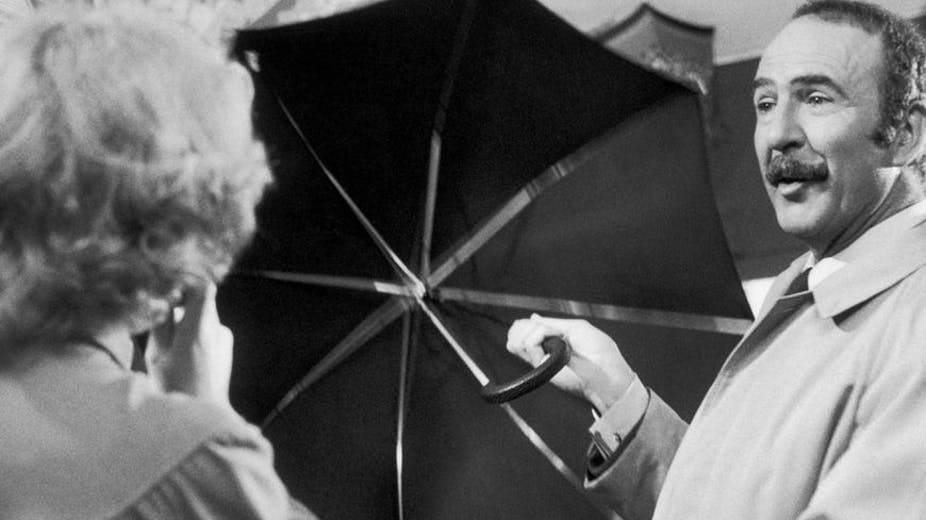
Henri Serin (Jean-Pierre Marielle) is a forty-five year old umbrella salesman for Maison Godinot by day and a Sunday painter at night. He lives a dreary and seldom fulfilling life in Saumur, a commune in the Maine-et-Loire department in western France. One day he takes a wry look at his life and comes to the sobering realization that he amounts to nothing. He’s universally despised by his high-strung and terminally boring puritan hag of a wife and kids alike. He’s at a dead end professionally but at least he gets to travel for a living. The only ray of light in his otherwise miserable existence is his love for ass and the quest to find the perfect pair to immortalize on canvas. On his professional and painting sojourns he indulges in the local cuisine and the local women, one of the few perks of a traveling salesman and hobby painter. On one such excursions he finds himself stranded with car trouble in the commune of Pont-Aven in the Finistère department of Brittany in northwestern France. There he meets painter Émile (Bernard Fresson) and his Canadian pin-up of a girlfriend, Angéla (Dolores McDonough, as Dolores Mac Donough). Émile is able to live off his painting handsomely and his libertine lifestyle only facilitates and enables his massive sex addiction. Henri falls head over heels for Angela, steals Émile’s paramour from under him, and the two elope. From this moment on Henri dedicates his every waking moment to painting and Angéla and painting Angéla and her grande pair de fesses. Things seem to go well for a while but one day the Canuck disappears and returns to her erstwhile lover.
Reluctantly, and with his tail tucked firmly between his iegs, Henri returns home to find his boring wife in the warms of another. This beckons the distraught and depressed Henri away from Saumur and back to Pont-Aven where his destiny as a painter surely lie. He takes to drowning his sorrows at the local cafés. At first he falls into the arms of Breton prostitute Marie Pape (Dominique Lavanant) (in traditional costume, complete with Bigouden headdress) but his spirit is not lifted with her. Everything is pretty dire until he makes his acquaintance with chambermaid Marie (Jeanne Goupil). Marie is everything Henry could want: young, beautiful, vivacious – and in the possession of the most perfect round ass he could possibly dream of. Little by little the newly-minted couple are accepted by the locals and Henri even befriends the town priest (Romain Bouteille). They are invited to the village fair where Marie and him interpret the song ‘Kenavo’ from le chansonnier breton Théodore Boutrel. At long last Henri has found peace in the rustic environs where he’s accepted as for the eccentric, bonvivant painter he always deluded himself to be. Here he’s able to sell his world-famous “Galettes de Pont-Aven” on the beaches – and he has Marie at his side and between the sheets.
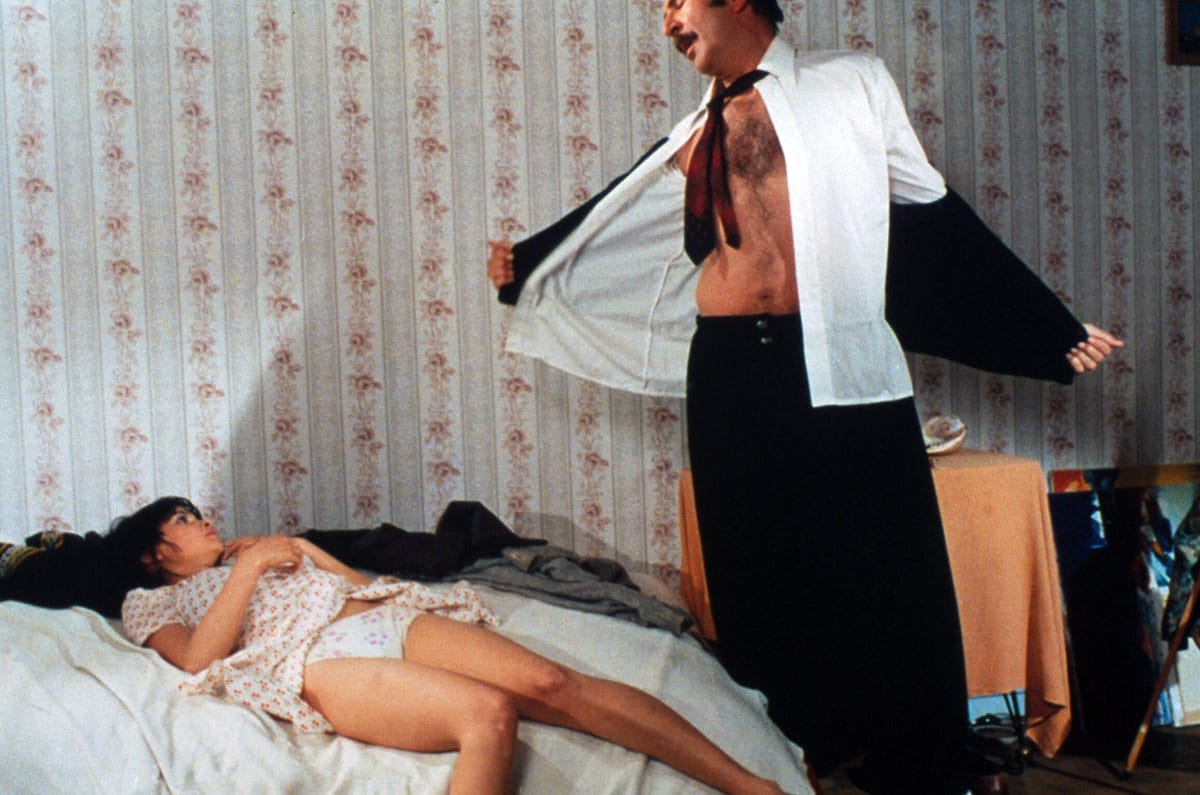
Like Muriel Catalá around the same time Jeanne Goupil is one of those enigmatic actresses that due to the nature of their more established beginnings were spared the grunt work in the trenches of fringe - and exploitation cinema. By grace of their mainstream status and repute Catalá and Goupil were simply too expensive for the likes of José Bénazéraf, Jean Rollin, Michel Lemoine, and Mario Mercier. In Don’t Deliver Us From Evil (1971) Goupil was a debutant, an ingénue of sorts, but by the time of Charlie and His Two Chicks (1973) she was clearly comfortable with who she was. Cookies is where that newfound confidence comes to the fore. Any excuse is good to have Jeanne Goupil disrobe. Here it’s her ass (the titular Cookies after all) that gets all the attention, and deservedly so. Two years removed from this Goupil would let it all hang out in the twisted romance Marie, the Doll (1976), her real tour de force. Perhaps more important than Goupil’s willingess to exhibit her body was his roping in of Jean-Pierre Marielle, with whom he would direct some of his greatest comedies. Marielle was the uncontested star of the amiable and freewheeling Charlie and His Two Chicks (1973) and Cookies was a vehicle designed specifically with him in mind. Goupil reaps the obvious benefits of sharing the stage with someone as distinguished as Marielle – and there’s obvious on-screen chemistry between the two. While Goupil is of paramount importance to Cookies, it is and remains a showcase for Marielle.
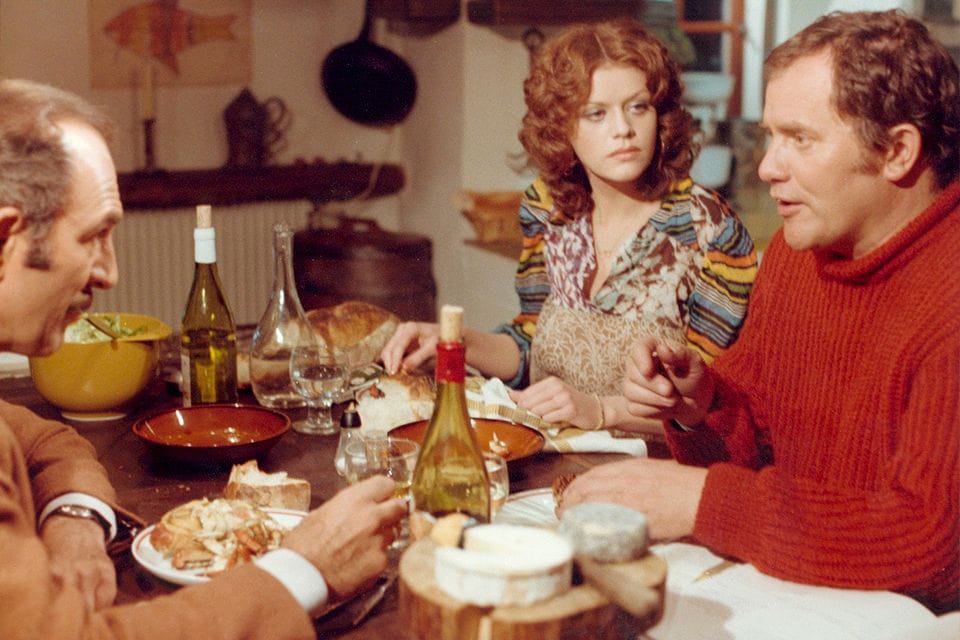
Cookies is just as cheeky as it is irreverent and unafraid to launch a scathing polemic against the French establishment. Whereas Don’t Deliver Us From Evil (1971) had a recitation of Charles Baudelaire’s The Flowers Of Evil as the final insult to the aristocracy here it’s ‘Kenavo’ from Théodore Boutrel fulfilling the same function but this time Séria aims his ire towards the boorish, unwashed common folk. It’s a perfect denouement in a satirical, pitch-black comedy that targets everyone and spares no one. Imagine Séria did get his wish and Charlie and His Two Chicks (1973) was indeed headlined by Jean-Paul Belmondo. Would something as impudent and flippant as this even have worked with international man of mystery Belmondo? It remains doubtful. Séria confronts some uncomfortable social truths: why do we strive a please (and appease) people we don’t like with things we don’t need? Will society really collapse into a proverbial jungle where only the fittest survive if we were all more truthful to ourselves and each other? Cookies is unafraid to force reckoning with some hard questions and gives you clapping ass cheeks and hearty belly laughs aplenty in return. Séria wants you to take pleasure in all the small things that make life worthwhile and worth living: a fresh pint of beer, a bourgonder meal, or a Breton girl. Above and beyond all else, as the great bard William Shakespeare wrote in Hamlet: ‘To Thine Own Self Be True’ or don’t let capitalist society delude (and dilute) you from what that is. In case of Goupil that turned out to be oil painting as these days she seems to have found a second life as a paintress under the nom de plume Jeanne K. Lichtlé. How strangely fitting.