Five Graves For A Medium (1965)
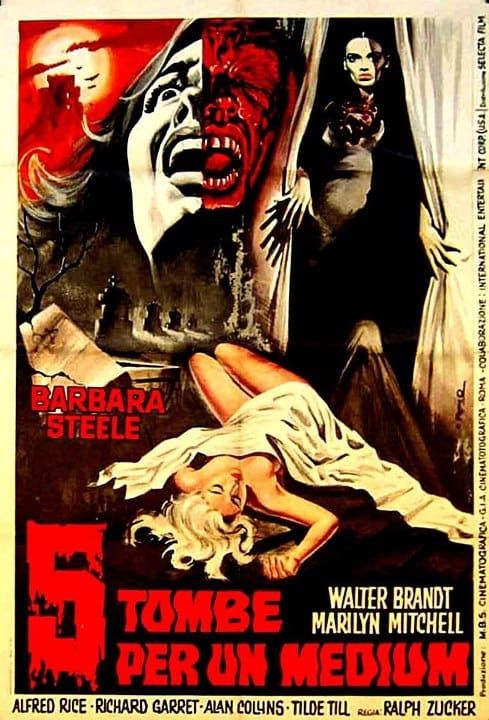
Plot: what horrible fate befell the late Dr. Jeronimus Hauff?
5 tombe per un medium (or Five Graves For A Medium, released in North American grindhouses and drive-ins as the pulptastic Terror-Creatures From the Grave) is not so much a minor entry as a more routinely uninspired one in Barbara Steele’s six-years-and-9-movies tenure as the once-and-future queen of 1960s Italian gothic horror. It’s perfectly servicable but misses any moments of significant poignance or any visual artistry that really sticks with the viewer afterwards. It’s not so much that Five Graves For A Medium is boring but never aspires to be anything more than a mere sum of its parts. Not even Barbara Steele and tenuous links to Edgar Allan Poe can redeem this perfunctory functional gothic horror from crushing mediocrity.
Headlined by British import Barbara Steele and domestic gothic horror exploitation pillar Walter Brandi with future director Alfredo Rizzo and Riccardo Garrone in supporting roles and anchored by screen veterans Luciano Pigozzi, Ennio Balbo, and Umberto Raho plus starlets of the day Mirella Maravidi and Tilde Dall'Aglio Five Graves For A Medium has someone for every age bracket and demographic. Written by exploitation regulars Roberto Natale (as Robert Christmas) and Romano Migliorini (as Roman McLiorn) and purported to be based on a short story of Edgar Allan Poe (whose oeuvre was very popular around this time) although more thematically rather than as an adaption of any one story in particular. Natale and Romano extended their collaboration on the Mario Bava gothic horror Kill, Baby... Kill! (1966) as well as the Eurociné Eurospy romp Agent Sigma 3 - Mission Goldwalther (1967) (with Jack Taylor) immediately following this. Natale would go on to write the Gloria Guida sex comedy So Young, So Lovely, So Vicious (1975), as well the giallo Watch Me When I Kill (1977), among many others. Migliorini for his part wrote Enzo G. Castellari’s Inglorious Bastards (1978) and Franco Prosperi’s Last House On the Beach (1978), among many more. A gothic horror stands or falls not only by the merits of its director, writer or cast but, perhaps equally as important, the location. Here that’s Castello Chigi in Castel Fusano in Rome where director Massimo Pupillo would also film Lady Morgan’s Revenge (1965). Pupillo was infamously dismissive of the film saying that, he "didn't care about the film" shrugging it off as an unfortunate triviality and nothing of consequence eclipsed by the superior The Bloody Pit Of Horror (1965) and Lady Morgan’s Revenge (1965). He even went as far as attributing directorial credits to either Italian producer Francesco Merli (as Frank Merle) or American distributor Ralph Zucker.
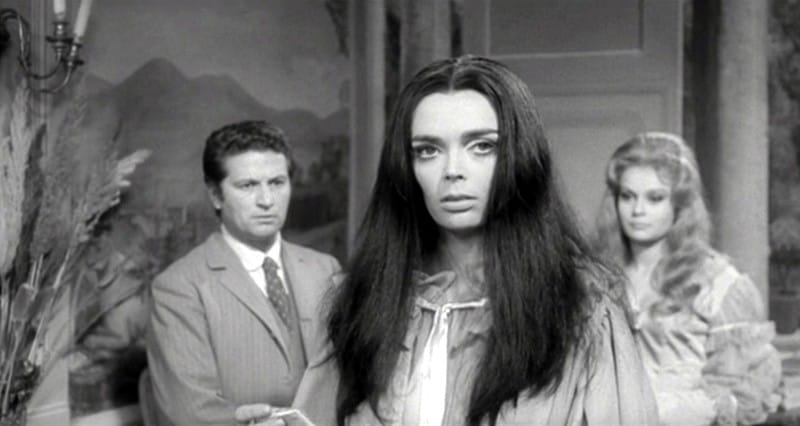
Four years into her tenure as the reigning queen of the Italo gothic Barbara Steele had the good fortune of having a classic to her name with Mario Bava’s The Mask Of Satan (1960) as well as lesser gems as The Horrible Dr. Hichcock (1963), The Ghost (1963) and surprisingly atmospheric offerings as The Long Hair Of Death (1964) and Castle Of Blood (1964). Five Graves For A Medium acts as a convenient delineation and was followed by the classic Nightmare Castle (1966), The She-Beast (1966), and An Angel for Satan (1966). Understandably, Steele was growing a bit tired of the whole gothic horror shtick, allegedly acted accordingly and proved difficult to work with for the first three or four days of the shoot. That was until director Massimo Pupillo chewed her out publicly and her attitude became more accomodating and even friendly.
Once again Barbara’s surrounded by some veritable monuments such as giallo, Eurospy, and spaghetti western mainstay Luciano Pigozzi. He could be seen in The Whip and the Body (1963), Blood and Black Lace (1964), The Castle Of the Living Dead (1964), All the Colors Of the Dark (1972), and Baron Blood (1972) among many others. Ennio Balbo would turn up a decade and a half hence in Alfonso Brescia’s lamentably chintzy space opera Star Odyssey (1979). Finally, there’s Riccardo Garrone or he of Dino Risi's Poor Girl, Pretty Girl (1957) and Federico Fellini's La Dolce Vita (1960). He frequently crossed paths with living legend Edwige Fenech in sex comedies such as Beautiful Antonia, First a Nun Then a Demon (1972), Giovannona Long-Thigh (1973), The Night Child (1975), and Confessions of a Lady Cop (1976). Good company to be in.
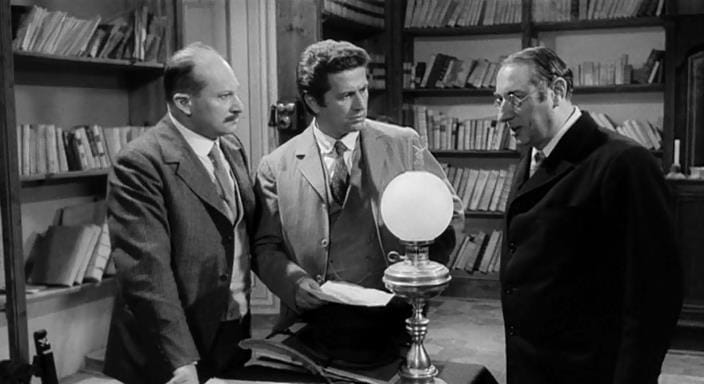
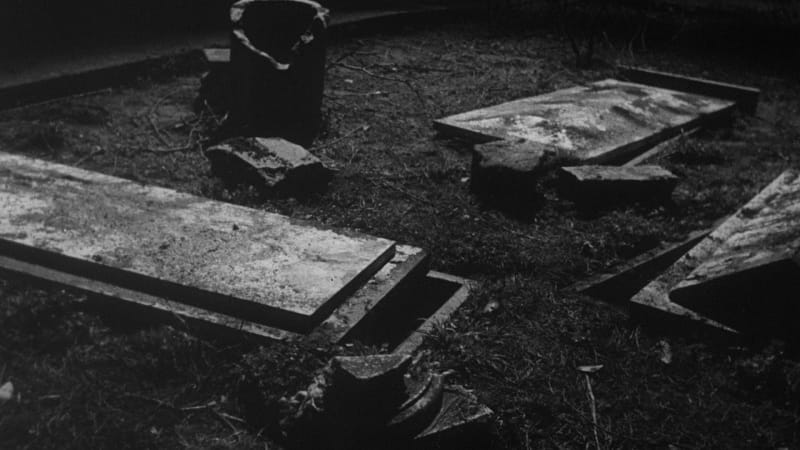
Germany, 1911. Attorney Albert Kovač (Walter Brandi, as Walter Brandt) is dispatched by his colleague Joseph Morgan (Riccardo Garrone, as Richard Garrett) to settle all the matters pertaining the last will and testament of Dr. Jeronimus Hauff (Umberto Raho) at their opulent mansion in the remote town of Brigoville deep in the hinterland. On his way to the mansion Kovač experiences technical problems with his wind-up car and decides to stay overnight at the mansion. There Kovač makes his acquaintance his daughter Corinne (Mirella Maravidi, as Marilyn Mitchell), Hauff’s second wife Cleo (Barbara Steele), as well as their superstitious maid Louise (Tilde Dall'Aglio, as Tilde Till) and administrator Kurt (Luciano Pigozzi, as Alan Collins). Upon learning that Villa Hauff was built upon the remains of a leprosarium (complete with galleries and subterranean mausoleum) he’s told that the doctor had a disconcerting interest in spiritualism and the occult and that he has been interred for a year. According to wheelchair-bound paralytic Oscar Stinnel (Ennio Balbo, as Edward Bell) only five people know of the exact circumstances surrounding the passing of the disgraced scientist. This leads Kovač to establish contact with town physician Dr. Nemek (Alfredo Rizzo, as Alfred Rice) and local archivist (Renato Lupi, as René Wolf) to research into the history of the village. When persons of interest meet sudden, violent ends Kovač’s interest is sufficiently piqued. Is Dr. Jeronimus Hauff truly dead or is he commanding the spirits of the dead to exact his revenge upon the unsuspecting living?
Compared to peak genre exercises as The Mask Of Satan (1960), Castle Of Blood (1964), The Long Hair Of Death (1964), or Nightmare Castle (1965) this is a fairly uneventful and low-key affair bereft of any poignant or visually arresting imagery. It clearly was a contractual obligation of sorts for Massimo Pupillo and for a supposed zombie movie (even a pre-1968 George A. Romero one) it’s suspiciously low on the living dead. Barbara Steele is beguiling as always with her large elven eyes, porcelain skin, and sculptured features. Steele had mighty curves and her dresses always accentuated them. On top of that she gets to take a long, foamy bath that’s worth a cursory view just by itself. The American cut also includes some brief nudity involving Mirella Maravidi which was fairly risqué for the time but nothing out of the ordinary. Walter Brandi and Alfredo Rizzo almost feel like a package deal. Brandi was a gothic horror pillar that had starred in kooky kitsch as The Playgirls and the Vampire (1960), The Vampire and the Ballerina (1960) and The Monster Of the Opera (1964) but also the supremely atmospheric and sensual The Slaughter Of the Vampires (1962). Brandi acquits himself well enough but is not able to elevate the mediocre material.
Alfredo Rizzo was notable for having (mostly uncredited) roles of no real importance in high-profile productions as Quo Vadis (1951), Roman Holiday (1953), and Federico Fellini’s La Dolce Vita (1960). As a director he debuted with the direly impoverished Eurowar yarn exercise Heroes Without Glory (1971). From 1971 to 1978 Rizzo helmed a number of raunchy comedies, dramas, and a thriller none of which have endured. Of his oeuvre the sex comedy Carnality (1974) and the gothic horror The Bloodsucker Leads the Dance (1975) are probably the most famous. The former for featuring Femi Benussi and the latter for having a leukemia-stricken and weakened Krista Nell (who passed away a month after the film’s release) in a diminished role.
Stranger still, combat footage of Heroes Without Glory (1971) - a largely uneventful and lethargic World War II exercise that not even copious explosions could redeem - became retroactively famous for having some of its footage lifted by French production company Eurociné for their Afrika Korps zombie gutmuncher Oasis Of the Zombies (1982) and a number of associate productions a few years down the line. Castello Chigi is not one of Italy’s more famous horror castle unlike, say, Villa Parisi or Palazzo Borghese (both in Lazio) or Castello Piccolomini (in L'Aquila). Director of photography Carlo Di Palma is able to get some evocative shots and beautifully captures the interplay of light and deep shadows in long corridors, charnel crypts, and heaving ivory bosoms – but it’s nothing that hasn’t been done prior. Aldo Piga provides a sufficiently creaky, pompous, and portentous orchestral score with generous use of theremin.
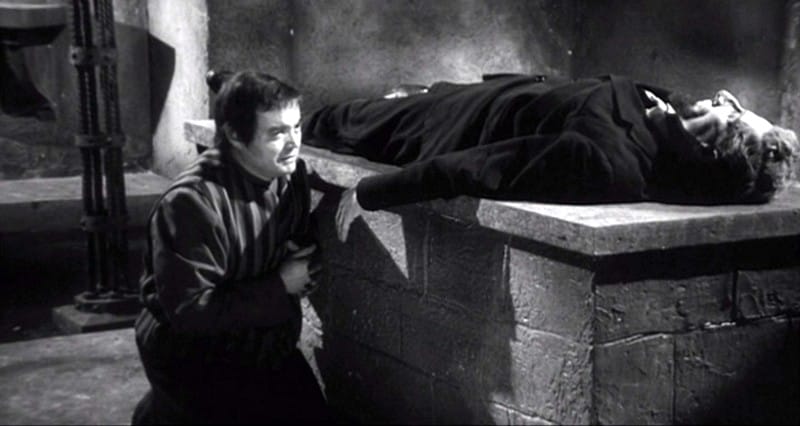
In the midst of miss Steele’s conquest of Meditterranean gothic horror Five Graves For A Medium is perhaps best described as rote. It does what it does well enough but never aspires to be anything more. It never reaches the lofty creative heights of The Mask Of Satan (1960), Castle Of Blood (1964) or Nightmare Castle (1965) that were both transcendental or transformative. Neither for that matter is Five Graves For A Medium as impoverished as the French co-production The Blancheville Monster (1963) and the quietly atmospheric Tomb Of Torture (1963). It holds a solid middleground in that it is beautifully (if routinely) photographed, staged, and scored with not a single department being at fault for anything in particular. There are slight differences between the original French/Italian cut and the international American version. Whereas the former is more rustic the US version is notably more gory and explicit. In our humble opinion Barbara Steele is at her best in monochrome gothic horrors that capitalize on atmosphere and suspense. There’s something about Barbara’s big elven eyes and porcelain skin that color film stock just doesn’t quite capture and that monochrome seems to highlight. A counter-argument could be made with Curse of the Crimson Altar (1968), and David Cronenberg’s body horror classic Shivers (1975) that blood-curdling color does Barbara justice, although those worked just because Steele was peripheral to them.