Au Pair Girls (1972)
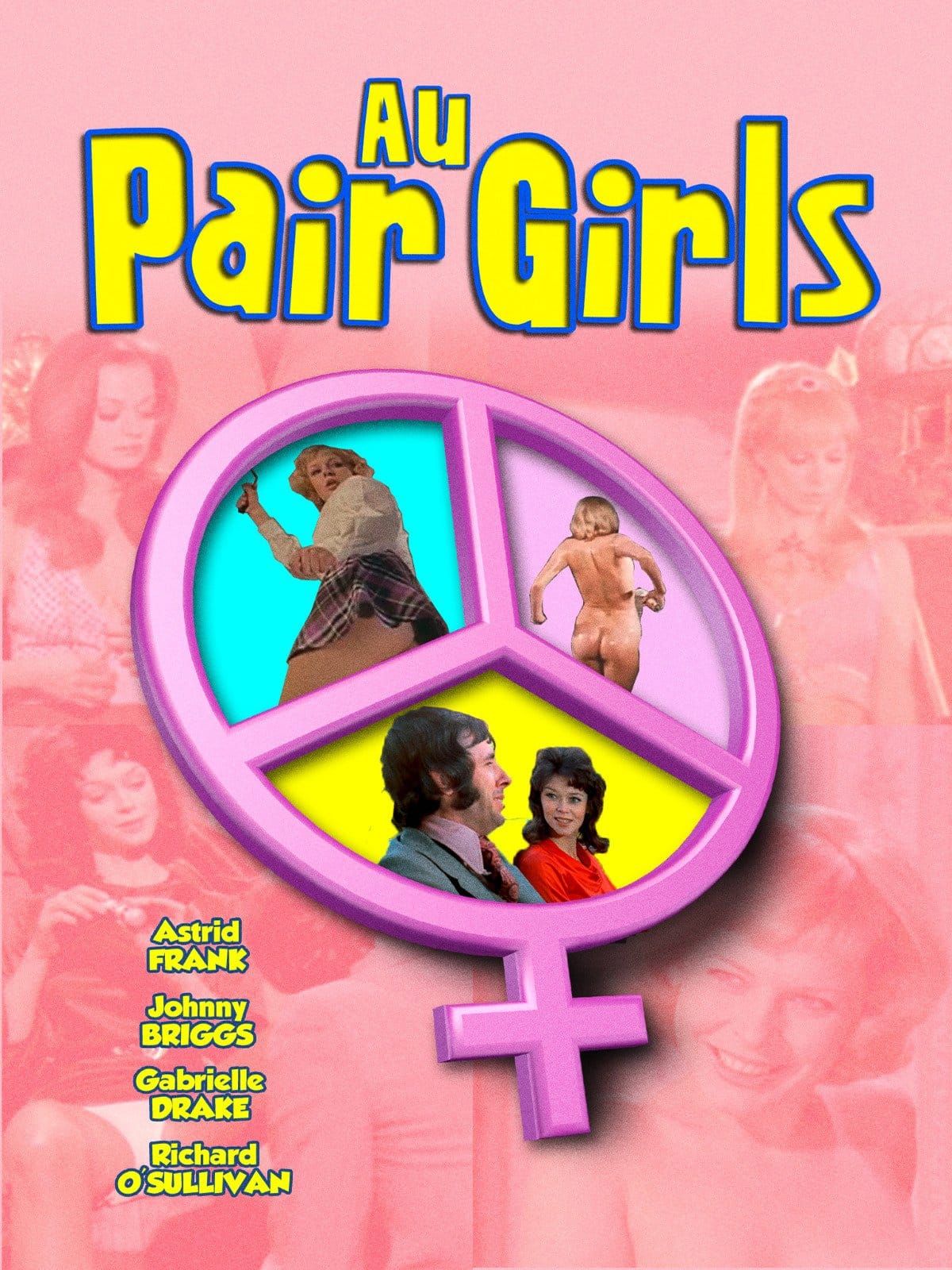
Plot: four au pair girls come to London to work. Hilarity ensues!
There’s no question about the importance of Great Britain in the history of exploitation. From the domination of the horror houses of Hammer and Tigon, to the Bulldog Drummond spy-romps following the success of James Bond, and the grand pillar in comedy that they were with Benny Hill, Monty Python, and the like. Great Britain played a pivotal role in the shaping and redefining of exploitation in its various forms. The men most directly responsible for pushing sexploitation as far as it possibly could were a trio of enterprising producers/directors by the name of Pete Walker, Derek Ford, and Norman J. Warren. Walker was a man of the people and a fervent proponent of the old adage that any formula or premise could be improved upon with copious amounts of blood and boobs. During the Sexual Revolution of 1968 Walker made School For Sex (1969) and he greeted the more permissive societal attitudes of the seventies with Cool It Carol! (1970), a fictionalized account of model-showgirl Christine Keeler and the Profumo affair. Following the box office success of School Girl Report (1970) it was only natural that others would follow suit. Val Guest heeded that call with the amiable (but ultimately inoffensive) sex comedy Au Pair Girls.
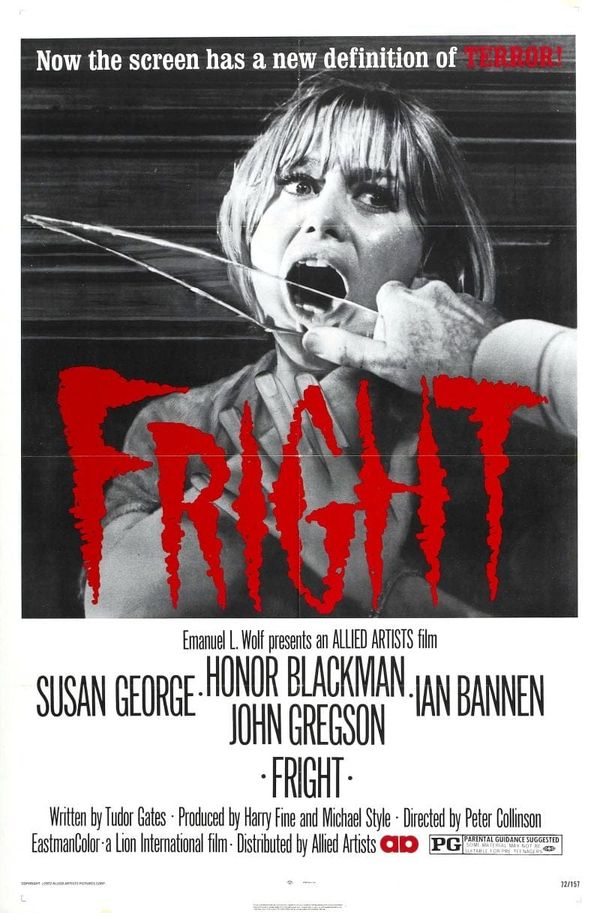
Au Pair Girls very much fits the mold of the German educational films (Aufklärungsfilme) of the prior decade albeit without the veneer of a documentary or that of a youth exposé, sensationalist or otherwise. After schoolgirls, housewives, cheerleaders, nurses, and flight attendants, au pair girls were the next logical choice. It’s a question for the ages why German Astrid Frank and British Gabrielle Drake were cast as a Swede and a Dane respectively when actual Scandinavian softcore stars (Birte Tove, Lise-Lotte Norup, the Maries, Liljedahl and Forså; Solveig Andersson, Inger Sundh, Leena Skoog, or the bubbly Christina Lindberg) were readily available and at most required post-production dubbing. Then again, this was a British production and while censorship laws in regards to nudity had since relaxed the UK wasn’t as the Nordic countries. Skoog was too lowly a star for this and Andersson and Lindberg were too deep into the muck of Nordporn exploitation for something this respectable. That would leave only Birte Tove or Lise-Lotte Norup but they were booked solid with the ongoing Bedside (1970-1976) franchise from John Hilbard. The obvious choice would have been Yutte Stensgaard (who had experience as an actual au pair) from Some Girls Do (1969), Zeta One (1969), Scream and Scream Again (1970), and Lust For a Vampire (1971) but, again, she might not be enough an actual actress. On the other hand Susan George was the starlet of the day. She had been in Pete Walker’s Die Screaming Marianne (1971), Fright (1971), and Straw Dogs (1971) from Sam Pekinpah. Perhaps this would have been an excellent fit for Christina von Blanc after The Etruscan Kills Again (1972) and before Bell From Hell (1974). It might have saved her from the indignities of working with Jesús Franco on A Virgin Among the Living Dead (1973).
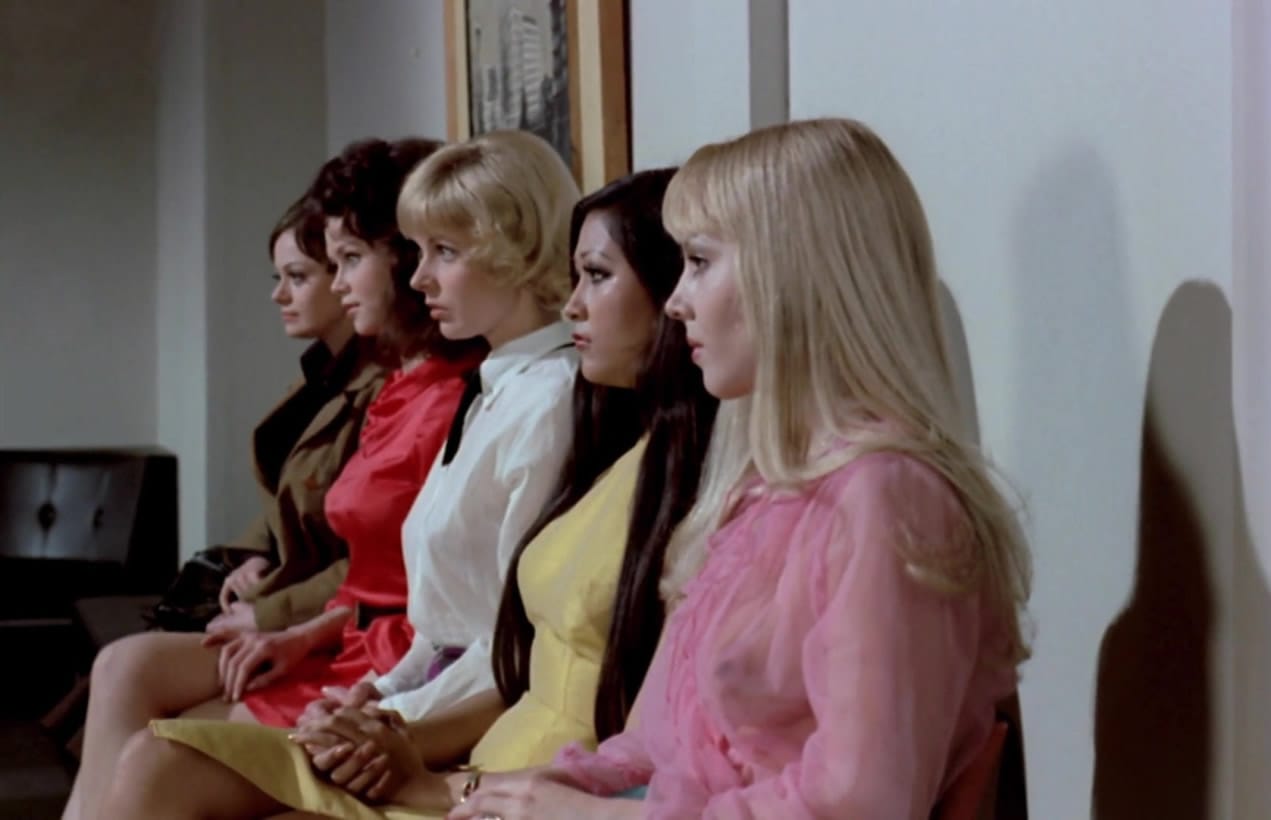
The director of Au Pair Girls was Val Guest. Guest had worked as an actor in London theatres and in early sound films for about ten years before turning to writing. He was commissioned by the Ministry of Information (under prime minister Neville Chamberlain) to lens various instructional shorts including The Nose Has It (1942) (about the perils of sneezing and spreading infections) and All Women Have Periods (1979) (explaining menstruation to young girls with Down Syndrome). Guest debuted with the comedy Miss London Ltd. (1943) but it wouldn’t be until Penny Princess (1952) nearly ten years later that truly was his own – and starred his wife Yolande Donlan. From there Guest forged an alliance with Hammer directing, among others, The Quatermass Xperiment (1955) and its sequel Quatermass 2 (1957) as well as The Abominable Snowman (1957). He directed the sex comedy Carry-on Admiral (1957) which, at least if the general consensus is to be believed, led to Peter Rogers launching his own lucrative Carry On (1958–1978) franchise. Guest won the BAFTA Award for Best Screenplay for the science fiction classic The Day the Earth Caught Fire (1961). He returned to Hammer where he wrote and directed When Dinosaurs Ruled the Earth (1970) (where the fur bikinis of Victoria Vitri and Magda Konopka were as legendary as the stop-motion dinosaurs) and to comedy with Confessions of a Window Cleaner (1974). Guest would direct a few actioners and thrillers before turning to television. Au Pair Girls is very much a product of the day where following the relaxation of censorship Pete Walker and Norman J. Warren pushed sexploitation as far as they could. Guest couldn’t possibly stay behind. Unbelievable as it may sound editor Tariq Anwar went on to have a long career in both television as well as in Hollywood.
Looking to fill the current vacancies the London branch of the Overseas Employment Agency has made arrangements for four au pair girls to work in the city. Danish girl Randi Lindstrom (Gabrielle Drake) is picked up by bumbling daydreaming Stephen (Richard O'Sullivan), the scion of the Wainwright Industries business empire. Liberated Swedish nymph Anita Sector (Astrid Frank) is obsessed with color TV and is assigned to Howard household, a couple of retirees. Mrs. Howard (Daphne Anderson) is endeared by Anita’s child-like antics and she nearly ends up giving old Mr. Howard (Geoffrey Bayldon) a heart attack with her uninhibited naturist tendencies and naked shenanigans. In the evening she goes to a casino where she’s courted by Sheik El Abab (Ferdy Mayne) before fallling for a photographer (Trevor Bannister). Nan Lee (Me Me Lai, as Me Me Lay) from China is picked up by valet Rathbone (Roger Avon) who explains that she’ll be staying with the aristocratic Tryke family. She was hired by the Lord (Harold Bennett) and the Lady (Rosalie Crutchley) as a companion for their musically gifted but socially stunted son Rupert (Julian Barnes). Lastly, introverted German mädchen Christa Geisler (Nancie Wait) almost immediately strikes a bond with her employers’ emancipated daughter Carole (Lyn Yeldham). She’s taken to a club where she’s courted by middle-aged rocker Ricky Strange (Steve Patterson). At the club the girls catch the eye of Sheik El Abab. As these things go Nan returns to China whereas the remaining au pair girls become the Sheik’s handmaidens.
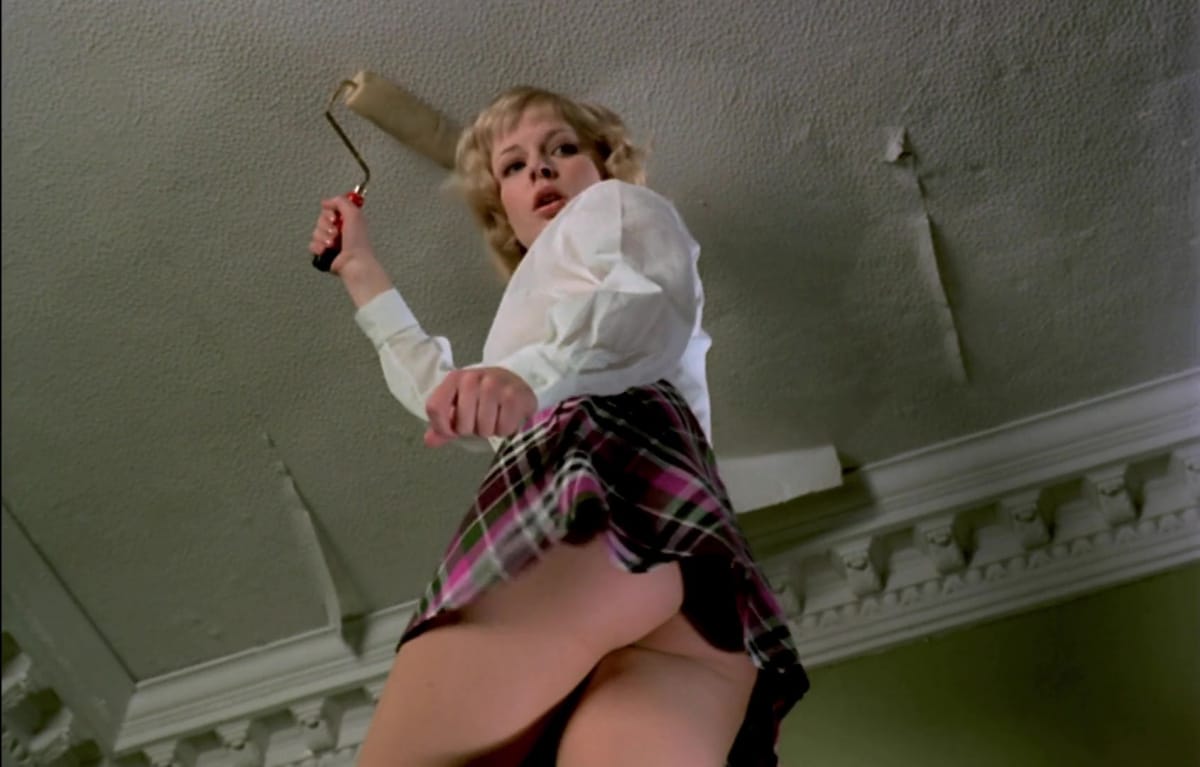
Who are the Au Pair Girls, you ask? Astrid Frank, Gabrielle Drake, Nancie Wait, and Me Me Lai. Frank was a regular in Ernst Hofbauer and Franz Marischka sex comedies back home in Germany, and the furthest from a name-star. Gabrielle was the sister of legendary folk singer Nick Drake, and Nancie Wait was (and would remain) a nobody. Burmese beauty Me Me Lai had an interesting career trajectory. Me Me had her start in low-budget British exploitation fare as the Glendale productions She'll Follow You Anywhere (1971) (with October 1970 Playboy Playmates and soon-to-be Hammer starlets Mary and Madeleine Collinson) and the gothic Crucible Of Terror (1971). Lai would attain cinematic immortality and become a cult favorite thanks to a trio of Italian cannibal flicks from Umberto Lenzi and Ruggero Deodato. The first was Lenzi’s mondo jungle adventure Man From Deep River (1972) and Deodato’s more humane Last Cannibal World (1977) followed closely by the preposterous Eaten Alive! (1980). All three have endured in the decades since. In between Me Me had a small role in Blake Edwards’ Revenge of the Pink Panther (1978) (with Peter Sellers). Lai ended her career in Denmark with the award-winning Lars von Trier thriller The Element of Crime (1984). How is it possible that Me Me never was given her own Emmanuelle (1974) or Vanessa (1977)? Cantonese Chai Lee had her Yellow Emanuelle (1977) despite having no career in Europe or Hong Kong to speak of. Making it all the more insane, Lai was a co-hostess on British game shows The Golden Shot and Sale of the Century while being one of the unsung queen of Italian exploitation. After her acting career ended Lai briefly went into competitive bodybuilding before changing careers and enrolling as a law enforcement officer and starting a family in her native Essex.
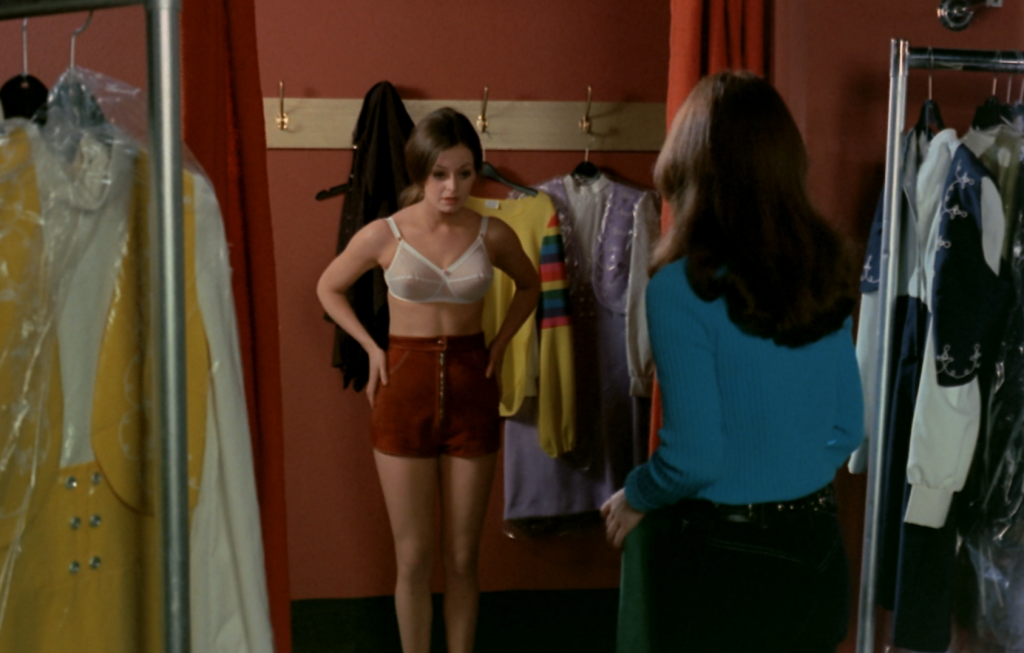
Guest being the old master hat he was perhaps kept things a tad too modest. Especially in light of the Sexual Revolution and the then-current Women’s Liberation Movement (WLM) (or second wave feminism) being in full swing. Consider that Au Pair Girls was released the same year as Pete Walker’s considerably more risqué The Four Dimensions Of Greta (1972). In Germany Andrea - Like a Leaf On Bare Skin (1968) (with Dagmar Lassander), Grimm's Fairy Tales for Adults (1969) (with Marie Liljedahl), Herzblatt oder Wie sag' ich's meiner Tochter? (1969) (with Mascha Gonska), and Schoolgirl Report (1970) dialed up the temperatures far more and easily. In the North there Denmark led the charge with Without A Stitch (1968) and Bedside Mazurka (1970) or the first of the Bedside (1970-1976) franchise. Sweden came scorching with Eva (1969) (with Solveig Andersson) and Christina Lindberg's filmography up to that point, or more specifically Dog Days (1970), Exponerad (1971), and Maid In Sweden (1971). Even the always respectable house of Hammer had resorted to baring bosoms. At the other end Germany would use a simliar format for Love In 3-D (1973) and Italy a young blonde by the name of Gloria Guida would debut in Monika (1974) and her bare naked ass would soon be revered all over the world. The Nordic countries and Mediterrean Europe were always more liberated and emancipated when it came to nudity, especially involving the female form. In comparison to what preceded it and what was the follow immediately in its wake Au Pair Girls is, well, rather tame.
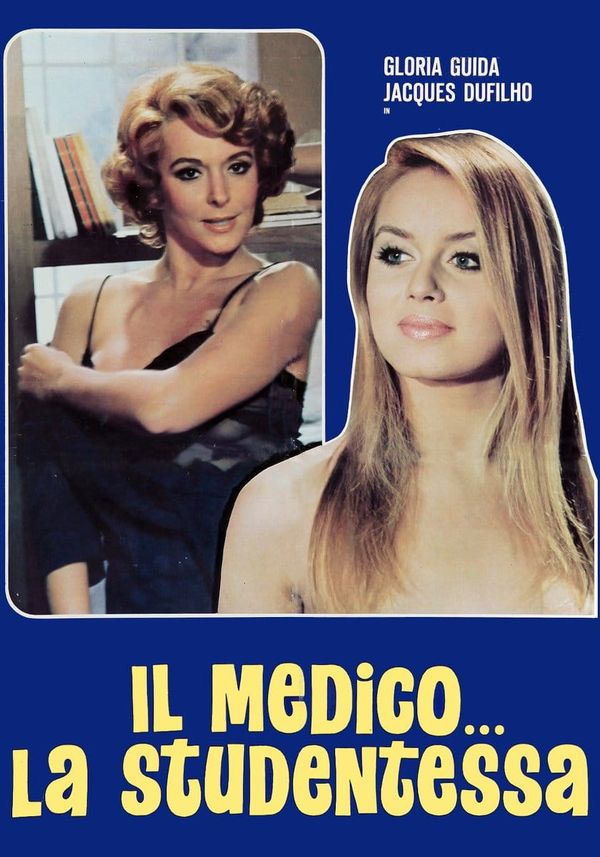
Apparently Italian producer Ennio Onorati saw it and figured it another good opportunity to have Gloria Guida showcase her naked form and world-famous ass. Guida, of course, the year before had scored big with the evergreen sex comedy The Schoolgirl (1975). The au pair girl was one of the male fantasy wish fulfillment figures that glorious Gloria hadn’t yet played. Thusly he put Au-Pair Girl (1976) into production with director Mino Guerrini and la Guida as the titular girl. There’s a case to be made that la Guida’s career was on the downturn after The Schoolgirl (1975) with routinous bilge as The Mammon Cat (1975), and the mildly entertaining duo of The Doctor… the Student (1976) and The Landlord (1976). Au-Pair Girl (1976) is a relative minor entry in Guida’s filmography and she would only redeem herself with To Be Twenty (1978).
As it stands Au Pair Girls is relatively tame compared to what Pete Walker and Norman J. Warren were pushing since the late 1960s. Sure, Au Pair Girls is better from a technical standpoint but it’s low on the exploitation factor. Ultimately it’s a relative innocuous comedy that can’t compete with British and German comedies of the day. They were raunchier, more bovine, and weren’t so terminally afraid of the exposed female form as Guest is here. Then again, Guest was an esteemed director with a respectable body of work. Thankfully, im Deutschland, Hubert Frank, Franz Josef Gottlieb, Alois Brummer, Ernst Hofbauer, and Walter Boos had none such trivial concerns. They just respected any girl who had the body they could work with. A sequel called Glamour Incorporated with Guest directing once again was proposed but never materialized as male wish fulfillment fantasy figures were plenty and ever-changing with school girls, nurses, flight attendants, et al all appearing during the decade.