Menina Casilda (2023)

Plot: lovelorn man kidnaps adolescent girl for the sake of company.
Now with the Hantavirus ascendant and the possibility of the next pandemic outbreak looming ominously on the horizon and the inevitability of another global lockdown etching ever closer it’s perhaps the ideal time to talk about Menina Casilda. With the benefit of hindsight it’s prudent to say that The Bar (2017) was, sadly, a thoughtful (not to mention accurate) depiction of the reaction to an actual outbreak of contagious disease – specifically, the COVID pandemic of 2019. It might not have had quite the morbid vision of apocalyptic societal collapse the way perhaps Rabid (1977), The Crazies (1973), and, to a lesser degree, I Drink Your Blood (1970) and Nightmare City (1980) had but, especially in retrospect, it proved profoundly and frightingly prescient regardless (whether by design or by circumstance.) While The Bar (2017) and its earlier grindhouse ancestors dissected the wider demographic effects of a societal collapse during a pandemic outbreak or an extinction level event few have actually bothered with analyzing how global catastrophe impacts members of society on the individual/emotional level. Menina Casilda offers a potential look into that. To think of this as a contemporary reimagining of William Wyler's The Collector (1965).
Menina Casilda is pandemic cinema that panders to the worst of human inclinations. It excuses, nay, justifies by the most flimsy of explanations – and expects the viewer to be sympathetic (or empathetic) towards their plight, the unlawful imprisonment of another human being for the sake of another. While the premise is tried-and-true, as executed here it leaves more than something to be desired. Before Sunrise (1995) is a well-loved classic because its simple premise (two people meet, they spent the evening talking and walking around the city) was explored so poetically, so lyrically, and it has continued to resonate with audiences because of its heartfelt honesty. If anything else, it was a variation on Night of Red Wine (1967). Menina Casilda on the other hand doesn’t even come within the general perimeter of Richard Linklater’s romantic classic. The key difference between Before Sunrise (1995) and this is that Linklater’s characters met and interacted serendipitously and by their own volition. Consent is a beautiful thing, especially when it’s mutual. Menina Casilda doesn't not seem to grasp this concept – and is all the worse for it. There’s only so little mileage you can get out of Paula Varela when there’s so little for her to do in the first place.
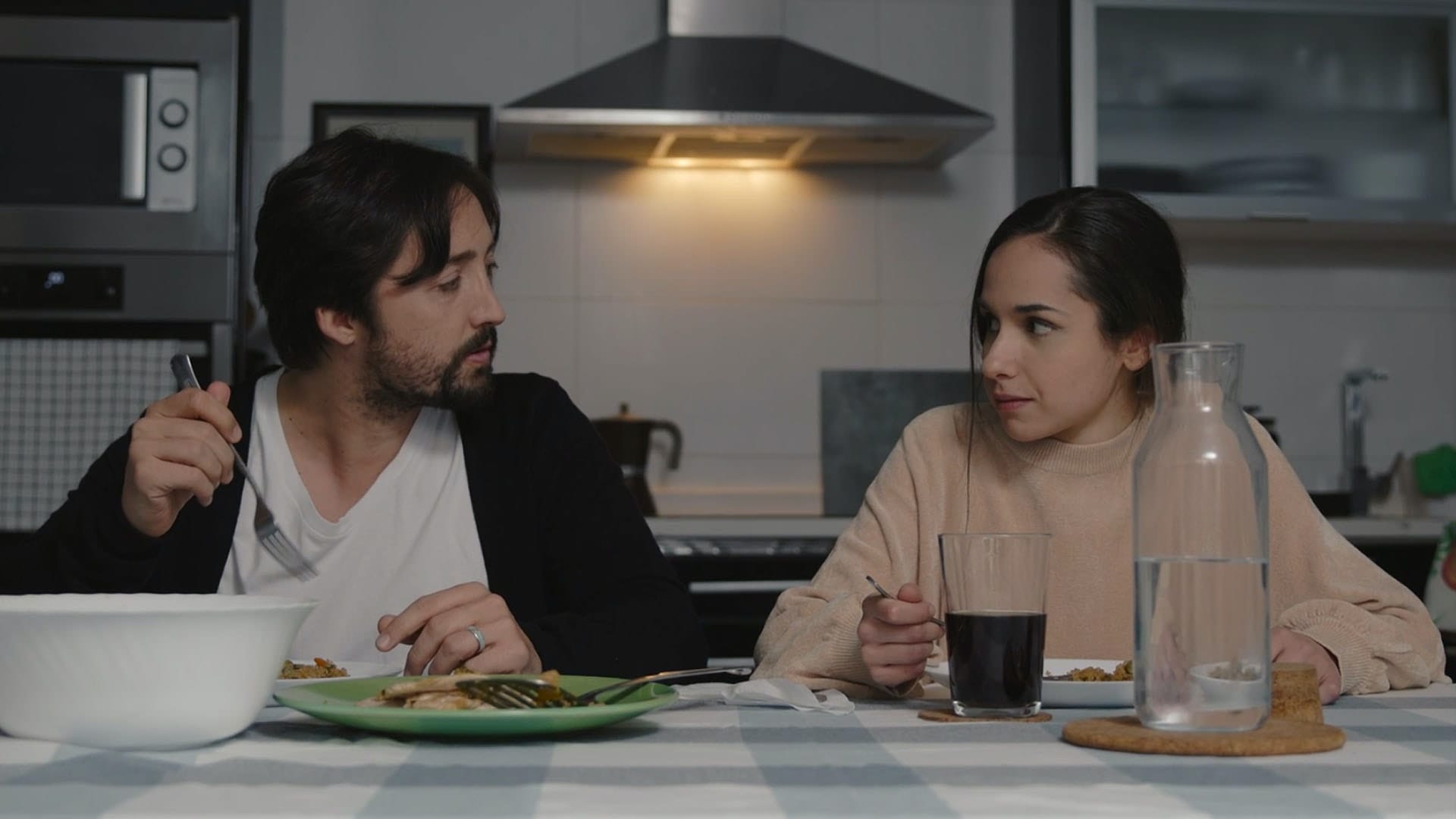
Late March, 2020. To curb the rampant COVID pandemic the Spanish government has imposed a strict lockdown and all non-essential workers have been ordered to stay home for the next three weeks. Diego Villanueva (Álvaro de Paz) is a 35 year old actor living in Madrid and in a fit of desperation he has grabbed 20-year-old law student Sara (Paula Varela) from the street and confined her in one of the rooms of his home. The only contact with the outside that Diego has are videocalls of his expat workaholic and emotionally unavailable father Juanma (Juanjo Sanjosé) and the delivery girl (Helena Lanza). Diego realizes the errors of his ways almost immediately and he treats Sara with the dignity and respect she deserves for the 3-week period or 22 days in April he’s bound to government-sanctioned home confinement and she to unlawful imprisonment. While Diego’s motivations aren’t entirely pure, his intentions aren’t actively malicious, predatory, or even sinister for that matter. You see, Diego is a cinephile and a voracious consumer of art in its many forms. He also is a bit lonely. He longs for a bit of emotional warmth, mental support, and some of that human touch. Things become complicated when he Diego’s father sends his associate Yolanda (Luisa Fernández) to periodically check in with his estranged son. After two failed escape attempts (one by stealth, the other by brute force and a ceramic candelabra) the precarity of the situation dawns upon Sara. She’s now desperate enough to throw her considerable charms at Diego by (quite cheaply and sluttily) trying to seduce her captor by offering him her body in exchange for liberty. As the first week slowly progresses Sara grows empathetic to her captor’s plight but her sympathy is hard-won. Eventually captor and captive start to bond over their mutual love for cinema as they act out scenes and dialogue from their favourite movies. If only things were different. If only Sara and him could have met under more optimal circumstances?
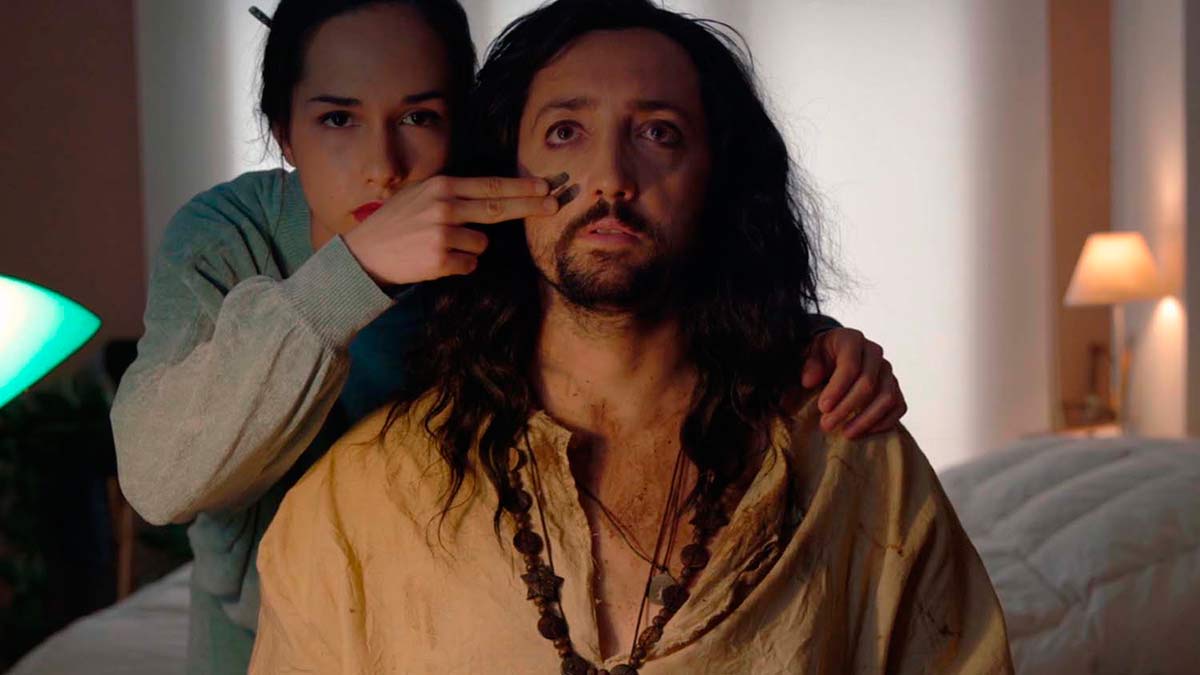
The title Menina Casilda is interesting, for one. Menina means, of course, “girl” but casilda has a plethora of possible interpretations and meanings, depending on where you look. In Spanish typically it means "dwelling place" or "virgin" and it’s believed to be derived from the Visigothic name Gisla, meaning "pledge" or "hostage." (further strengthened by the taking hostage and killing of Colonel José Moscardó Ituarte’s 24-year-old son Luis at the siege of the Alcázar during the Spanish Civil War – something that the plot echoes oh so very clearly) Others ascribe to the belief that it means "pure" or "chaste." Regardless of what writer Mario Parra and director Éric du Bellay meant us to infer from it the two fairly early on have Diego summarize the folklore legend of Santa Casilda, or the Alcázar (or Islamic castle or palace) of Toledo, to his captive Sara adding even further depth to a title already pregnant with meaning and nuance. According to British philosopher John Locke, “a man’s home is his castle” and here that rings truer than ever. The menina in question here is dancer and model Paula Varela. A brief flash of topless nudity aside Menina Casilda isn’t exploitative on Varela in any way. In the hands of a lesser director (say, contemporary pulp exploitationers as Norberto Ramos del Val or César del Álamo) this just as easy could have devolved into a tedious exercise in directionless softcore writhing and lecherous voyeurism. Menina Casilda has grander ambitions and as an intellectual exercise it works wonderfully well.
Amazon Prime has the cojones and temerity to describe Menina Casilda as a romantic comedy. This, no matter how hard it tries, does not qualify as one. Not even within the most strenuous and forgiving tenets of the subgenre – and it exemplifies a fairly recent cinematic trend (and the ongoing decline of the traditional rom com) within the wider comedy spectrum from, say, the 2010s onward. In truth this is a domestic drama. While there are indeed comedic moments here and there and occassionally Menina Casilda even manages to elicit a chuckle – these are too far and few to even qualify as a dramedy, if you’re feeling charitable. A drama with one or two semi-funny moments does not a comedy make. The great philosopher (and adroit orator) Gabrielle Belle has recently released an extensive and eloquent video essay observing this as well as the prolonged death of the romantic comedy in general. This is closer to the thriller/horror subgenre of captivity and torment (even if the latter is psychological rather than physical) than to a rom com.
The moral implications of this are rather daunting, grim, and painfully obvious. Kidnapping and unlawful imprisonment (even in the abscence of any actual torment, malice, or neglect) should under no circumstance ever be glamorized, romanticized, or idealized. To dispense with the obvious, while isolation under genocidal neo-liberal vulture capitalism is indeed a very real thing and probably more widespread than commonly believed this is not the way to address that societal ill. This is where Menina Casilda suffers most gravely. While it does not sympathize with Diego, it does absolve him of any responsibilities and/or the direct consequences of his actions. That nobody within his personal sphere finds anything suspicious and/or calls the police thoroughly boggles the mind.

Had this come from shlockmeisters César del Álamo or Norberto Ramos del Val perhaps we would have been mildly enthused and tempered our expectations accordingly. However this comes from French arthouse director Éric du Bellay who filmed a handful of social drama shorts before arriving at this debut. The setup is charming in its simplicity and the lack of locations and supporting characters is endearing considering the suboptimal circumstances (a global pandemic). Álvaro de Paz and Paula Varela are good actors, no doubt – but our ennui intensifies when you consider that Stockholm (2013) did this thing better and earlier. Captivity (2022) is build around a similar premise but is even worse since it came with a fundamentalist American Christian nationalist agenda that was puritan and hypocritical in equal measure and tried to sell itself as horror. Regardless, at least this works as a thought experiment or intellectual exercise. Hopefully Varela will be able to ascend to the mainstream and not be stuck in low budget hell the way Alba Messa, sadly, has. As it stands Menina Casilda was something that sounded good on paper but didn’t fully translate to the screen. And that’s unfortunate because there’s certainly the figment of an idea in here.