Miranda (1985)
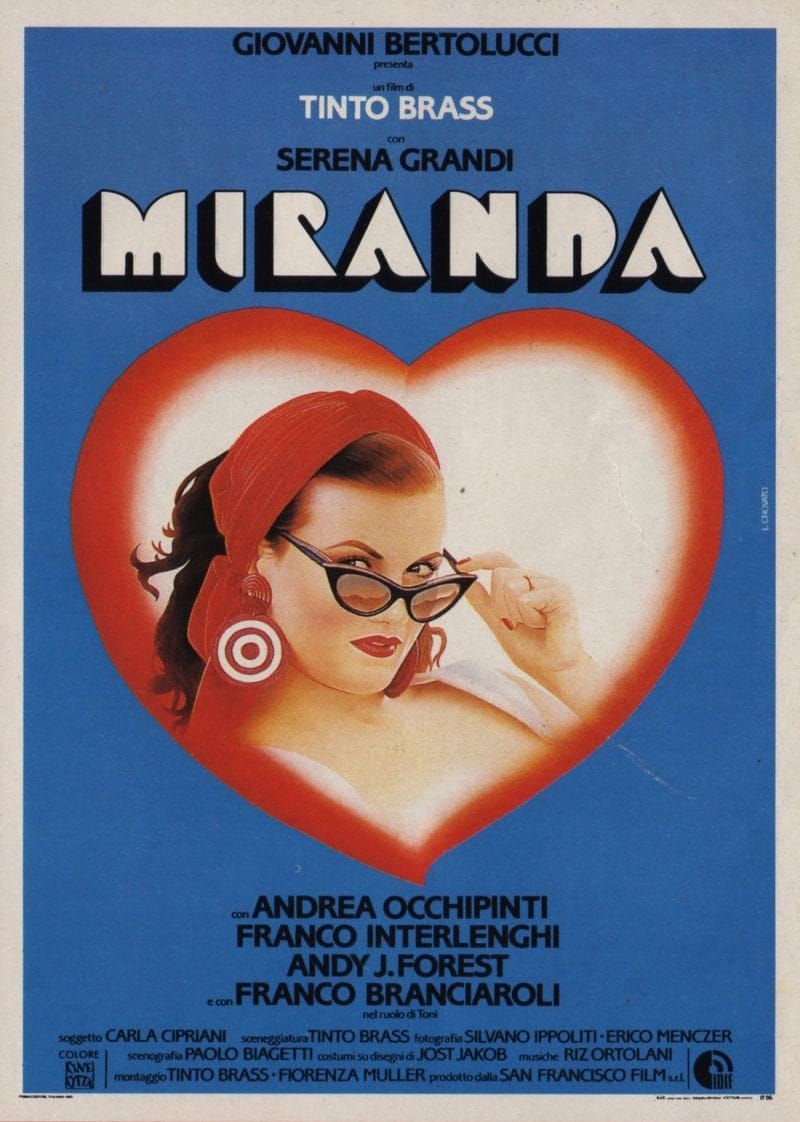
Plot: libertine innkeeper is looking for a few good men….
Two years after The Key (1983) bombarded Stefania Sandrelli to a sex symbol and boosted her lengthy and storied career the master of erotic arts Tinto Brass returned. Once again produced by Giovanni Bertolucci, written by Brass, photographed by Silvano Ippoliti, and scored by the ever-prolific Riz Ortolani Miranda has Brass at his wildest. Brass was the de facto grandmaster and reigning champion of the form now that Radley Metzger was in his fin de carrière and Russ Meyer had retired. For his second feature Brass used the 1752 Carlo Goldoni play La locandiera (or The Innkeeper) (where the titular character was called Mirandolina) as the basis and once again laid fire upon church and state in his usual provocative manner by changing the time to post-World War II Italy. Whether she knew it or not Sandrelli had shaped the form of things to come. Quite literally too. Miranda is what some Italian critics have come to call, retroactively or otherwise, a “momenti migliori del ‘cinema di petto’” or one of the “best moments of ‘breast cinema’”. Which is not hard to believe because that’s what Italian soft erotica boiled down for much of the 1980s. Luciana Ottaviania made a career out of it. Miranda and Tinto Brass was, is, and forever will be, about ass. You can’t spell Brass without ass, after all. Ten years before Il Resto del Carlin film critic Vittorio Spiga had poetically described the Mario Imperoli sex comedy Blue Jeans (1975) as, "an adult comic book that flows into a real exaltation of the remarkable ass of Gloria Guida." Miranda would do the same for its sultry starlet, serendipitous or otherwise.
Not Florence Guérin, Sabrina “my ass is bigger than hers” Siani, or sensual Iberian Cine-S vixens as Andrea Albani, Eva Lyberten, or the Jess Franco adjacent Analía Ivars grabbed Brass’ attention and eye. For Miranda he decided upon a mousy and matronly aspiring Bolognese actress by the name of Serena Grandi (born Serena Faggioli on 23 March 1958.) Blessed with a curvaceous figure (probably mid-to-plus-size by today’s skeletal standards) not only did Serena have a vertigo-inducing 38D (85D) bust she had the soft belly, thick thighs, wide hips, and massive ass to match. Grandi was something of an Italian Isabel Sarli. Just five years earlier Grandi had debuted inconspicuously (and under the very German sounding alias of Vanessa Steiger, for whatever reason) in Joe D’Amato’s Hellenic slasher Anthropophagus (1980). Before that she had had a few decorative roles of no real importance in the comedies The Traveling Companion (1980), The Women of Quiet Country (1980) and My Wife Is A Witch (1980). By November 1982 sexy Serena had featured in the Italian Penthouse and she caught her first big break by landing a role in Luigi Cozzi’s delirious sci-fi/peplum The Adventures Of Hercules (1985) (with Lou Ferrigno, Milly Carlucci, and Sonia Viviani).
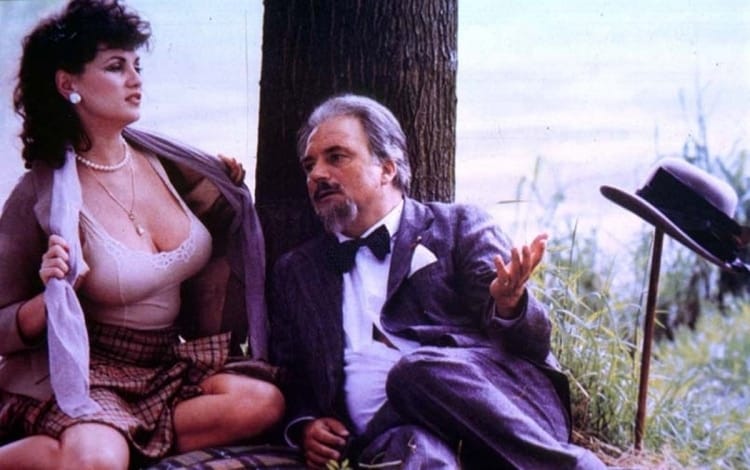
Prior to her association with Brass, Grandi was already a pin-up showcasing her delectable shapes and forms with frequent spreads in Blitz, Skorpio, Turbo, Gin Fizz, and Gente Mese. Brass was about to consolidate her status as a sex symbol. Allegedly, Grandi’s audition involved her appearing completely naked before Brass and him filming every part of her exposed body. Unfortunately, history has failed to record who else auditioned for the part. As the decade wore on Serena would continue to proliferate and cultivate her image as a wanton sex kitten by showing off her divine dimensions in erotic potboilers as Lady Of the Night (1986), Desiring Julia (1986) and the French co-production Exploits Of a Young Don Juan (1986) (with Claudine Auger, Alexandra Vandernoot, and Virginie Ledoyen), as well as the Sergio Corbucci comedy breastacular Rimini Rimini (1987), and the Lamberto Bava horror Delirium (1987) (which was either a very late giallo or a very peculiar slasher with a breast fixation). At the dawn of the nineties she starred in the comedy Saint Tropez, Saint Tropez (1992) (alongside the equally impossibly proportioned and future Brass goddess Debora Caprioglio) and a few years later Brass called upon her again for Monella (1998).
Pianura Padana (Padan Plain or the Po Valley) in Northern Italy, the 1950s. It is manifest that Padan is a sterling example of il miracolo economico italiano due to the generous aid provided by the United States and the Marshall Plan. Somewhere in a sleepy village Miranda (Serena Grandi) is the comely landlady of the rustic Locanda da Gino (or Gino’s Inn). The population is a ragtag combination of native Italians, American servicemen, a few young French women, and an assortment international travelers. Unwavering in the belief that her missing husband Gino Rostagni is bound to return from World War II Miranda refuses to believe that her marriage has been de facto annulled. Absent her husband’s long-desired return Miranda has not been averse to the occasional dalliance and has taken to maintaining an affair or two. Whenever the mood strikes she jumps between the sheets with international transporter Berto (Andrea Occhipinti, as Andrea Occhipin') and when he’s tending to business obligations she holds up an affair with quinquagenarian intellectual and wealthy former fascist sympathizer Carlo (Franco Interlenghi). He affectionately showers her with attention, compliments, and expensive gifts as a way of getting access to her body. Then there’s the displaced American serviceman Norman (Andy J. Forest, as Andy J. Forrest) who works on the outskirts of town and occasionally services her (and others) too. Amidst all this waiter Tony (Franco Branciaroli) secretly carries a torch for his voluptuous employer but for some reason she keeps him at a distance. While testing out which suitor enflames her passions and satisfies her needs most she discusses matters of the heart and pleasures of the flesh with her best friend Leda (Malisa Longo). As the seasons change and Miranda’s sex games ramp up in frequency and intensity, the question is who will be the lucky one to put a ring on the wanton innkeeper?
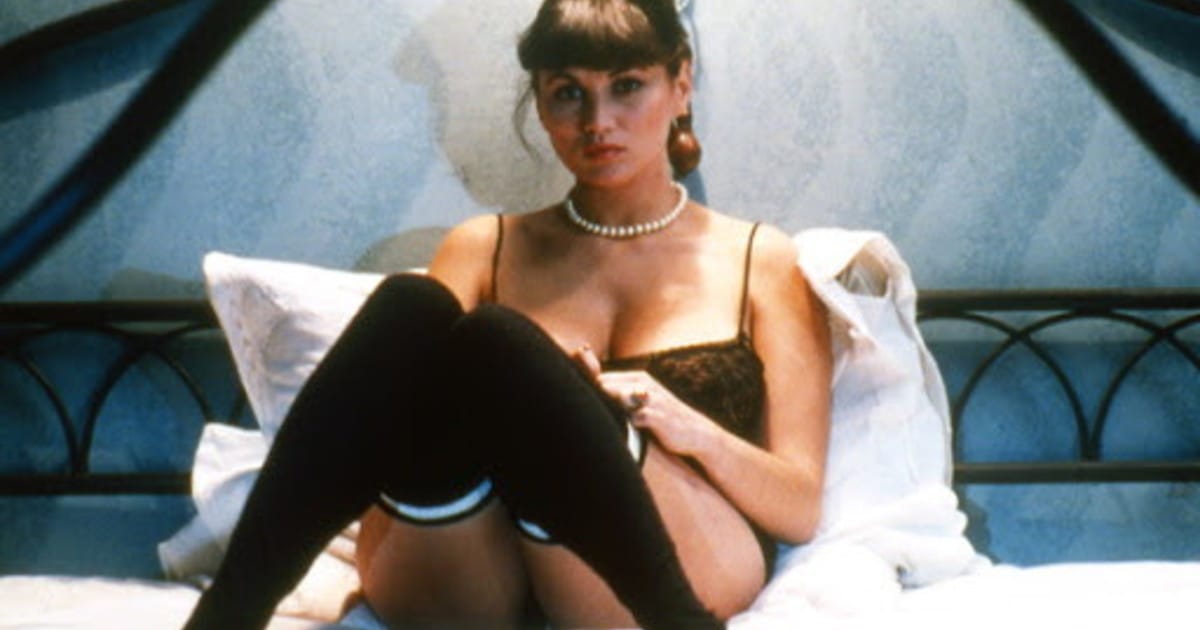
Miranda was anchored by two veterans from opposite ends of the quality spectrum in the form of Franco Interlenghi on one side and Malisa Longo on the other. Interlenghi was the romantic leading man of Neapolitan cinema and one-time rival of Marcello Mastrioanni. While he was a domestic superstar he was never able to broker an international career. Franco was the father of Antonella Interlenghi, she of Yeti, Giant of the Twentieth Century (1977) and the Lucio Fulci gore epic City of the Living Dead (1980). Longo was a Venetian actress that rose to prominence with the gialli Nude... You Die (1968) and One on Top of the Other (1969) and from there became the hottest starlet in commedia sexy all'Italiana with I Cristiana Student of Scandals (1971) and Beautiful Antonia, First a Nun Then a Demon (1972). By the second half of the 70s her star had fallen to such a degree that she became an implacable pillar in Italo exploitation and partook in just about every major fad.
Around this time she was something of a muse to notorious hack Alfonso Brescia. In that capacity Malisa could be seen in his infamous space opera quadrilogy following Star Wars (1977) with as dubious high-water mark the laughably inept Star Odyssey (1979) but she also starred in a pair of his turgid commedia sexy all'Italiana. Other pulp hits include her supporting role in Terence Young’s peplum spoof The Amazons (1973) and the bootleg barrel-scraper Battle Of the Amazons (1973) (where the real highlight was Paola Tedesco). Longo rounded out the seventies with a pair of Eurociné il sadiconazista Elsa Fräulein SS (1977) and the derivate Helga, She Wolf of Stilberg (1978) before partaking in the barbarian craze with Thor, the Conqueror (1983). During the 1980s she could be seen in, among many others, Urban Warriors (1987) and The Red Monks (1988). A Cat in the Brain (1990) was a disheartening low point for her as well as director Lucio Fulci.
La Grandi herself was part of a new breed and new wave of Italian dream woman and international sex symbol, one shaped after Anita Ekberg in Federico Fellini’s La Dolce Vita (1960). Serena and her contemporaries (Pamela Prati, Luciana Ottaviani/Jessica Moore, Donatella Damiani, and Angela Cavagna, to name the most obvious) represented a thicker, rounder, more naturally curvaceous ideal of hyper-femininity. By today’s standards she’d probably be labeled lush, chubby, extra, plump, thick, or exceptionally well-fed. This being a Brass feature there’s plenty of Serena in just about every imaginable position (compromising and otherwise) and in what seems like an almost perpetual stage of undress. Grandi can be seen parading in and out of a wide array of costumes and a variety of miniscule undergarments. One of the people responsible for the costume design was Stefania D'Amario, she of Walerian Borowczyk's Behind Convent Walls (1978), The Sister Of Ursula (1978), Zombi (1979), Umberto Lenzi’s Nightmare City (1980), and Michelangelo Antonioni's Identification of a Woman (1982).
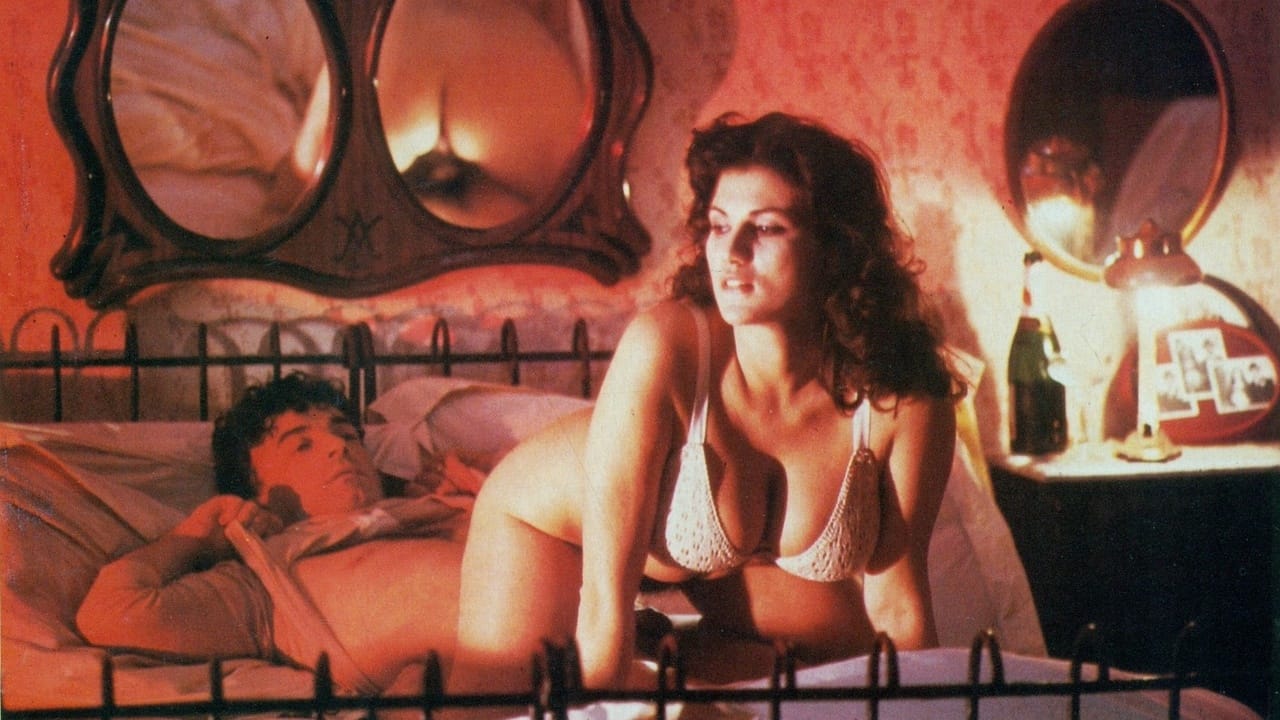
Serena’s ample curvature, sensual shapes, and formidable forms are thoroughly explored with Brass’ loving gaze and Silvano Ippoliti’s photography captures her at her utmost desirable. Perhaps there’s a point to be made that Brass’ women were somewhat hairy by today’s standards but that very much was a by-product of the period. Trimmed armpits and pubes would become en vogue only in the 1990s. European erotica of the decade (and the one prior) was in the habit of casting ordinary looking women. They were unquestionably breathtakingly beautiful but there was something plain and average about them that made them easily relatable. Serena Grandi might have had the body of goddess but she never seemed unattainable. For young actresses she (and others like her) must have been aspirational. Serena herself has always remained incredibly grateful for (and always has been vigorously protective of) her association with Tinto Brass and the legacy of Miranda. According to interviews, old and new, Grandi was never shy about admitting that as a country girl she learned everything about the craft from maestro Brass. While Grandi the actress was very much something of Serena’s own creation, Grandi the sex kitten was that of old Tinto’s.
There are two kind of Tinto Brass features, the ones before Paprika (1991) and everything after. The Key (1983), whenever it could stop focusing on Stefania Sandrelli’s magnificent ass for a minute, had actually something to say about the socio-political climate of the day as well as gender roles and the patriarchy in Italian society at large. Miranda on the other hand has none such concerns and squarely focuses on the finer points of Serena Grandi’s massive behind. Brass once again targets the hypocrisies of church and state and their treatment of women, but not much else. By 1985 that was old hat, even for Brass. To its credit Miranda seems to realize this and makes Serena Grandi the focal point. Grandi’s ascension to becoming a Brass babe was historically important as it would reveal the Brass curse.
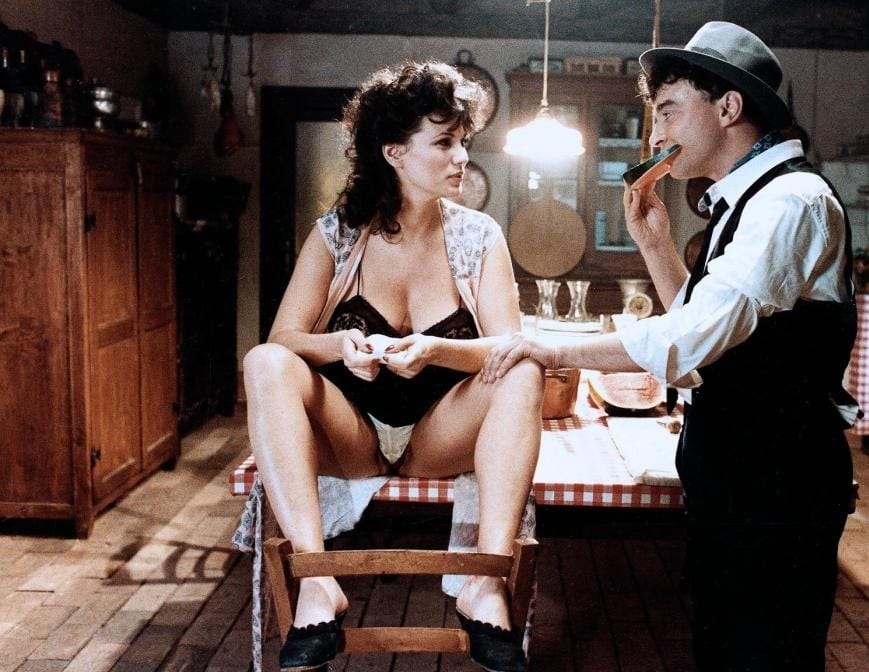
Her Brass feature could, arguably, be considered her career nexus – and it cast a long and wide shadow over anything and everything she would do, and has done, since. Every Brass babe following Serena Grandi would fall victim to this curse. The only exception to this would be miss Sandrelli who already was a star before she bared her plump ass for Brass. There’s a remarkable decline post-1992 with The Voyeur (1994) and Monella (1998) which largely feel as facile retreads of well-trodden territory. The decline ultimately culminated in Monamour (2006) when Brass abandoned celluloid for pristine digital video and completely did away with any and all socio-political subtext and commentary. Then there’s the fact that there’s no “original” Brass film, as every of his pictures were adaptations of literary works. Tinto Brass never wrote his own film. Miranda is a reminder of better, more optimistic times and that thickness in fact does prevail whenever it’s given a chance and opportunity to flourish and bloom. According to insiders Miranda was believed to be one of Federico Fellini's favorite films.