Shock Treatment (1973)
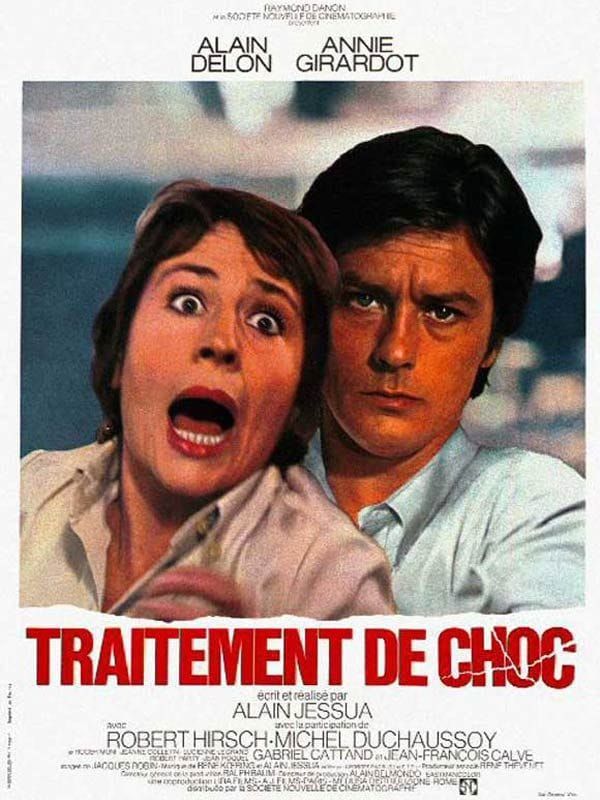
Plot: aging socialite discovers a terrible secret in a prestigious health clinic.
1973 was not only an exceptionally good year for rock with genre-defining albums from progressive titans Emerson, Lake & Palmer, Genesis, Pink Floyd, Yes, Le Orme, and Gentle Giant as well as ur-heavy metallers Black Sabbath; it also was the year that Mediterranean Europe was swept under a wave of supreme gothic horror revivals. Directors (especially in Britain, Germany, and Italy) had been pushing the boundaries of the thriller (and adjacent police procedural) at the very least since the early-to-mid 1960s following the example of grandmaster Alfred Hitchcock. While the line between thriller and horror has always been nebulous a more clinical approach had never really been attempted before. For that infinitesimal window in time the medical subset of horror was ever so briefly the flash in the pan before dissipating instantaneously into thin air in the wake of the double-whammy of The Exorcist (1973) on one side of the Atlantic and The Wicker Man (1973) on the other. Shock Treatment (or Traitement de choc, pour ceux qui ne parlent pas français) was a precursor to the French-Canadian Shivers (1975), Rabid (1977), and Coma (1978) and the inconspicuous beginning of the French Extreme with the surprisingly minimalist but effective Night Of Death! (1980).
The medical horror subgenre happened concurrent to and in parallell with the contagion horror that briefly surged in the 1970s. Contagion horrors embodying a variety of social anxieties, the fear of government overreach, and the attendant paranoia following the US humiliating defeat in the Vietnam War. It was different from its medical cousin in that it typically was a pontification on institutional dysfunction and the common people’s undying and unyielding refusal and resistance to bend to authority. Prime examples of the subgenre include I Drink Your Blood (1970), Garden of the Dead (1972), The Crazies (1973), Shivers (1975), The Grapes Of Death (1978), and Bloodeaters (1980). They were portrayals of how a bad situation will irrovocably, inevitably, and catastrophically spiral out of control the more well-intended people meddle in it in trying to contain it. Medical horror on the other hand typically revolved around unscrupulous government people (or high-ranking members in the upper-class) either causing an outbreak indirectly or being responsible for the situation getting out of control while lowly (but morally upright) medical personnel try to expose said dignitaries for their cover-ups. An interesting delineation point of sorts was Umberto Lenzi’s frightfully prescient Nightmare City (1980) that was probably the last real contagion horror at the very dawn of the nascent Italian zombie craze.
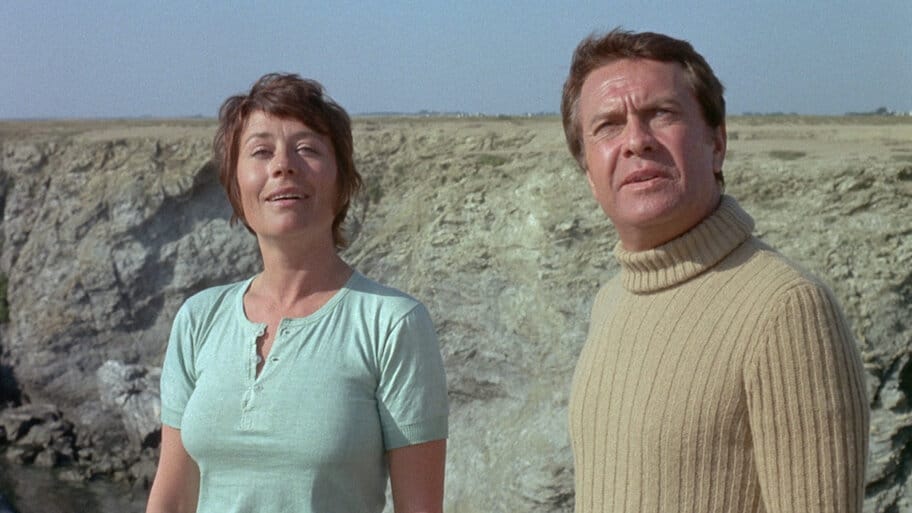
Before this we never heard of Alain Jessua and were not familiar with any of his body of work. In the 40 years from 1956 to 1997 Jessua directed 10 films – all of which dealt with the fear of aging, the exploitation of immigrants, the dangers of medical innovations, and the dystopian societal implications inherent to that. His prefered subject was the feeding of the elder upon the young, both literal and figurative. In the decade of Jean Rollin and the omnipresence of the oneiric fantastique a medical thriller was something else. Apparently Jessua held some sway over the French cinema industry as he was able to work with superstars as Alain Delon and Annie Girardot. Delon was a beloved leading man who mostly appeared in dramas and crime films and is mostly known for The Swimming Pool (1969) around these parts. He was part of the French jetset and an international man of mystery alongside fellow pillars Jean-Louis Trintignant and Jean-Paul Belmondo. Delon worked with many directors, including Luchino Visconti, Jean-Luc Godard, Jean-Pierre Melville, Michelangelo Antonioni, Louis Malle, and Agnès Varda. For him Shock Treatment was something slightly out of character. As for the women, Jessua cast his wife Anna Gaylor and that of his friend Louis Malle in the form of Anne-Marie Deschodt (because nepotism is a disease of all ages.) Photographing was Jacques Robin, who was a camera operator on Diabolique (1955), and frequently worked with actor/writer/director Robert Hossein.
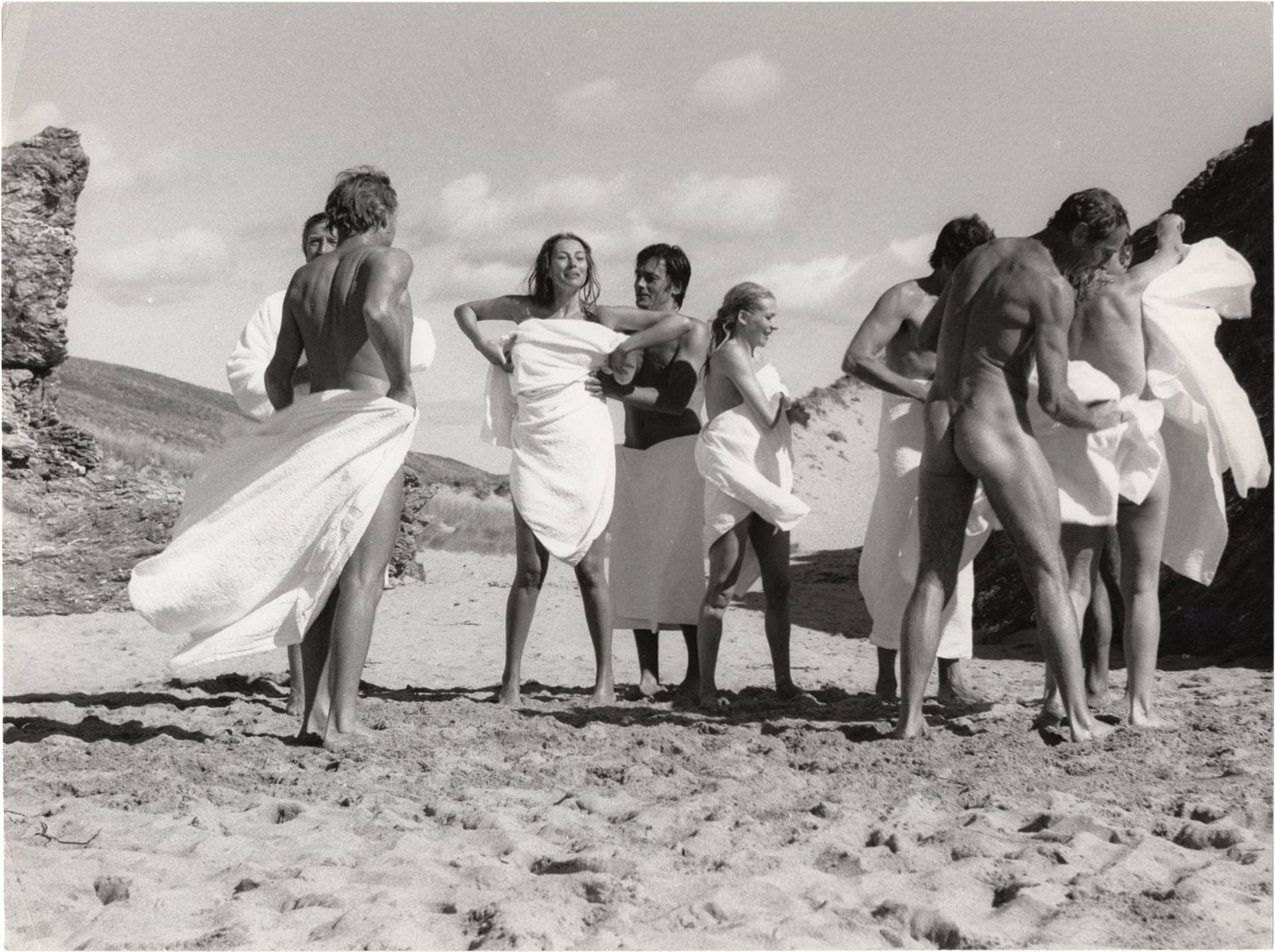
Hélène Masson (Annie Girardot) is a 38-year-old single woman who’s on the verge of a nervous breakdown after managing a prêt-à-porter fashion plant non-stop and losing her lover to a younger model with it. She has checked herself in for an extended retraite at the health clinic and thalassotherapy institute of Dr. Devilers (Alain Delon) at behest of her best friend Jérôme Savignat (Robert Hirsch). Together with his trusted partner Dr. Bernard (Michel Duchaussoy). Dr. Devilers is at the razor’s edge of modern medicine and has developed a revolutionary anti-aging program involving a strict vegetarian diet, hydrotherapy, naturism, and fresh cellular implants from sheep embryos. Among his clientele are government officers, the bourgeoisie and aristocracy, as well as captains of industry. Besides the medical personnel the institute is maintained and staffed exclusively by freshly imported strapping young men, this year Portuguese. They all look pallid and ashen, and act as if they’re under some kind of trance. The clients, most of whom are regulars and have been undergoing the therapy for years, have formed a commune. One night Savignat laments the ailments, infirmity, and decrepitude of senior age encroaching upon his deteriorating form. He confides in her that he’s on the precipice of financial ruin as he has poured all of his fortune into the therapy. He tells her that the therapy creates a genuine physical dependence. The next morning Jérôme is found drowned. The police rule it a clear open-and-shut case of suicide not warranting any further attention or allocation of resources. When she inquires with the staff and Dr. Devilers Hélène is met with obdurate silence. All of these strange coincidences and odd details about the clinic and staff compel Hélène to investigate what Dr. Devilers is hiding in his heavlly fortified laboratory and what exactly is the special ingredient that makes his rejuvenation treatment unique.
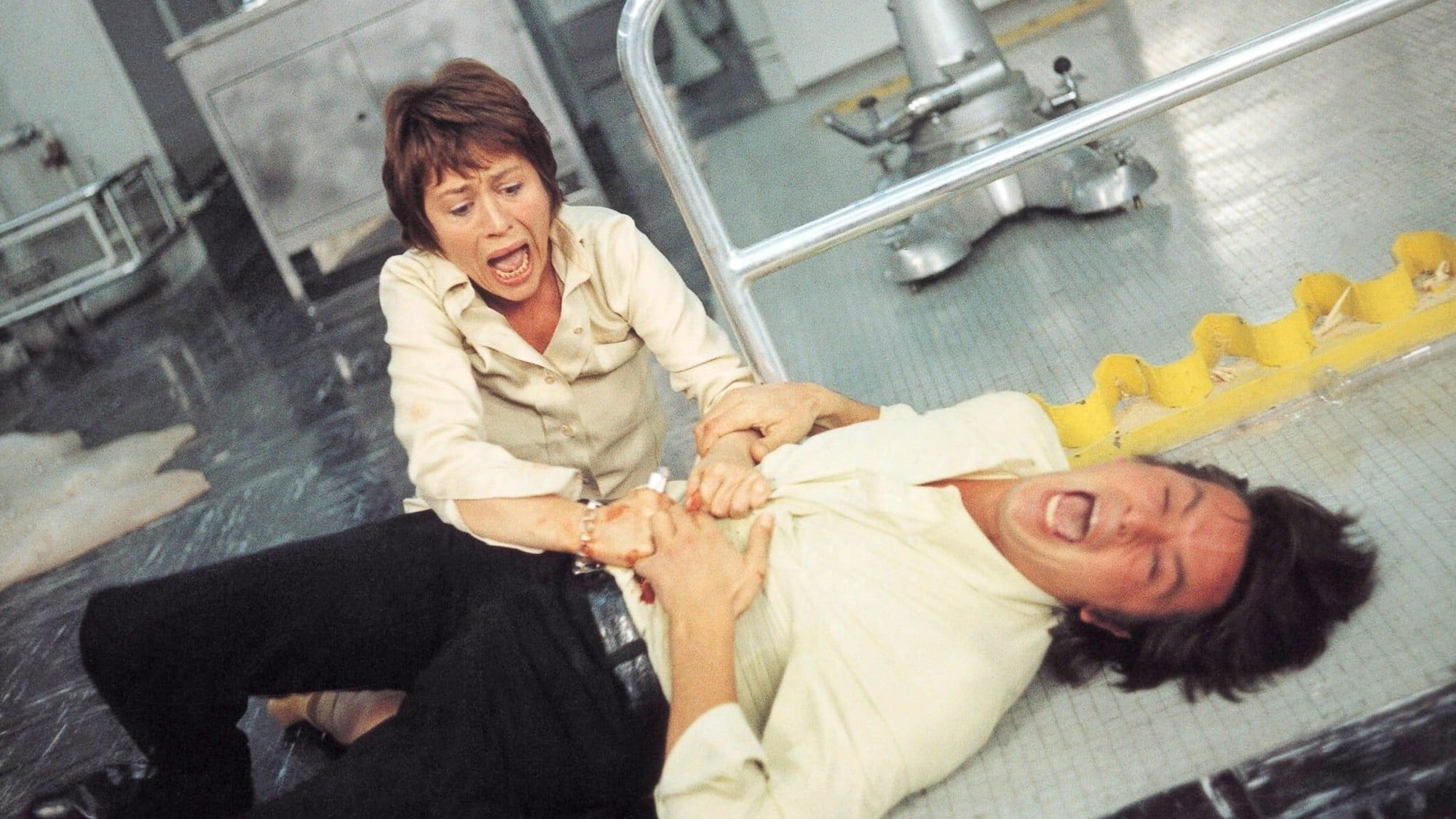
Shock Treatment apparently is representative for Jessua’s body of work as it a genre exercise (a thriller, in this case) that functions as a social commentary with the rich feeding on the poor, the destitute, and the chronically disenfranchised. Or in this case, the bourgeoisie feasting on the blood (quite literally, frankly) of the proletariat to stave off aging. As near as we can tell Jessua never really bend to the market or whatever happened to be popular but in one or two instances his genre pieces coincided with then-current trends. Here Jessua was on the cutting edge as the medical thriller was to experience a brief window of popularity and the vehicle of choice for those who wanted to dress up their sociopolitical critiques appropriately without venturing headlong into actual horror. Interestingly, Jessua found himself out of step with both mainstream - as well as fringe cinema domestically as well in Europe at large. The early 1970s was the time of the fantastique in the wake of Jean Rollin’s vampire epics domestically and Mediterranean Europe was engulfed in full-blown gothic horror revivalism and the emergence of the giallo. Shock Treatment is neither but at least embraces that oneiric naturalism that French cinema is known and loved for. For something as taste du jour it holds up surprisingly well in its utilitarian minimalism. Less is always more, and the sole gore scene is just as effective as it is brief. Coma (1978) might have had more starpower but this one is free of Hollywood limitations.
It’s interesting that Alain Jessua never used the vampire horror as a vehicle for his preferred message and political ideals that was gaining traction at the time. Jean Rollin and Mario Mercier had provided all the necessary evidence that non-existent budgets shouldn’t be a restriction on creativity. As far as we’re aware The Hunger (1983) ten years later used vampirism as a metaphor for addiction, and 11 years after that Interview with the Vampire (1994) had its aristocrat vampires (quite literally) feeding on the working poor, the systemic disenfranchised, and the societally forgotten. As a master technician Jessua effortlessly switched between politically-charged and socially conscious manifestos as Armageddon (1977) or No Harm Intended (1988) and more light-hearted genre deconstructions as Frankenstein 90 (1984) and Paradise for All (1982) that spoofed mad science horror and sex comedies, respectively. Jessua apparently adamantly refused to follow the conventional career trajectory and that perhaps explains why his films aren’t as widely known as they could or should be. Shock Treatment is an excellent example of non-British terror and suspense.