A Holy Place (1990)
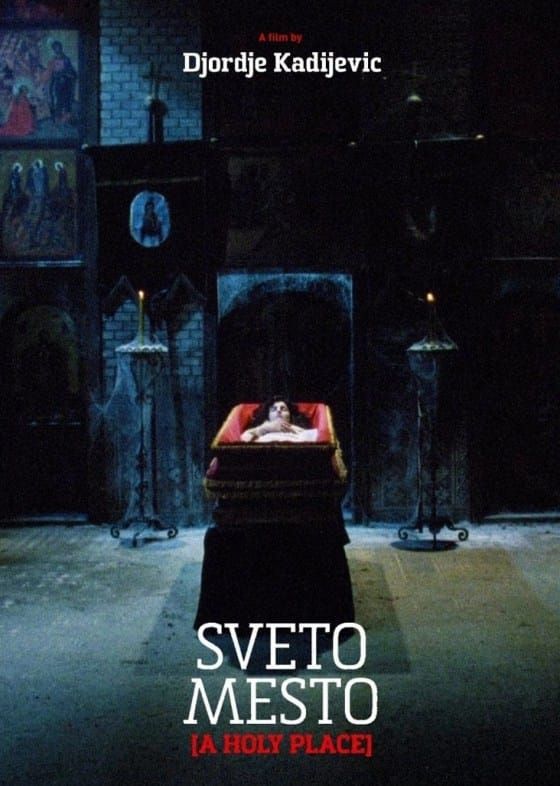
Plot: seminarist must stand vigil for three nights in an abandoned church.
A Holy Place (Sveto Mesto or Свето место back at home) is that rarest of beasts; a remake of an old and beloved classic that actually is able to stand on its own merits. The place of Viy (1967) in Soviet – and global horror history is both uncontested and unsurpassed. A Holy Place merits interest moreso than the contemporary Russian reimaginings because as a faithful retelling of the Soviet undiluted gothic horror milestone it actually tries to do something with the story while remaining true to its spirit. It expands upon the backstory of the character and showcases what Viy (1967) only hinted at. Nobody is going to mention this remake in the same solemn breathless deference to Viy (1967) as nothing simply comes close. Regardless A Holy Place is worth a cursory glance.
Viy (1967) is the quintessential Russian folkloric horror that every serious fan of the genre should at least have a passing familiarity with. That Viy (1967) since has been remade, retold, and reimagined several times in the ensuing decades should surprise no one. While most remakes are redundant at best and unnecessary at worst this reimagining from Serbia (then still part of the larger Socialist Federal Republic of Yugoslavia along with Bosnia and Herzegovina, Croatia, Macedonia, Montenegro, and Slovenia) arrived not only some 23 years later – but was conceived for television. Who better to reimagine Soviet horror classic Viy (1967) for then-contemporary Serbian television than master of folk horror Đorđe Kadijević?
Lest we forget, Kadijević is remembered around these parts for his pastoral horror masterpiece The She-Butterfly (1973). Kadijević was a specialist of counter-revolutionary war films and historical/social dramas and the linchpin of the subversive Yugoslav Black Wave from the late 1960s/early 1970s (along with Dušan Makavejev, Žika Pavlović, Aleksandar Petrović, Želimir Žilnik, Mika Antić, Lordan Zafranović, Mića Popović, and Marko Babac). Under the repressive authoritarian regimes of communist dictators Josip Broz Tito and Milan Pančevski anti-war sentiments were quelled. Đorđe Kadijević was forced into television where he made The Gifts of My Cousin Maria (1969), Ward (1973), The Maiden's Tune (1973), and his most enduring work The She-Butterfly (1973).
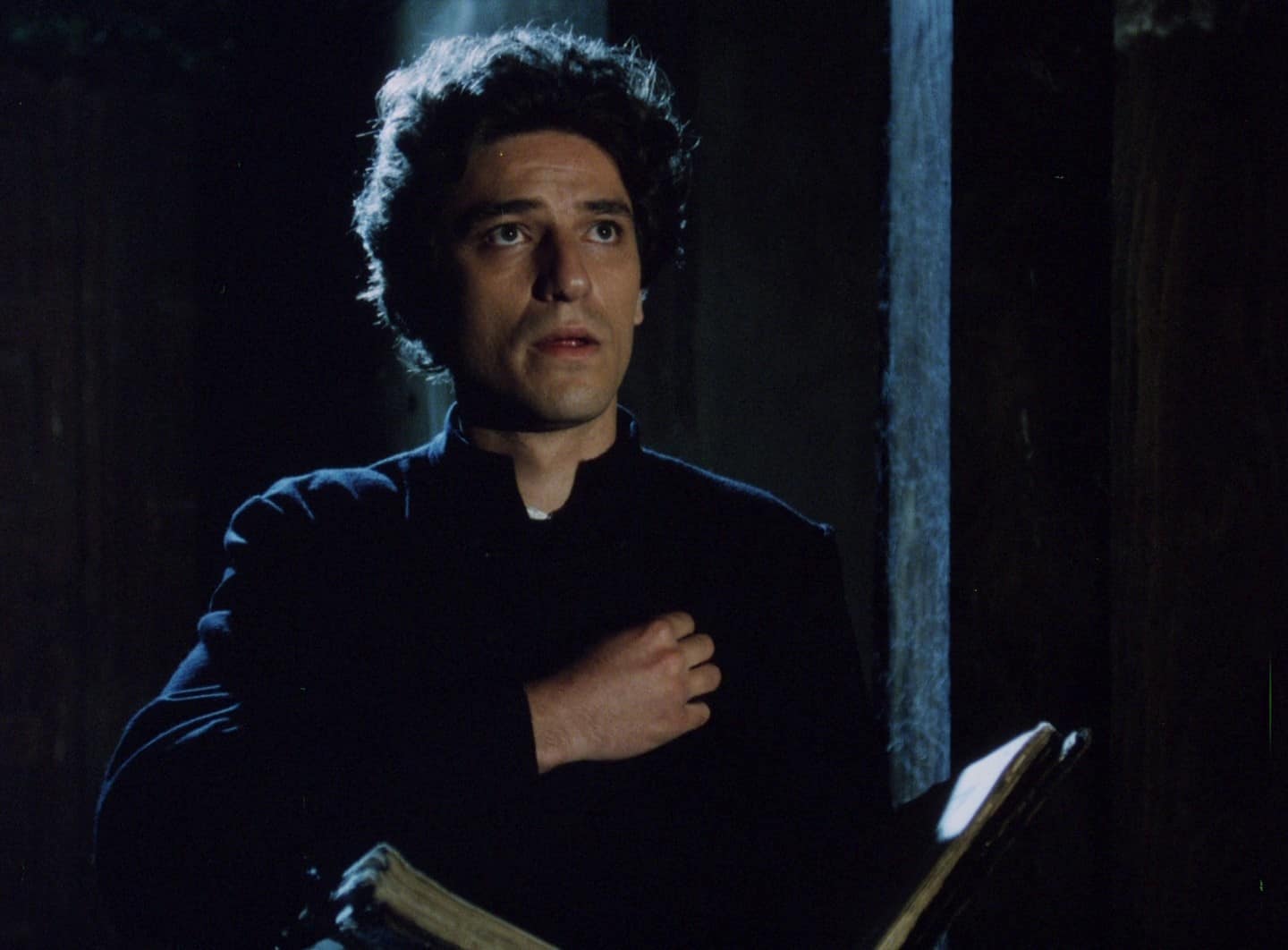
The seminarist Toma (Dragan Jovanović) and two of his theologian student friends are walking into town in the middle of the night when they are spooked by the baying of wolves. On the fog-enshrouded road Toma sees a black driver-less carriage with a beautiful woman inside. Finally the three spot a decaying farmhouse. The old woman at the farmhouse agrees to provide them with food and shelter for the night on the condition that they sleep in separate areas of the barn. On his way to the shed Toma once again sees the black driver-less carriage. In the blackest of the night the old woman tries to seduce Toma. When he beseeches her not to she rides him across the countryside after which it dawns upon Toma that the old hag must be, or is, a witch. He wards her off with the Lord’s Prayer and violently beats her. Upon succumbing to her injuries the old witch transforms into a beautiful woman who continues the advances. Toma acquiesces to his fleshly desires and a passionate moment between him and the hitherto nameless girl erupts. Once the raging fires of desire are fed she appears lifeless in his arms. Bewildered Toma flees the environs of the farm for the seminary.
The headmaster (Dušan Janićijević) informs him that a prominent patron of the church, the local aristocrat and feudal lord Master Županski (Aleksandar Berček) has summoned for him. The aristocrat orders Toma to fulfill the dying wish of his daughter to stand vigil reciting prayers and singing psalms by her coffin in the imposing gothic village church for three consecutive nights. That night Doros (Danilo Lazović) and Spira (Radoš Bajić) come to collect him and protest is of no use as an agreement was made. Reluctantly and without much of a choice Toma begrudingly accepts his fate. On the way to the chapel Toma learns that the girl has indeed passed away during their journey and, to his abject horror, discovers that Katerina (Branka Pujić) is none other than the witch her met earlier.
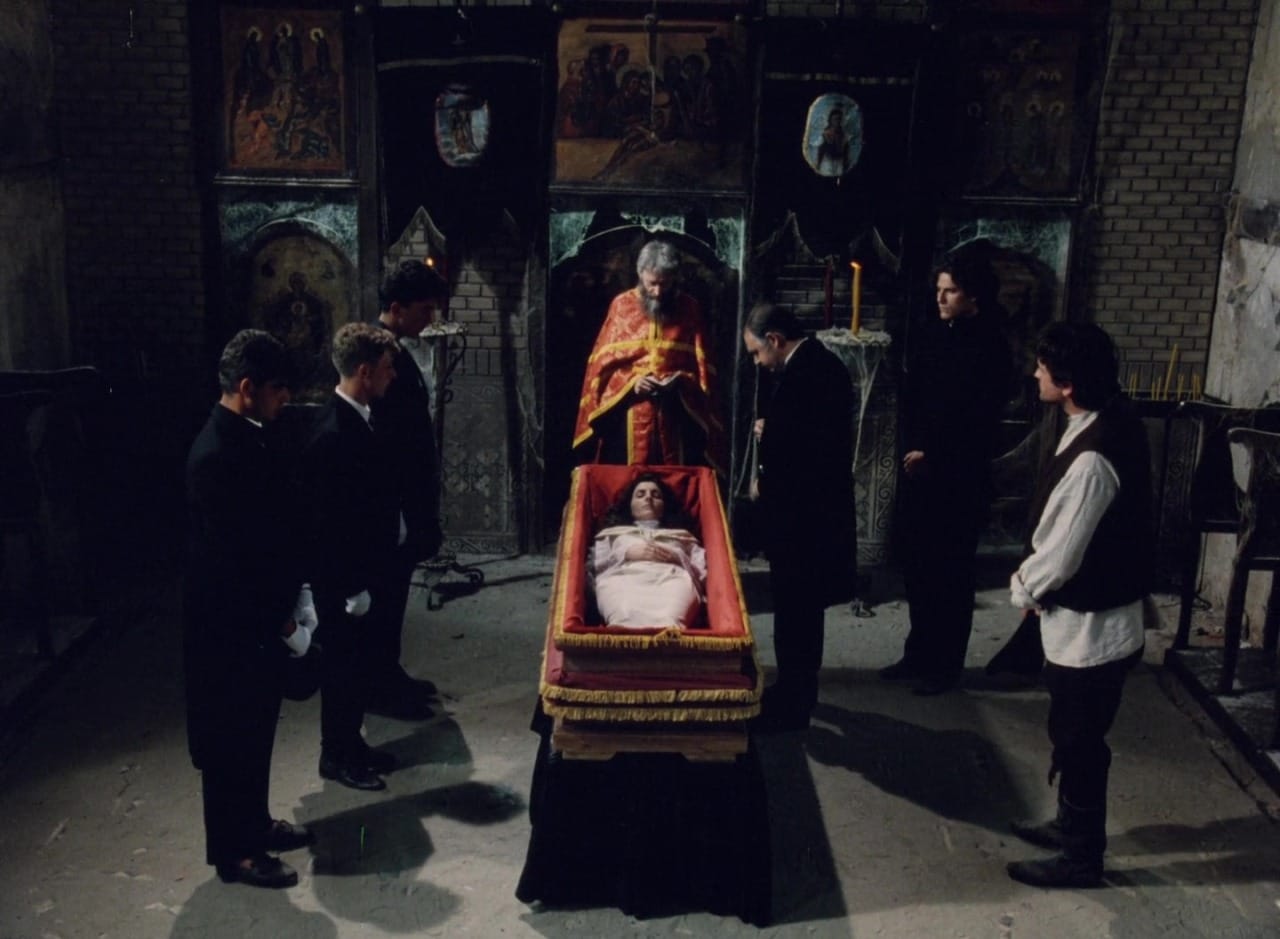
As the curtains of night descend Toma draws a protective circle around himself and diligently commences his prayers and psalms. Katerina rises from her coffin and seductively dances for Toma but cannot pass his sacred circle. Perennially indolent, adverse to exertion of any kind, and chronically underachieving Toma spents the day at the tavern getting criminally drunk. There he hears the religiously impaired and more superstitious of the villagers tell tall tales about the Zupanski clan. The vagrant Nikita (Predrag Miletić) once was a laborer on the farm until he was seduced by the daughter and left a broken man, how the housekeeper Lenka (Maja Sabljić) was assailed by the family feline after rebuking the wanton daughter’s advances, and how father's unbecoming lust for his nubile daughter drove the matriarch (Mira Banjać) to an early grave. For the next two nights of his vigil Toma wonders whether his faith will be strong enough to withstand the unholy forces of evil.
For all intents and purposes A Holy Place is a pretty faithful retelling of the beloved Soviet original. However there are some significant deviations as well. Consider the way this was named. Вий or Viy/Vii roughly translates to “spirit of evil” and was in reference to the Natalya Varley character. Evil (2006) was called Ведьма or Vědma back at home in Russia and translates to “witch.” The international market version is the cause for confusion here. Свето место or Sveto Mesto instead refers to the church, A Holy Place. There’s a dinstinct undercurrent of grimy sexual depravity and violence, cheap late night cable TV-level tittilation, and an all pervading sense of the blackest misanthropy and dread. During the nocturnal summoning of the denizens of the dark during the third night the demon of Viy does not appear. The fate of Toma is unambiguously decided at the conclusion whereas there was some room for interpretation in the original. By and large A Holy Place is exactly what you’d expect from a television production and within those restrictive limitations of such a framework it actually works surprisingly well. As a made-for-television feature A Holy Place is decidedly not the special effects extravaganza, and the utterly engrossing gothic horror phantasmagoria that the Russian original was.
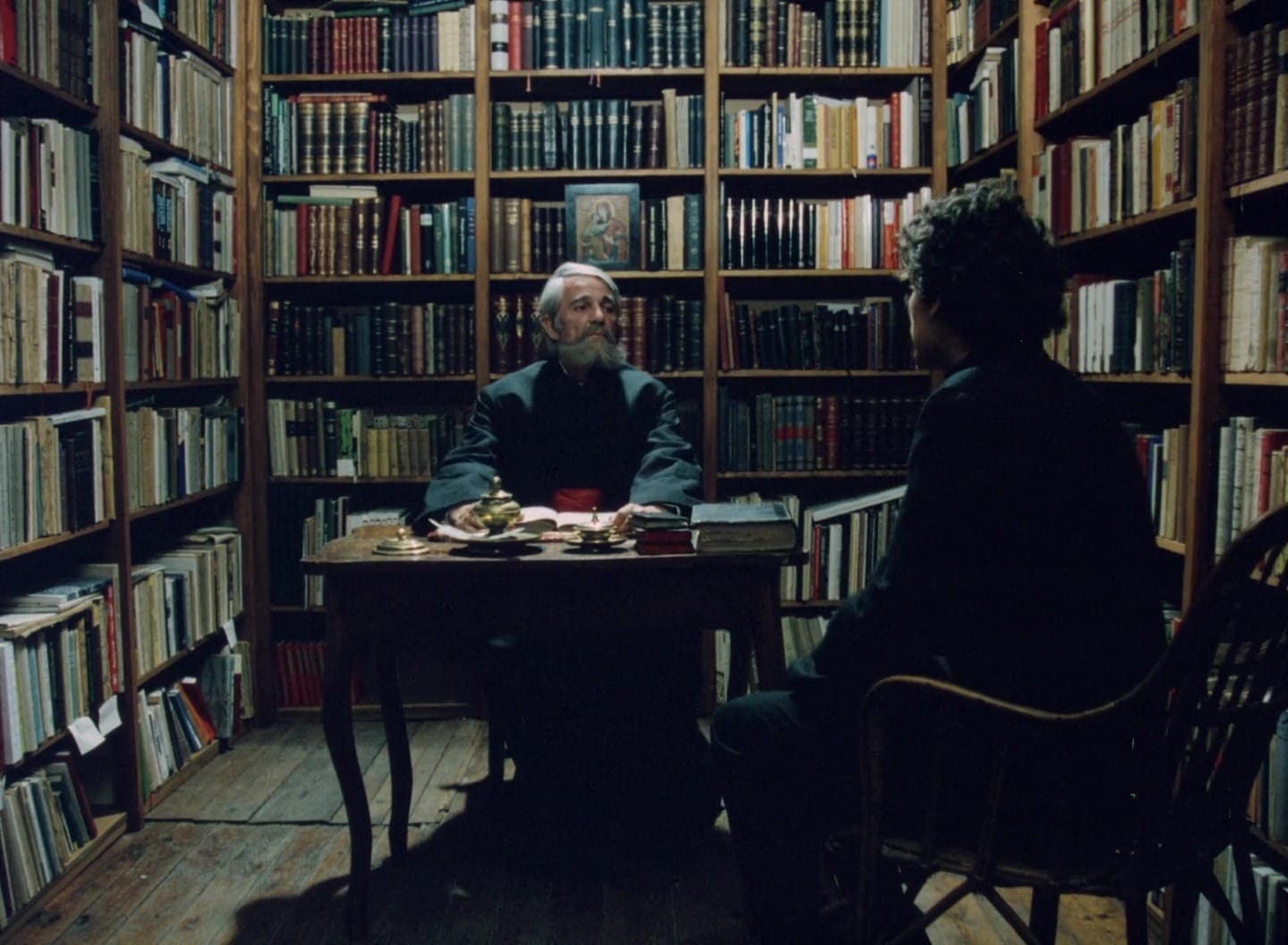
Whereas the Soviet original was a gloomy gothic horror tour de force and a triumph of art over budget A Holy Place puts more emphasis on repressed sexuality, Faustian corruption, as well as moral decay. Things Viy (1967) only alluded to. Viy (1967) left a lot, if not most, to the imagination whereas this does blatantly not. More damingly perhaps, Branka Pujić is good enough in her role as Katerina but can in no way measure up to Natalya Varley in the original or ginger wonder Mirjana Nikolić in The She-Butterfly (1973). To his credit Đorđe Kadijević gets some considerable and good mileage out of the small Banat village of Dolovo and its Orthodox Church Saint Nicholas, so much so in fact that it almost becomes a character in itself. Meanwhile cinematographer Aleksandar Petković lovingly photographs Slavic ice queen Branka Pujić at her most desirable. The whole thing is bathed in deep shadows, asphyxiating mists, and is greatly enhanced by a droning minimalist synthesizer score from Serbian keyboardist Laza Ristovski.
That it took until 1990 before Viy (1967) was remade in any shape or form is surprising enough – especially in light how something like this could have been easily remade during the continental European gothic horror revival of the 1970s. How strange it is that Italy and Spain never picked up on it or saw it fit for a domestic or international remake. As a remake A Holy Place gets most things right and while the expansion upon the backstory certainly adds a dose of pathos it was never all that necessary. Viy (1967) understood the virtue of simplicity and the power of implication. There’s a time and a place for something A Holy Place and Đorđe Kadijević was the ideal director to conjure it. While we are against remakes on general principle A Holy Place makes a good case for not all contemporary remakes being instantly redundant when the original is still around and available. A remake should always strive for enhance (or expand) upon the original and that's exactly what A Holy Place does. Kadijević was onto something here.