The Red Monks (1989)
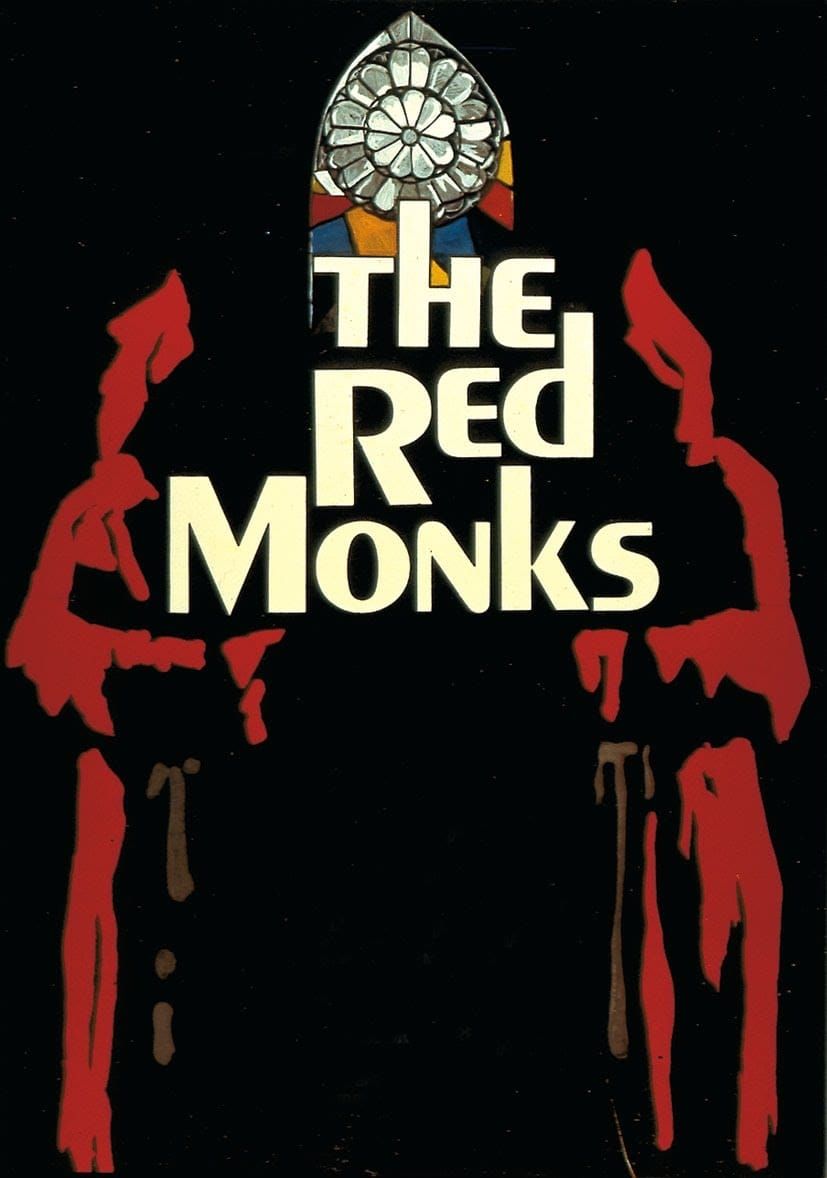
Plot: ancient blood cult threatens to eradicate a clan’s entire bloodline.
Arriving near the end of the 1980s the fate of The Red Monks (i frati rossi back at home per chi non parla italiano) was decided before even a single reel was filmed. By the late 80s the Italian cinema industry was in a steep decline and productions weren’t alloted the comperatively lavish budgets they once commandeered. Produced by Pino Buricchi, who specialized in sexy comedies, dramas and erotic thrillers, and part of the “Lucio Fulci presents” series The Red Monks bears all the signs that would come to define the horror genre in the 1990s. In other words, The Red Monks is a tedious bore short on both the gore that Fulci is associated with, and the nudity that were the bread-and-butter for most of Buricchi’s other output. Not even Lara Wendel and Malisa Longo, a good decade past her prime, can save The Red Monks from well-deserved obscurity.
Gianni Martucci was a writer, occassional director, and protegé of Alfonso Brescia. In that capacity Martucci penned the screenplay to the very matter-of-factly titled giallo Naked Girl Killed in the Park (1972), was responsible for second unit direction on the peplum Poppea: A Prostitute in Service of the Emperor (1972) the same year, and wrote the screenplay for his own directorial debut with the commedia sexy all’italiana The College Girl (1975). The Doctor Under the Sheets (1976) (released in North America as the slightly abbreviated Under the Sheets) was more of the same, but never reached the glorious heights of the prime Gloria Guida, Lili Carati, or Nadia Cassini – let alone those of real sexy comedy royalty as Edwige Fenech and Laura Antonelli. Martucci then proceeded on to the obscure poliziotteschi Blazing Flowers (1978) with Al Cliver before arriving late to the giallo cycle with Trhauma (1980). Producer Buricchi was the man behind The Last House on the Beach (1978), Lola's Secret (1984) (with the divinely proportioned Donatella Damiani), executive produced the post-nuke epic Urban Warriors (1987) as well as The Family Jewels (1991) (with Florence Guérin).
Among the cast are mostly unknowns, with exception of principal leads Malisa Longo and Lara Wendel. Wendel attained some degree of infamy and stirred controversy on a semi-regular basis by playing sexually active underage characters in scandal dramas (usually involving either familial - and/or May-December romances). Wendel first rose to prominence with mostly decorative and small roles in the gialli My Dear Killer (1972) and The Perfume of the Lady in Black (1974). These led into a string of mostly clothing-free roles – as a legal minor still - in Maladolescence (1977), Mimi (1979), and Pier Carpi’s craptastic Rosemary’s Baby (1968), and The Exorcist (1973) adjacent Ring Of Darkness (1979). Her first significant role was in the drama Desire (1980) (alongside orginal Tinto Brass goddess Stefania Sandrelli). A small role role in Dario Argento’s Tenebre (1982) (alongside Mirella D’Angelo and Marino Masé) led to the demanding role of “girl in swimming pool” in Michelangelo Antonioni's Identification of a Woman (1982). Further credits include Lamberto Bava’s Midnight Killer (1986), Umberto Lenzi’s Ghosthouse (1988), and a drama called Husbands and Lovers (1991).
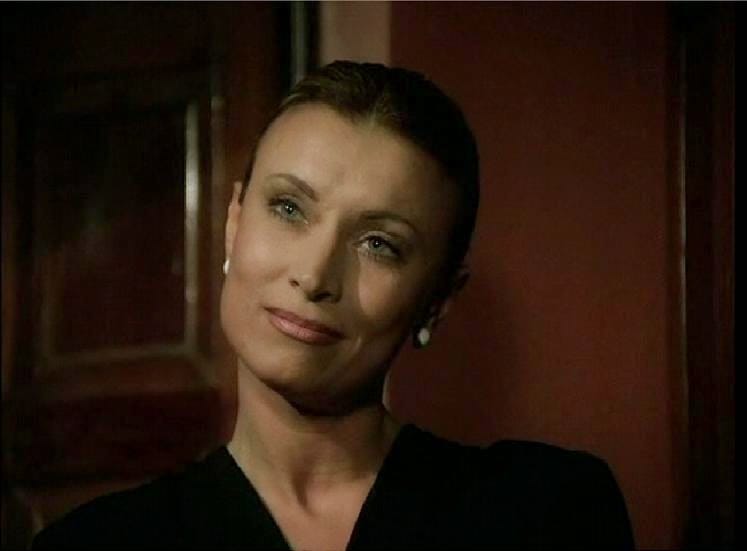
Longo was a decorated veteran at this point and a very long way from One on Top of the Other (1969) and her own brush with controversy with I, Cristiana, Student of Scandals (1971) as well as the decamerotici tryptich The Forbidden Decameron (1972), The Strictly Forbidden Decameron (Hush Now, My Dear Boccaccio) (1972), and Pranks, Liberties, and Loves of the Secret Decameron (1972). Longo’s long career encompassed, among many others, The Way Of the Dragon (1972), Ricco (1973), and the Terence Young breasts-and-games spectacle The Amazons (1973), as well as Renato Polsell’s Erotic Games of a Respectable Family (1975). When she wasn’t working with Alfonso Brescia then French production company Eurociné kept her employed. Longo partook in a number of Alfonso Brescia productions including the slapstick peplum comedy Amazons vs. Supermen (1974), the two commedia sexy all'italiana Love Affairs, Beds, and Betrayals (1975), and The Adolescent (1976) before appearing in Brescia’s infamously awful science fiction trifecta with Cosmos: War Of the Planets (1977), War Of the Robots (1978), and Star Odyssey (1979). Around the same time Malisa starred in the Eurociné productions Captive Women 4 (1977) and Helga: She Wolf of Stilberg (1977). Just a year before Longo had made a brief – albeit largely inconsequential and very nude - appearance in the post-apocalyptic actioner Urban Warriors (1987). She was a long very way from Tinto Brass’ Miranda (1985). A lot can happen in four years.
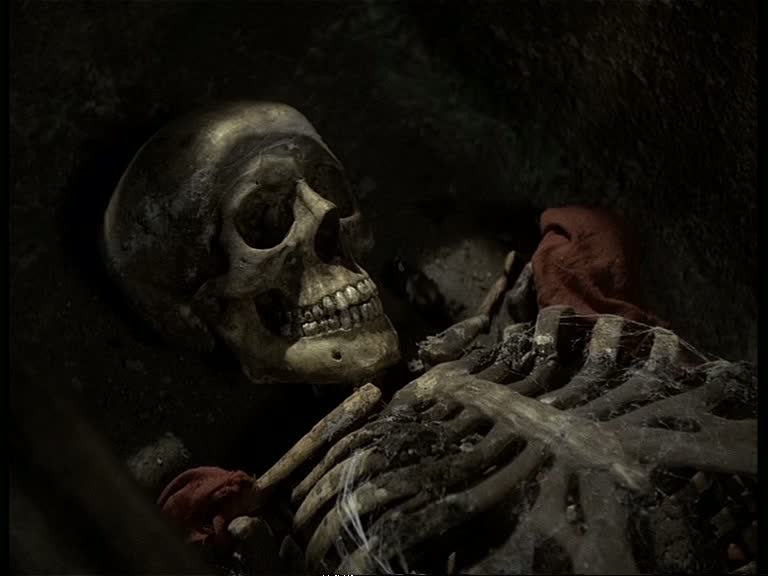
Lost in thought Riccardo Gherghi (Gaetano Russo, as Ronald Russo) (for maximum confusion the English dub calls him Richard Garlini instead) finds himself roaming the woods on the idyllic family estate and the Renaissance-era castle he has just inherited. His attention (and gaze) is drawn towards an elderly violin-playing woman. As she disappears into thin air the mystified Gherghi takes to inspecting his castle. Within the age-old stone halls, archways, and nighted galleries Richard catches the glimpse of a naked young woman gallivanting seductively in and around the ebon corridors. This beckons the nobleman to follow her into the shadow-filled depths of the labyrinthine torch-lit cellar. When he finally catches up to her she somehow produces a hitherto unseen enormous broadsword. As she turns around to face the nobleman one swing severs his head clean off his torso.
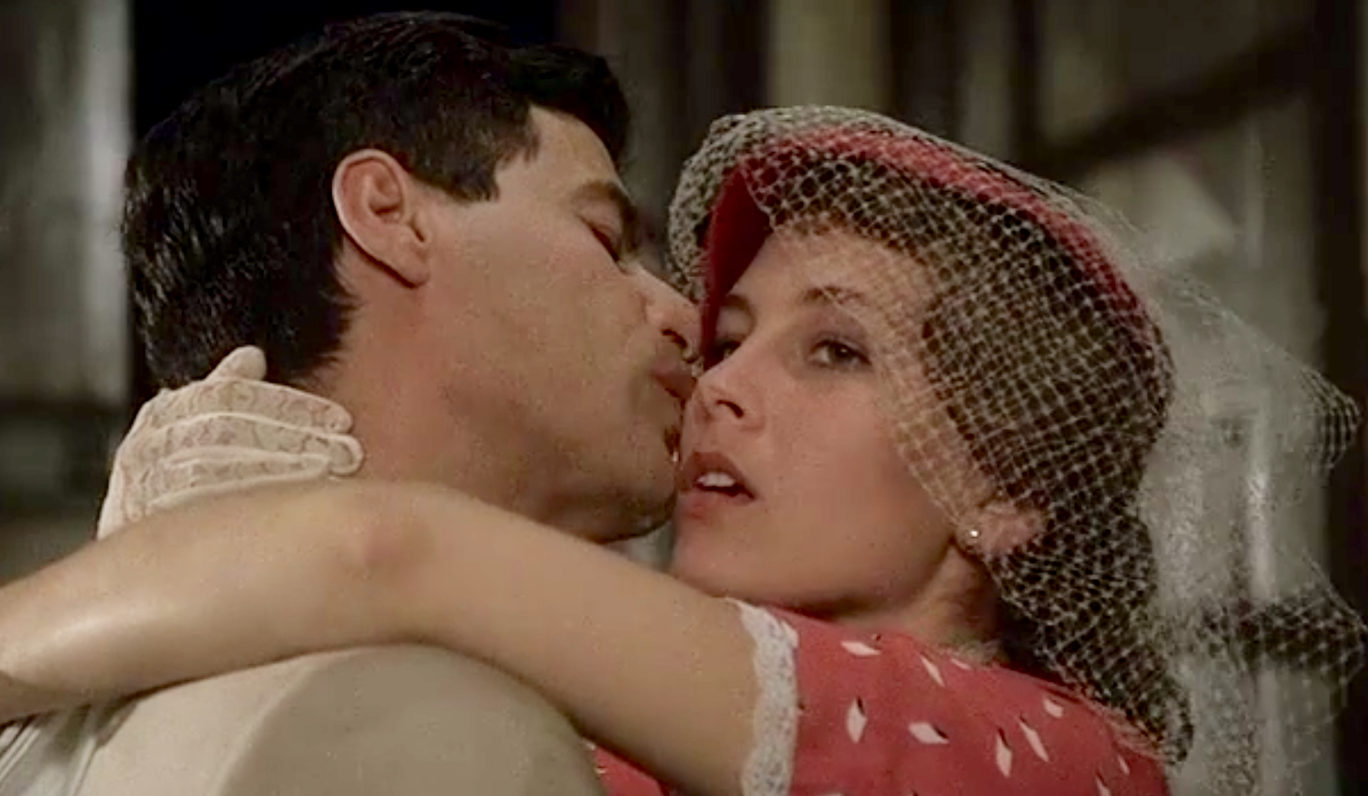
50 years earlier, in the late 1930s, the castle belonged to an ancestor his by the name of Robert Gherghi (Chuck Valenti, as Richard Brown) (to maintain the painstakingly established maximum confusion the English dub calls him Robert Garlini instead) who also took to wandering its woods. One day looking for his dog Morgan he made his acquaintance with bespectacled paintress Ramona Icardi (Lara Wendel) whom the fleabag had scared up the nearest tree. When Robert notices that Morgan’s ravenous maw has ravaged her skirt he profusely excuses himself for the canine’s wayward behavior. He insists on taking Ramona into the castle so his housekeeper Priscilla (Malisa Longo) can do the necessary repairs. Naturally the two fall madly in love and before long they are married. As the first order of business Robert hires the French Lucille (Mary Maxwell) (the English dub calls Louise instead) as Ramona’s personal handmaiden. Meanwhile Robert insists on taking very important business meetings instead of consummating his marriage. On one such urgent nightly meetings Lord Lodorisio (Claudio Pacifico), the current abbot of the order of the Red Monks, firmly instructs him that their ritual requires the blood of a virgin, preferably his wife’s.
Understandably frustrated that her husband is more interested in conducting business than in a thorough exploration of her nethers Ramona takes to feverishly painting. One day Ramona is in the woods painting when her work is complimented by the vagrant Ben (Gerardo Amato) who skulks around the property unchecked for some inexplicable reason, has been doing so quite some time, and is drawn to the property by some strange inner tide. Meanwhile Lucille takes to exploring the darkened bowels of the castle basement. An ill-timed decision carrying swift fatal consequences. Ben has an affinity for sexual assault and a degree in 15th-century Satanism but before he can divulge all the pertinent details concerning the latter to Ramona he must first engage with her in the former. Naturally Ramona offers no resistance to be ravaged by the unkempt wanderer. Instead she takes to fabricating stories to keep this from Robert who’s more concerned with when the next very important business meeting is taking place than showing even the faintest scintilla of carnal interest in her. Having properly violated the young maiden Ben chronicles the history of the castle and its occupants.
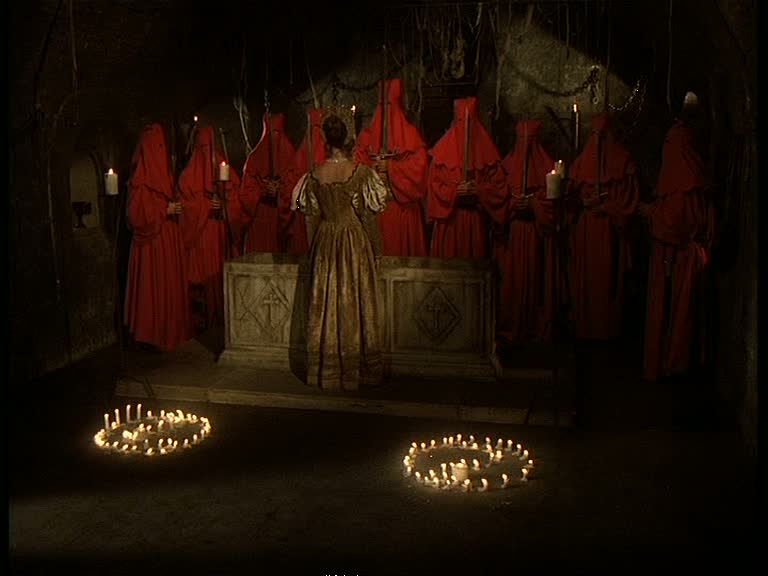
The castle was built in the 1480’s by the Grand Duke Lodorisio (Bruno Di Luia), a great warrior on the fields of battle as well as between the sheets and a member of the Knight Templar. In fact he established the splinter group of the Confraternity of the Red Monks and like their parent group the Knight Templar they too were suppressed by the Vatican for their occult and heretical practices and targeted for extermination by papal decree. Lodorisio instilled the Pope with such fear that he sent a lone knight Count Bartholomew Garlini to assassinate the Grand Duke. Wit the threat of the Grand Duke diffused the Garlini claimed the castle and estate as their own while the Red Monks went underground, quite literally in this case, seeking refuge in the castle basement. The Red Monks allowed the Garlini to live in the castle with the sole caveat of the obligatory periodic blood sacrifice to Satan, their infernal lord and master. The Grand Duke’s gypsy wife married the assassin and the two bloodlines have since been parasitically intertwined. As the sacrifice draws near Robert wonders what arcane ritual are the Red Monks conducting and of what signficance is Ramona to the ceremony? Why do all answers come at the searing blade of a cold steeled, ornately designed broadsword?
Four excruciatingly detailed plot summary can’t mask just how little actually happens and that its most inspired moments, which are rare in and of themselves, are mere allusions to older, much better Italian films. This one has the kind of familial intrigue, dysfunction and circular backstabbing you’d recognize from the Mario Bava giallo A Bay of Blood (1971) or even The Night Evelyn Came Out of the Grave (1971). There’s a coven of Satanic monks lurking in the cellar which was seen earlier in the Sergio Martino giallo All the Colours of the Dark (1972) (with Edwige Fenech), and said performing a resurrection rite for a deified ancestor? Well, that was done earlier in Renato Polselli’s psychotronic kink-horror masterpiece Black Magic Rites (1973). The whole thing bathes that sleazy, sweaty late 80s late night cable television grime that bore gunk as Knife Under the Throat (1986) and Eleven Days Eleven Nights (1987) and just about anything and everything in between. While 15th-century Satanism is one thing we prefer black magic of the 13th century, but who's keeping count?
Fulci fanatics certainly will recognize the basement-bound bloodcult, the opulent inherited abode, the family’s German shepherd pet dog, and shadowy, mysterious figures that inhabit the castle grounds. Anybody even vaguely familiar will recognize these elements from City Of the Living Dead (1980), The Beyond (1981), and The House By the Cemetery (1981). That The Red Monks on top of it all is full of heavy-handed religious imagery and features the brutal slaying of a maid, there’s little chance of it being anything else than reminiscent of far better Fulci movies made a decade or less, earlier. Unfortunately The Red Monks takes itself seriously, and wasn’t an ambitious meta-deconstruction of the gothic horror genre, or a self-reflexive commentary on Fulci’s horror body of work quite in the same way as Cat In the Brain (1990), a production that did more with even less.
There are many reasons why The Red Monks fails as a (gothic) horror movie, but the main one is that it never gets tense, let alone scary. Like Oasis Of the Zombies (1982) it suffers terribly from a pace that's beyond glacial, and what little payoff its premise delivers never justifies the buildup. The screenplay insists on a mood-setting prologue and then segues into a flashback (one that encompasses almost the entirety of the movie) and a flashback-in-a-flashback during the third act.It never bothers explaining whose flashback we are watching in the first place, and how the prologue is supposed to relate to the rest of the story. At face value it leaves The Red Monks without a single protagonist and audience identification character. Not to mention that the backstory of the Red Monks (especially their defiance of Catholic thralldom, and subsequent extermination by papal decree) are more interesting than the main plot and warranted an epic treatment on the level of either The Monk (1972) or Flavia the Heretic (1974).
The cinematography is flat and lifeless, the dubbing disinterested and disengaged. Villa Giovanelli-Fogaccia and Forte Portuense in Rome are beautiful historic locations and remain beloved tourist attractions to this day – but you wouldn’t be able to tell from this. Malisa Longo, ten years past her prime, isn’t able to do much with what little she’s given and there’s no chemistry whatsoever between Lara Wendel and any of her male co-stars. Arriving a decade late to when gothic horror was last relevant, The Red Monks tries very hard to pass itself off as a revival of sorts, but abjectly fails on any and all levels. Considering the company he kept it’s no surprise that Martucci’s career, insignificant as it was, never went anywhere.