Horror Rises From the Tomb (1973)
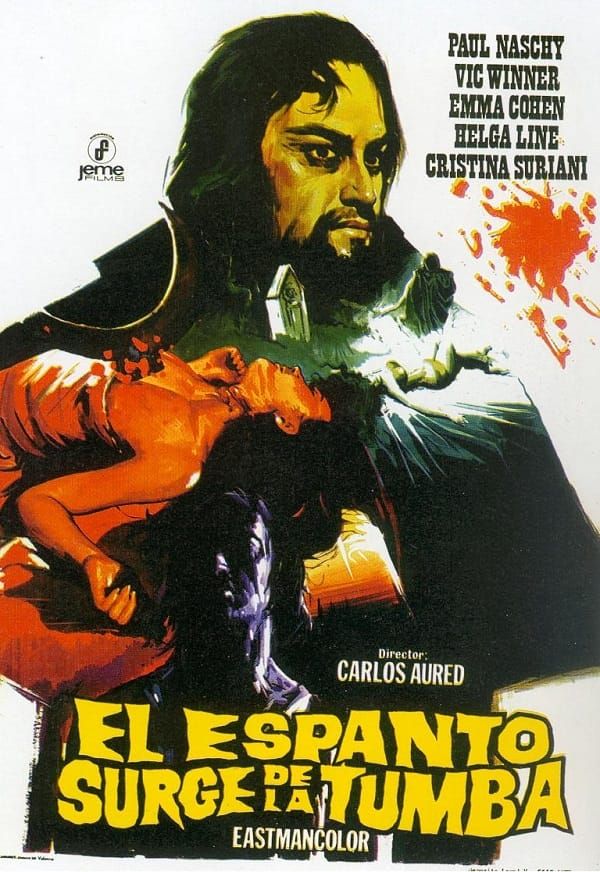
Plot: warlock seeks revenge against the descendants of his executioners.
Anybody conversant in the body of work of Paul Naschy will know that there was more to him than Universal Horror monsters and his El Hombre Lobo, Waldemar Daninsky. El espanto surge de la tumba (or Horror Rises From the Tomb para aquellos que no hablan español) is one of those occult horrors that were all the vogue in the early-to-mid seventies, and is a recombinant of several things Naschy was doing around this time. Following hot on the heels of Count Dracula’s Great Love (1973) and the preceding Curse Of the Devil (1973), Horror Rises From the Tomb is more incomprehensible insanity from the grand master of Spanish fantaterror. Something of a minor title in Naschy’s massive body of work Horror Rises From the Tomb is an atmospheric little ditty that gives a bunch of second-stringers their day in the sun. Filmed around the same time as León Klimovsky’s The Dracula Saga (1973) and re-using much of the same cast Horror Rises From the Tomb packs quite a punch for what is by all something very modest; if you go in not expecting some transcendental, life-altering experience.
As a Spanish retelling of either the Méxican sub-classic The Living Head (1963) or the American The Thing That Couldn’t Die (1958) Horror Rises From the Tomb seems forever relegated to a minor (or secondary) Naschy feature. Given that the Méxican was in Spanish we’re inclined to believe that Naschy was more familiar with that than the later US remake. Anyhow, here Naschy has gathered a spate of familiar supporting players and only one leading lady. Behind the cameras there’s Carlos Aured, director of photography Manuel Merino (who had worked steadily with Jesús Franco in years prior), composer Carmelo A. Bernaola, and special effects man Antonio Molina. The casting is about a paygrade below what you’d usually expect. Helga Liné is about the only star with some cachet and Emma Cohen was a bright star with marquee draw to spare. Betsabé Ruiz is someone you get when you can’t afford Luciana Paluzzi or Silvia Tortosa and Cristina Suriani is always a sure bet when Rosanna Yanni or Cristina Galbó prove too costly. Horror Rises From the Tomb is technically the first Spanish zombie movie as the siege in the third act was clearly inspired by George A. Romero’s Night Of the Living Dead (1968) and it preceded Jorge Grau’s The Living Dead at Manchester Morgue (1974) by a single year. Film historians and cult chroniclers seem to have all but forgotten that important little detail.
Aured became one of the key directors in the Barcelona softcore scene of 1978-83 with the shortlived Cine S or “el destape” movement. In that capacity he was one of the instigators of said movement with the likes of Ramón Fernández, Jaime de Armiñán, Jorge Grau, Mariano Ozores, Eloy de Iglesia, Vicente Aranda, and José Ramón Larraz. Aured was a frequent collaborator with Alfonso Balcázar, Ignacio Farrés Iquino, or Jaime J. Puig. Cine S were quasi-comedic soft erotic romps featuring the likes of Verónica Miriel, Amparo Muñoz, Adriana Vega, and Sara Mora. However, it was Iquino’s The Hot Girl Juliet (1981) that truly launched Cine S and Andrea Albani, a former basketball player and swimmer, before more largely similar romps sprung from the same genetic stalk. Albani wasn’t an Iquino discovery exclusively as she debuted in José Ramón Larraz’ Madame Olga’s Pupils (1980) a year earlier. After the Cine S genre collapsed Carlos Aured would return to the terror and horror genres with The Enigma of the Yacht (1983) with Silvia Tortosa and Trapped in Fear (1985). Two years later, in 1987, Aured would retire from filmmaking after the Deran Serafian directed Alien Predator (1987), for which he acted as producer, went over schedule and over budget with his American partners heaping the incurred debts from the shoot on him.
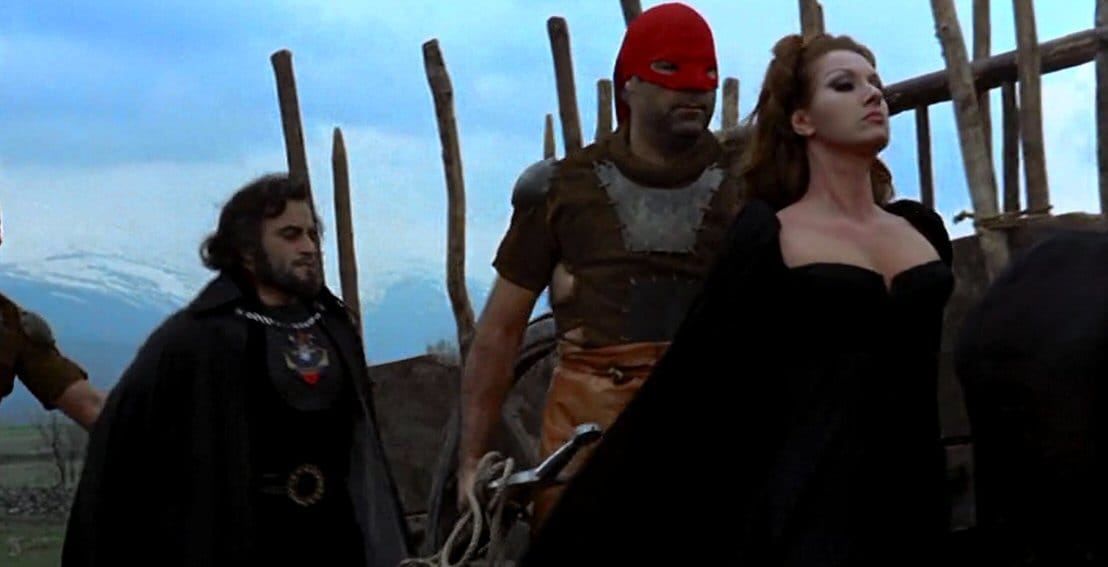
France, 1454. In the rural countryside a small procession brings knight and warlock Alaric de Marnac (Jacinto Molina Álvarez, as Paul Naschy) and his mistress Mabille De Lancré (Helga Liné) before the tribunal of his brother Armand (Paul Naschy) and his associate André Roland (Víctor Barrera, as Vic Winner). The duo is charged with witchcraft, vampirism, and lycanthropy – and sentenced to death. Alaric is to be beheaded and Mabille is hung by her ankles; stripped, tortured and, finally, killed. Before dying the duo spit defiance in de Marnac’s face and curse his bloodline and the following generation of de Marnac descendants. Five centuries later Hugo de Marnac (Paul Naschy) and his girlfriend Sylvie (Betsabé Ruiz) invite their friends Maurice Roland (Víctor Barrera, as Vic Winner) and his girlfriend Paula (Cristina Suriani) to a romantic evening in his palatial abode. Sylvia just so happens to be friends with spiritualists Jean (Julio Peña) and Gail (Montserrat Julió). Through their mutual association the friends seek an audience with medium Madame Irina Kormorova (Elsa Zabala) and arrange a séance to evoke the spirit of Alaric de Marnac. De Marnac speaks of a treasure hidden deep within the monastery on the Villas de Sade estate.
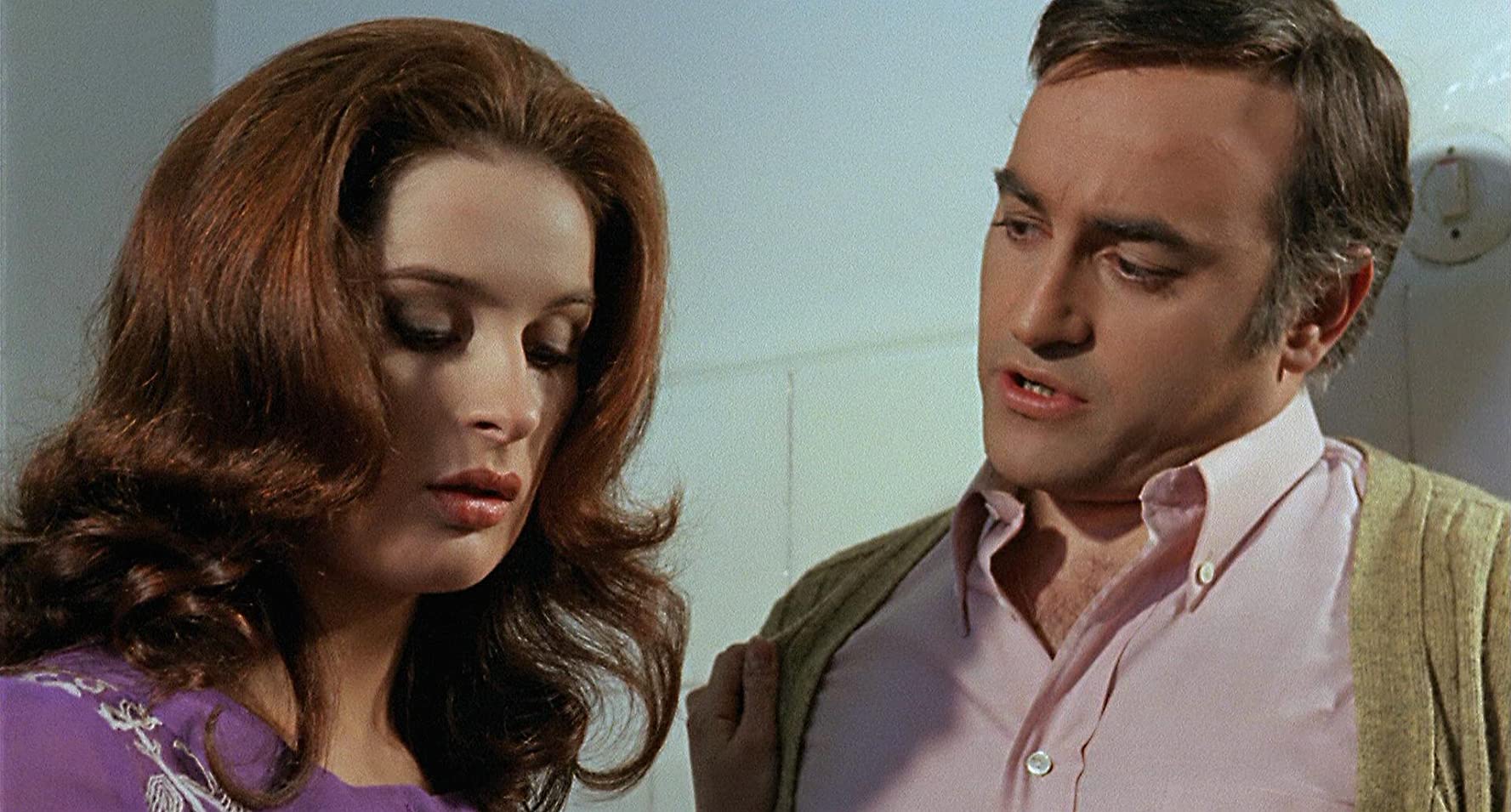
On one of the smaller countryroads en route to the Villas de Sade estate Hugo, Sylvie, Maurice, and Paula are suddenly ambushed by some would-be robbers. They are saved in the nick of time by local armed strongmen André (Ramón Centenero, as Ramon Centenero) and René Govar (Francisco Llinás, as Francisco Llinas). The men are promptly recruited as laborers on the improvised archeological dig on Villas de Sade. Looking after the estate is groundskeeper Gaston (Juan Cazalilla) and when he catches one of the laborers (Luis Ciges) trying to steal the chest from the day’s excavation he’s promptly killed for his trouble. This prompts his daughters Elvire (Emma Cohen) and Chantal (María José Cantudo, as Maria Jose Cantudo) to come the château. In rapid succession Chantal is killed, and Paula is abducted by the possessed laborers. When Maurice goes looking for Paula he too falls under the spell of Alaric and abducts Sylvie to use her in a necromantic ritual to revive De Lancré. Now both resurrected Alaric de Marnac and Mabille De Lancré summon a horde of undead to stop Hugo and Elvire. Out of the blue Elvire remembers the Thor’s Hammer, an ancient family heirloom. Before unleashing the heirloom’s magickal powers Hugo is killed by a possessed Maurice. Will the power of the Thor’s Hammer be enough to stop the malefic Alaric and Mabille?
Of course Naschy was going to end up with a bevy of babes on his arm. While Horror Rises From the Tomb isn’t quite as memorable as it probably ought to be the cast is filled with familiar faces. More importantly, just like Girl Slaves of Morgana Le Fay (1971) before it, it is redhead heaven. First, there’s Helga Liné who was a pillar of Meditterranean horror and a regular in Spanish fantaterror. Ten years after The Blancheville Monster (1963) Liné is at the height of her sensuality. Second, our personal favorite Betsabé Ruiz - forever relegated to secondary and supporting parts - is for once given a lead role with lots of dialogue and a part that doesn’t just require her to take her top off, although that happens too. Liné and Ruiz had starred in several productions together by 1973 although seldom on equal footing or billing.
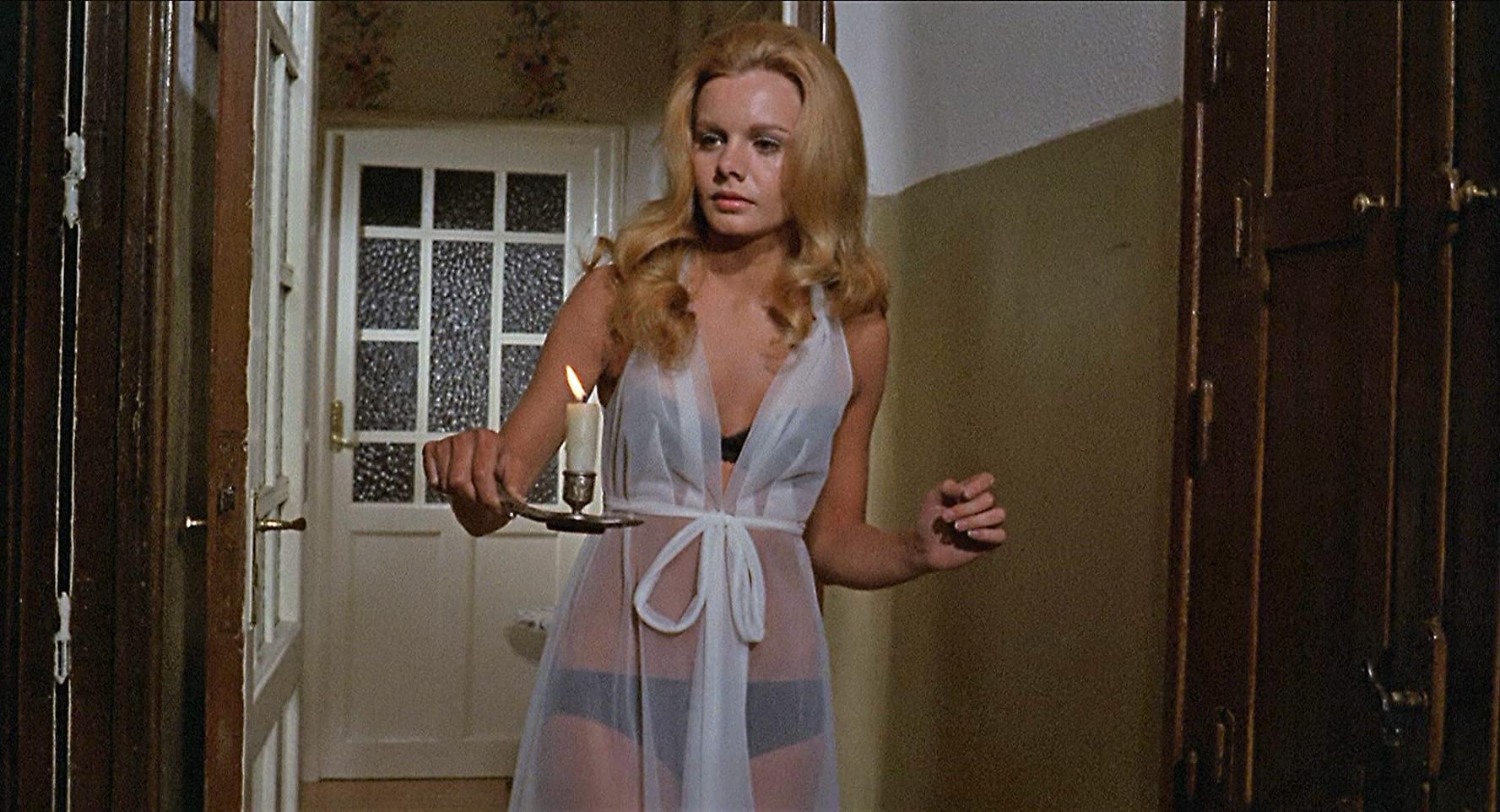
In both The Loreleys Grasp (1973) and The Dracula Saga (1973) Liné was the lead, Cristina Suriani inevitably received only second billing and Ruiz was in the perennial purgatory of either much smaller, supporting roles or merely decorative ones that usually culminated in taking her top off without speaking a single line. Suriani never quite ascended to leading lady status and fortunately Horror Rises From the Tomb shows that Suriani could carry a production on her own. The odd woman out is Emma Cohen, a former comedic star that somehow ended up in fantaterror – and horror cinema. Cohen was a few years away from appearing in Jesús Franco’s The Other Side Of the Mirror (1974) and John Gilling’s The Devil’s Cross (1975). Either way Emma Cohen is Naschy’s prerequisite damsel-in-distress and in a puzzling bit of editing Hugo goes from being Betsabé’s lover to Cohen’s in mere moments in between scenes. It was the big screen debut for María José Cantudo who would go on to have a long and steady career in Spanish cinema and later on television.
Horror Rises From the Tomb was willed into existence to pull ailing production company Profilmes from the brink of bankruptcy. The company had invested in a bunch of high-concept dramas and arthouse features that fared abysmally at the box office and failed to turn a profit. Thus, sufficiently in dire straits both financially and morally, Profilmes called upon Paul Naschy to conceive a surefire hit on a modest to low budget to ward off impending financial ruin. Paul Naschy had seen Carlos Aured work as assistant director under Léon Klimovsky on his fourth El Hombre Lobo feature The Werewolf Versus the Vampire Woman (1971). Klimovsky couldn’t possibly commit to the project since he was filming The Dracula Saga (1973), The Vampires' Night Orgy (1973), and Vengeance of the Zombies (1973) around the same time. Carlos Aured was not one of Spain’s more prolific filmmakers, amassing a filmography of a modest 15 movies in 12 years. Aured started out in the 1960s as an assistant director to, among others, León Klimovsky where his association with Paul Naschy started. Naschy and Aured would collaborate on the giallo Blue Eyes Of the Broken Doll (1974), and The Mummy’s Revenge (1975).
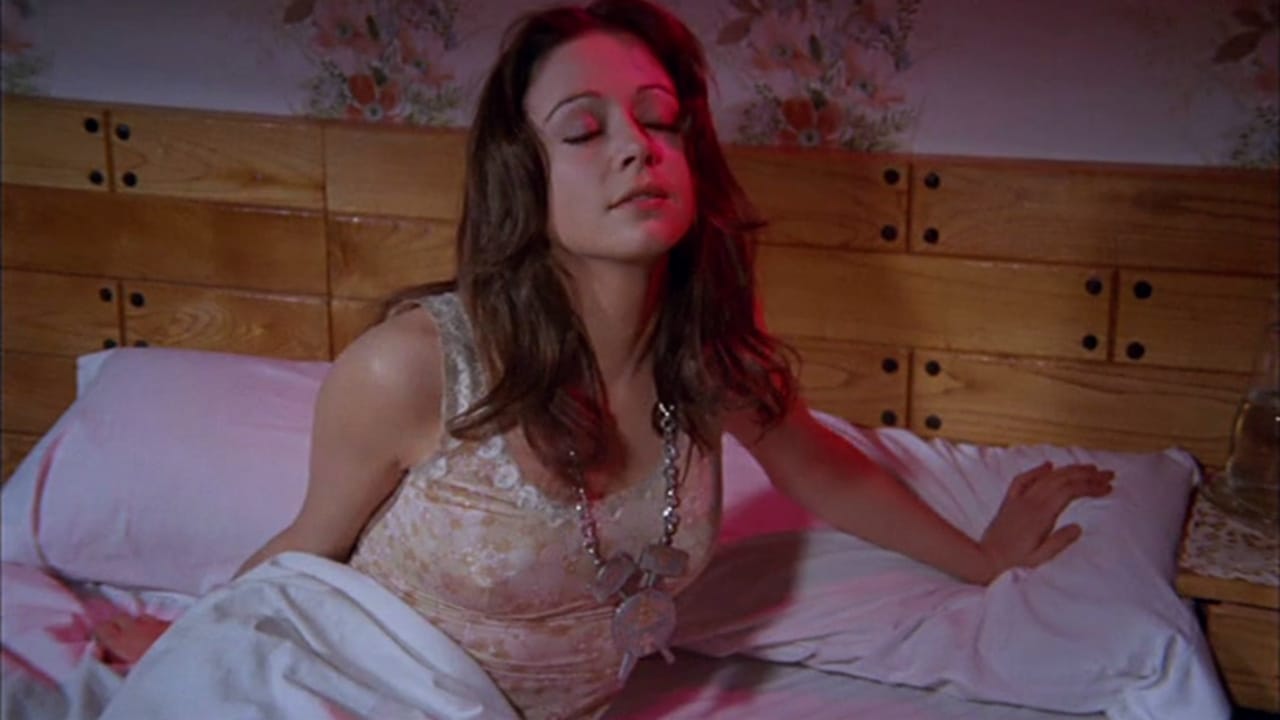
According to historical accounts, Naschy wrote the screenplay in a day and a half, and to save costs it was shot on location on his parents’ estate in the Lozoya Valley, north of Madrid, in the municipality of Rascafría. Horror Rises From the Tomb was the hit Naschy hoped it would be and disaster was averted. For the next few years Profilmes continued to exist as a low budget horror pulp factory. Horror Rises From the Tomb was part of a mini-wave of Iberian occult horrors that shared the same grimy and earthen visual aesthetic. As such it fits neatly with Necrophagus (1971), Curse Of the Devil (1973), and The Vampires' Night Orgy (1973). Perhaps it’s too much of archetypical Naschy to put it in the same category of genuine curios as A Bell From Hell (1973) and The Witches Mountain (1972).