Hapkido (1972)
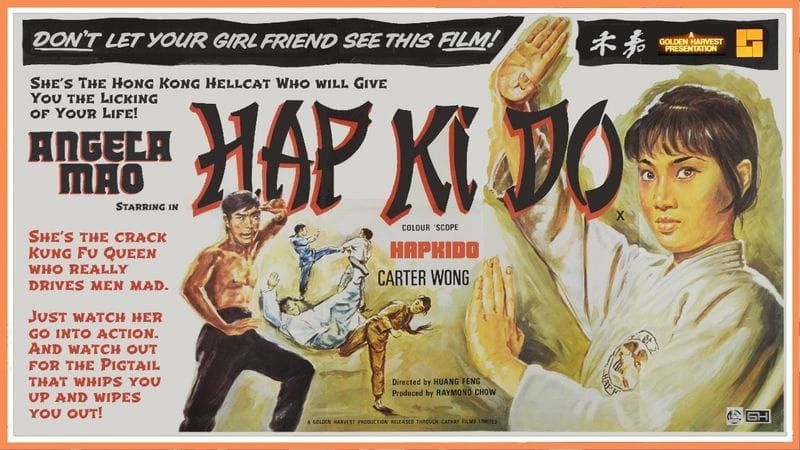
Plot: promising young student avenges the slaying of her master.
Everything was different in Hong Kong martial arts cinema in the 1970s. By 1970 General Investments Limited (or MP&GI, better known as Cathay) had ceased operations and Yau Kiu Films Company found itself overshadowed by the towering behemoths Shaw Brothers and Golden Harvest. Connie Chan Po-Chu, Josephine Siao, and Cheng Pei-pei were the martial art action stars of the sixties, but with a new decade come new stars. These were Angela Mao Ying and Chia Ling. Mao was the martial arts star of the seventies. Hap Ki Do (合氣道 back at home and rather confusingly Lady Kung Fu in North America) is an early entry in Mao’s filmography, a showcase of her hard-hitting, acrobatic, and gracefully savage style and the one from whence she derived her pet name. It has the distinction of being the second of four productions helmed by director Feng Huang and not only features an array of old and new stars, but also is custodian to spectacular action choreography by the then up-and-coming Sammo Hung Kam-Bo, soon to be a force of his own, and Taiwanese Shaolin leading man Carter Wong Ka-Tat.
As the sixties gave way to the seventies and Connie Chan announced her retirement there was the need for a new female action star. She was Angela Mao Ying (茅瑛). Ying was born Mao Ching Ying in 1950 as the third in a family of eight. Before enrolling at the Taipei Foh Sing Opera Academy, the institution owned by her father Mao Yung Kang, in Taiwan in 1958 Angela attended ballet classes. At the tender of 12 she toured 24 American cities with the Academy. At the Peking Opera Mao trained for the next 8 years and prior to becoming an action star Angela was a Chinese opera actress. Mao was well-versed in multiple martial arts disciplines including the Chinese wushu (武術) as well as in the Korean arts of taekwondo (태권도), and hapkido (합기도) (wherein she held a black belt). At this point Angela’s reputation as a consummate martial artist soon preceded her and reached the ears of Golden Harvest executive Raymond Chow. While word got out to Chow it was director Feng Huang who discovered Angela Mao at age 17. Huang had a nose for finding new talent having discovered Sammo Hung Kam-Bo and Carter Wong Ka-Tat prior. During her prime in 1973-75 Angela Mao was frequently dubbed “the female Bruce Lee” and a quote famously attributed to her was: “When I was a somebody, Jackie Chan was a nobody.” Further immortalizing her legacy is the fact that she served as the inspiration and model for Ling Xiaoyu of the popular Tekken video game franchise.
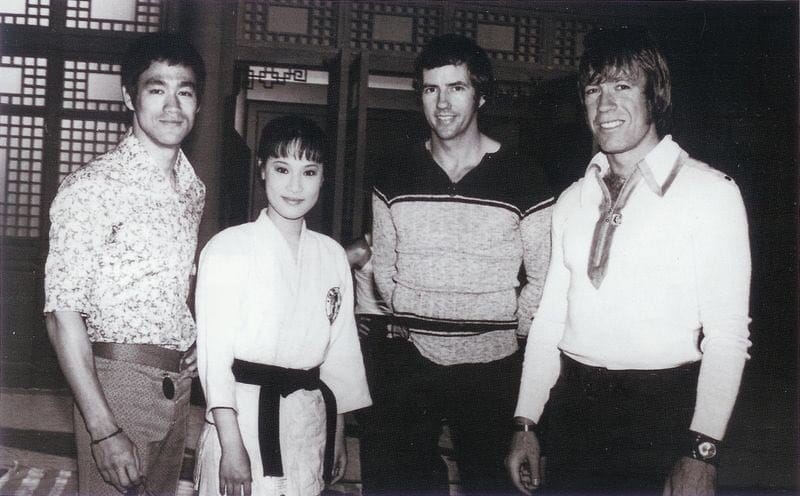
Hapkido was an important title for the then-new Golden Harvest, the company founded by Shaw Brothers exiles Raymond Chow and Leonard Ho in 1970, who just the year before had contracted a new martial arts star by the name of Bruce Lee. Lee had declined an offer from Shaw Brothers and signed with Golden Harvest instead because of the better pay and greater creative freedom it allowed its talent. Golden Harvest dominated the Hong Kong box office through the 1970s and 1980s and introduced the Western world to the likes of Bruce Lee, Jackie Chan, and Sammo Hung. The Bruce Lee vehicle The Big Boss (1971) had positioned Golden Harvest as a competitor. Lee would visit Mao the set of Hapkido in company of Americans Chuck Norris and Bob Wall and, duly impressed by her hard-hitting technique, offered Angela a part in his Enter the Dragon (1973). While the remainder of her output isn’t as well-known Angela Mao found international fame in the part of Bruce Lee's doomed sister in Robert Clouse’s action classic. Director Feng Huang had worked with Angela Mao earlier on the period costume martial arts epic The Angry River (1971) and would so again with the more low-key but efficient Lady Whirlwind (1972), When Taekwondo Strikes (1973), and The Tournament (1974). Each a showcase for Mao’s gracefully wrecking technique. Strangely when Bruce Lee passed away early a slew of pale male imitators vied for the throne Mao was destined to usurp.
In Gyeongseong (경성) (present-day Seoul), Japanese-occupied Joseon (조선) (present-day South Korea) in 1934 Hapkido grandmaster Shih Kung-chan (Ji Han-Jae) from Eagle School of Hapkido explains the principles of the discipline to his class congregating in his dojo, and specially to three of his most gifted students. He explains to Yu Ying (Angela Mao Ying), Kao Chung (Carter Wong Ka-Tat), and Fan Wei (Sammo Hung Kam-Bo) that they will act as delegates and instructs them to start their own Hapkido dojo in China. Through no fault of their own the trio soon find themselves on a collision course with the competing Japanese Black Bear School of Karate. Things do not improve after Fan Wei gets into an altercation with two drunken Black Bear students (Suen Lam and Bruce Leung Siu-Lung) when he defends miss Sau (Nancy Sit Ka-Yin) from their unwanted advances at a local eatery. If the restaurant owner (Hao Li-Jen) and waiter (Tsang Choh-Lam) are to be believed the Black Bear students have seized control of the town and actively occupy it through their apparent unrelenting reign of terror. Black Bear delegates then threaten Yu Ying before coming to a brawl at the market. After Kao Chung is ganged up upon and injured during a diplomatic courtesy visit at the Black Bear School of Karate and Fan Wei is killed in the following altercation Yu Ying, ever the pragmatist and pacifist, is left with no other diplomatic or non-violent option. Now she’s cornered and forced to defend not only her friends, but also the remaining village dojos that have united in a front behind her, as well as the honor of Hapkido itself from the imperialist Japanese oppressor.
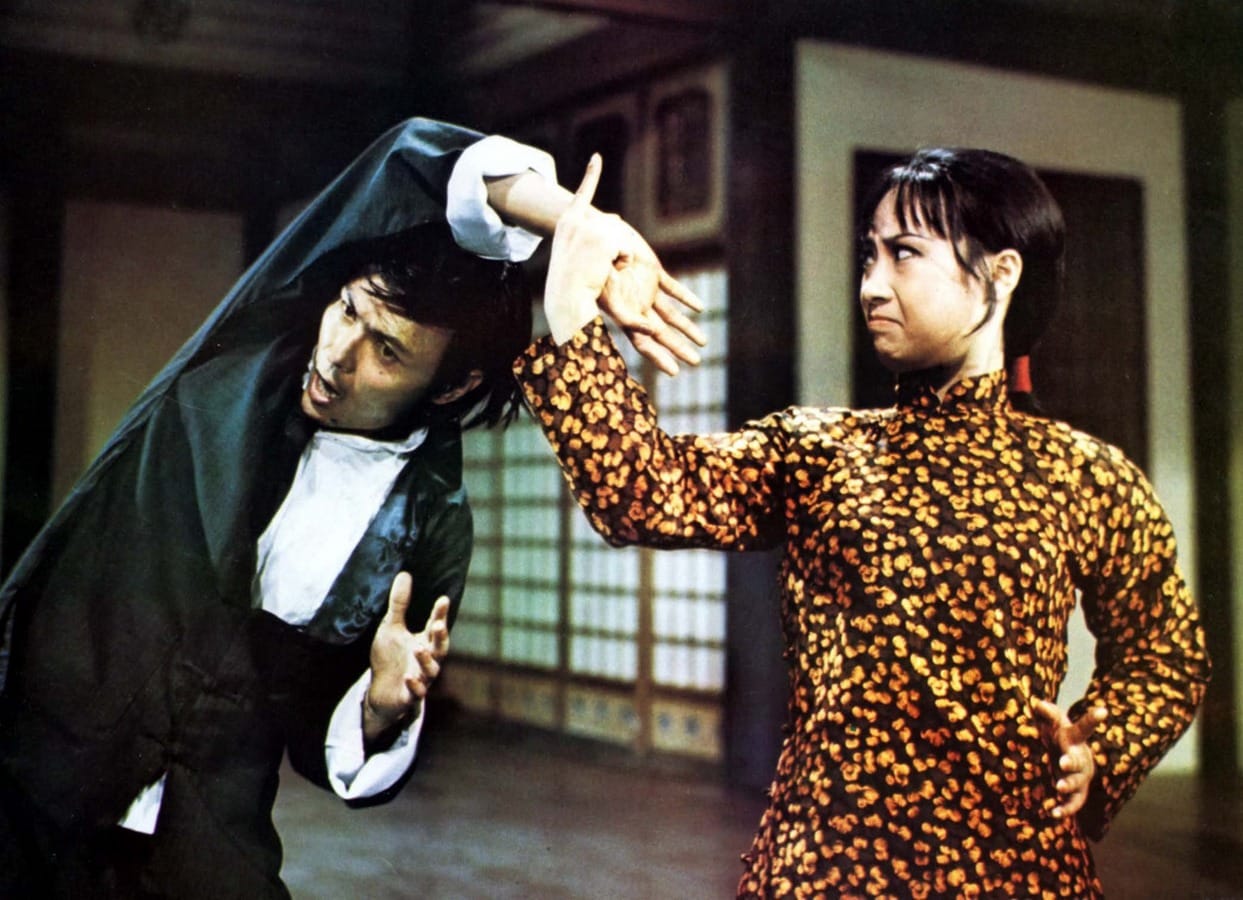
To say that Hapkido is filled to the gill with talent would be an understatement. The energtic action choreography from Sammo Hung Kam-Bo evinced that he was destined for stardom in his own right as a stuntman, actor, and later producer and director. A young Jackie Chan, Corey Yuen Kwai, and Yuen Baio can be seen among the many extras. South Korean Ji Han-Jae (지한재) - one of the founding teachers of hapkido and one of the highest ranking instructors in the disclipine - not only stars as Mao’s honored grandmaster in the movie, but actually trained Mao in the art of hapkido when she was younger. Earlier that year he had featured in the Bruce Lee classic Game Of Death (1972). Hapkido is all about efficiency and to that end it all but recycles the plot to Bruce Lee’s Fist Of Fury (1972) for maximum impact. Evidently no expense was spared and Golden Harvest made sure that every renminbi (人民币 or RMB) was on the screen. The production design, cinematography, and period costumes are well above average. Mao is a one-woman wrecking crew and the action choreography from the young Sammo Hung Kam-Bo evinced that he was a superstar in the making. As this was set in the midst of the Korean independence movement (1919-1945) Hapkido pushed a completely understandable “the Japanese are bad” plot.
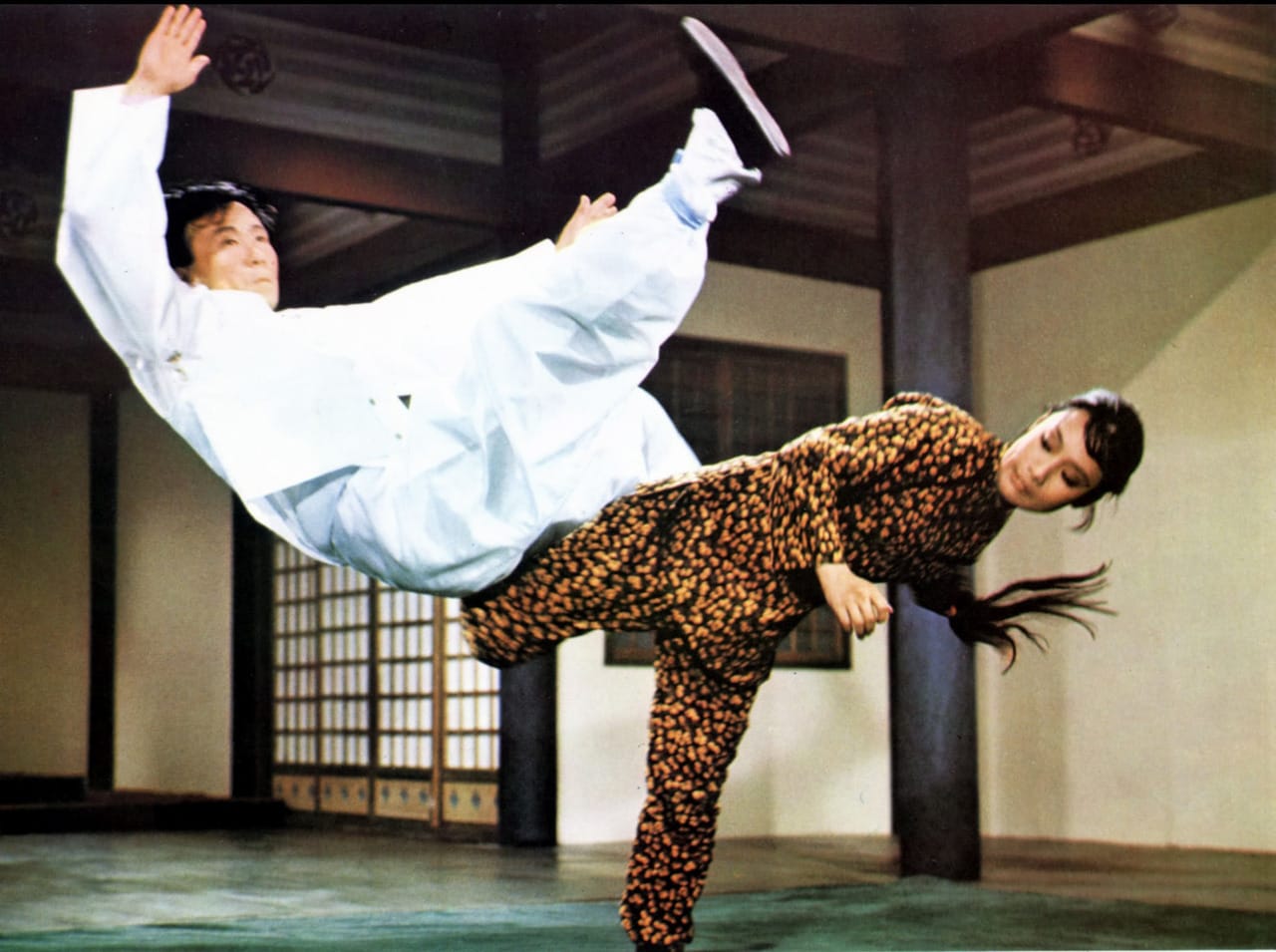
The reason to see Hapkido is, of course, Angela Mao Ying. As Yu Ying is a diplomat that only resorts to violence, despite continual harassment and intimidation, after all other possible peaceful options have been exhausted. It isn’t until both her partners are either incapacitated or killed and her grandmaster is murdered that Yu Ying goes on the defensive. Angela Mao Ying has but a handful of fight scenes yet each is more intense and hard-hitting than the next. Whether she’s fighting thugs and goons seperately or in group, by hand or with a weapon – or with her pigtails; Mao is a joy to behold as the mousy little woman that the Black Bears underestimate every step of the way. It’s something the West never quite figured out (although things have been improving ever so slightly in recent years) but what the East understood more than half a century ago. Nothing is more impressive and awe-inspiring than a woman meting out carnage that makes her male counterparts pale in comparison. Lady Whirlwind (1972), When Taekwondo Strikes (1973), and The Tournament (1974) all would make Mao the central character and make her fight scenes their entire raison d'être. Mao might not have been the first of her kind, but she’s certainly the most memorable. If it wasn’t for Mao we would’ve never known Girls with Guns action stars Michelle Khan (later Yeoh), Moon Lee Choi-Fung, Cynthia Khan and Yukari Oshima.
The female avenger, whether she brandishing a katana or just her naked fists, is one of the persistingly enduring ur-characters of Asian cinema at large and one that has been consistently and continually reinvented as the decades wore on. From Connie Chan Po-Chu in Supreme Sword (1969) and Yōko Matsuyama in the gender-swapped The Tale of Zatoichi (1962) derivate Crimson Bat, the Blind Swordswoman (1969) and Meiko Kaji in Lady Snowblood (1973) or Etsuko Shihomi in Sister Street Fighter (1974) to Loretta Yang Hui-shan in Taiwanese chunkblower The Challenge of the Lady Ninja (1983). In mid-1980s Hong Kong it was brought into the then-contemporary age with the Girls with Guns subgenre after which the inevitable Quentin Tarantino reimagined the katana-wielding avenger with Uma Thurman and his two-part Kill Bill (2003-2004) mini-saga. That, predictably, led to a modest deluge of imitations the best of which is probably Ichi (2008) with Haruka Ayase from My Girlfriend Is A Cyborg (2008). Lesser imitations were bound to follow whether it was Minami Tsukui in Geisha Assassin (2008) or Rina Akiyama in Psycho Gothic Lolita (2010). In one degree or another they all owe part of their existence to Mao.
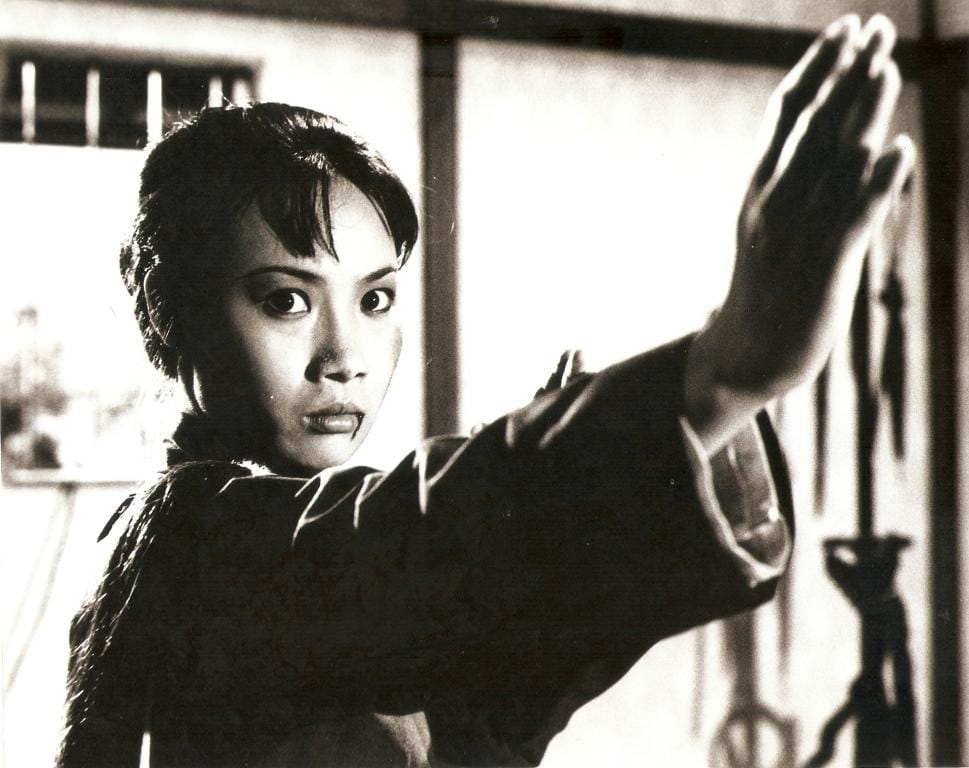
Hapkido is the best early Angela Mao Ying features tend to get. Once the main characters are set up and their alliances/rivalries explained it gets right down to the action. Sammo Hung Kam-Bo, Carter Wong Ka-Tat, Ji Han-Jae all partake in the action next to Mao Ying and each prove why they went on becoming stars later on. Action is plentiful and hard-hitting and the international English language version isn’t too shabby, although subtitled original versions are always preferable. Golden Harvest knew they found their new star with the discovery of Angela Mao Ying and Hapkido is testament to that. Her window as reigning martial arts star was a brief three years but in that time Angela Mao Ying starred in enough productions to cement her legacy as the definite martial arts superstar of the seventies. It set Golden Harvest on the path to domination and proved that Raymond Chow and Leonard Ho could defeat the hulking Shaw Brothers studio at the very game they had defined up to that point. Hapkido is a highly recommended piece of Hong Kong martial arts history that isn’t to be missed.