Hong Kong 97 (1994)
Plot: corporate assassin is targeted for extermination
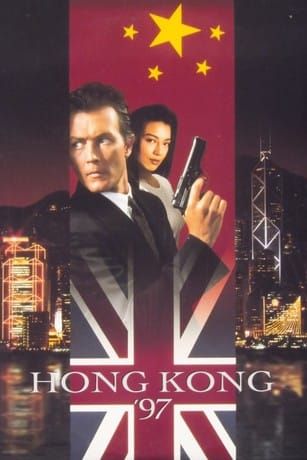
Over the years Hawaiian pulp director Albert Pyun has dabbled in realistic, non-cyberpunk scenarios to often varying results. Hong Kong 97 wasn’t the first of such ventures, but has become memorable for all the wrong reasons. With two name stars, an assortment of regular working stiffs, Hong Kong 97 is Pyun’s attempt at political intrigue set against the transfer of sovereignty over Hong Kong from London to Beijing in on the eve of 30 June 1997. Hong Kong 97 is neither thrilling, insightful, nor action-packed. What was supposed to be a tale of deception, betrayal, and shifting loyalties is in actuality something of a tedious bore. As always with Pyun the properties he imitates tend to be better than the movie he ends up shooting. Hong Kong 97, despite its star power, is unfortunately no different.
In 1986-1987 Robert Patrick starred in four movies by Filipino action mogul Cirio H. Santiago, the master of topless kung fu, before landing a bit part in Die Hard 2 (1990), which led to a starring role in Terminator 2: Judgment Day (1991). Patrick starred in the critically savaged video game adaptation Double Dragon the same year. Ming-Na Wen was Jing-Mei Chen in long-running medical series ER (1994–2009), Chun Li in the Jean-Claude van Damme video game adaptation Street Fighter (1994), and was part of One Night Stand (1997) from Leaving Las Vegas (1995) director Mike Figgis. Wen would built the rest of her career on voicing Disney princess Mulan. Pyun regulars Tim Thomerson, Brion James, Andrew Divoff, and Chad Stahelski appear in supporting roles. Kickboxer (1989) alumnus Ming-Yang Li plays a supporting role as Katie Chun’s father Chun, which about as far as humor in Pyun’s work tends to go. Hong Kong 97 was the first English language movie for Malaysian model-turned-actress Selena Mangh, who would also work with Albert Pyun on the cyberpunk martial arts romp Heatseeker (1995).
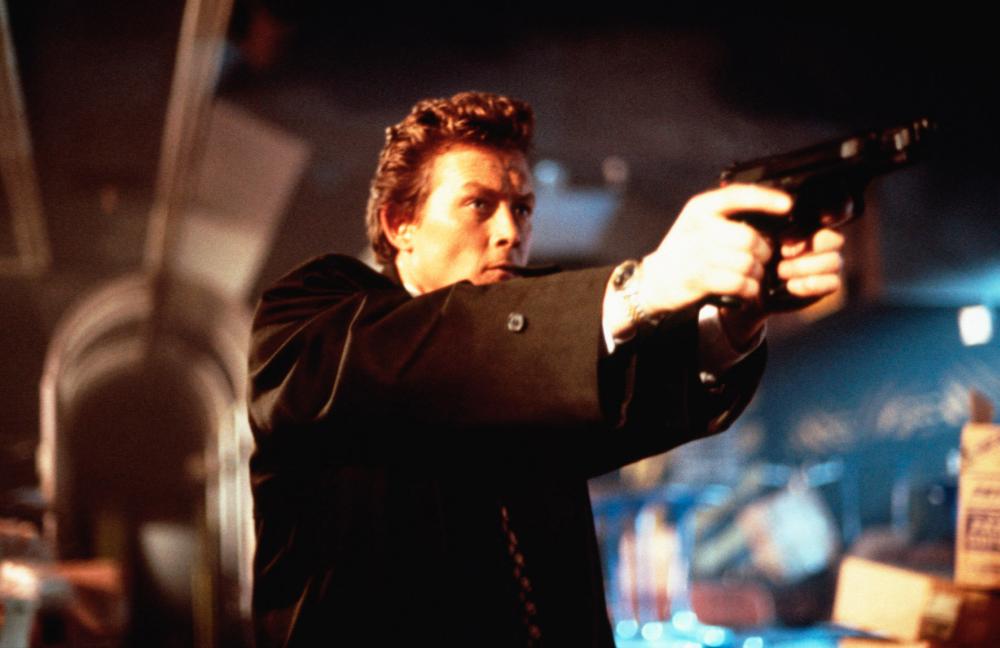
In Hong Kong on June 30, 1997, the eve before the transfer of sovereignty from Britain to The People’s Republic of China, corporate assassin Reginald Cameron (Robert Patrick) is tasked with the slaying of a high-ranking Chinese PLA officer acting as a diplomat, one General Woo (Nonong Talbo). In the colony Cameron hooks up with his Chinese liaison Li (Selena Khoo, as Selena Mangh) and soon the two engage in horizontal mambo before warding off a swarm of assailants in the buff. With Sherwood Industries swiftly closing ranks Cameron searches out his former lover Katie Chun (Ming-Na Wen) in hopes of clearing his name. Meanwhile Jack McGraw (Tim Thomerson) , Cameron’s oblivious friend, and Sherwood executive Simon Alexander (Brion James) help Cameron where they can. Outnumbered and outgunned by the goons from Malcolm Goodchild (Andrew Divoff) and mercenaries alike Cameron must flee from China before the completion of the power transfer locks him in permanently.
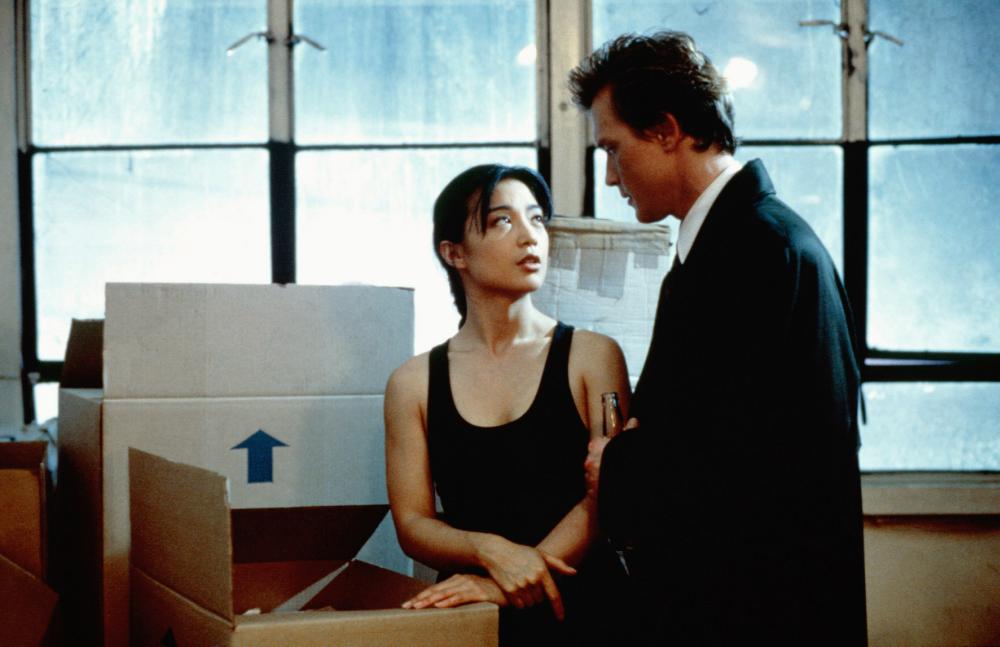
Hong Kong 97’s biggest sin isn’t so much that anything that what it portrays is, for the most part unlikely, and frequently improbable; but that the way which it is delivered is so unforgivingly banal. Two years after the derivative but striking Nemesis (1992) Pyun has sunken to depths from which he would never recover. The screenplay by Randall Fontana, who played a bit part in The Lawnmower Man (1992), fares as well as you’d expect of a novice writer. That he’d end up working with the producers and directors of dubious merit as Albert Pyun, Albert and Charles Band, and David DeCoteau seems only just in retrospect. The pithless shoot-outs make the low budget action movies from Fred Olen Ray and Allan Holzman look lively and exciting in comparison. Only Terri Conn, who played a bit part as one of Katie Chun’s students, has built a steady career in television after being in a trio of Albert Pyun movies, of which Hong Kong 97 was the second.
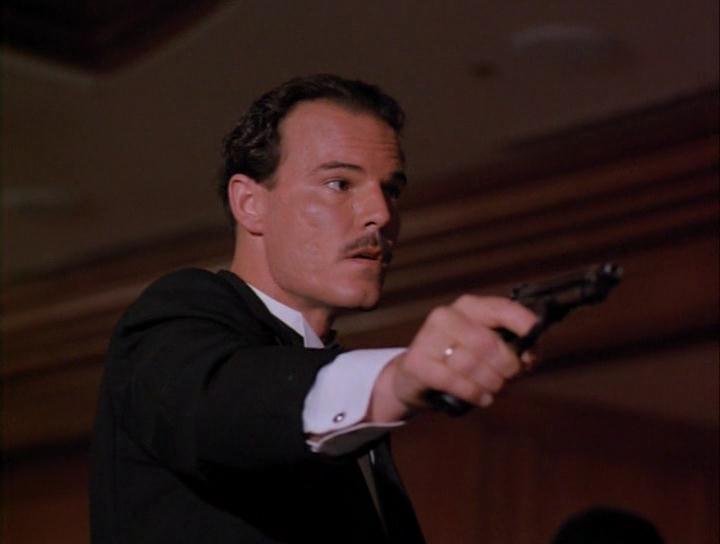
That Hong Kong 97 turned out as meager as it did is hardly surprising. Based upon a screenplay by Randall Fontana, and shot back-to-back with the Bond imitation Spitfire (1995) and the cyberpunk martial arts romp Heatseeker (1995), Hong Kong 97 tries to capitalize on the Hong Kong action craze of the day, and fails rather spectacularly in the process. The opening shoot-out gives the mistaken impression that Hong Kong 97 aims for Naked Killer (1992) styled over-the-top action, but focus soon shifts more towards general political intrigue. Fontana nor Pyun know how to effectively handle the political angle, relegating it to the background almost as quickly as it is introduced. Within the first few minutes one is treated to the bare posteriors of both Selena Mangh and Robert Patrick, and in a scene not much later all three male characters are getting a rubdown in a local massage parlor. While there’s no shortage of bare skin, regretfully none of it involves Ming-Na Wen. The sheer amount of naked flesh cannot save Hong Kong 97 from failing on a fundamental level. It’s business-as-usual for Pyun and he has no interest in engaging with the subject matter he has chosen as the background for this limp genre exercise.
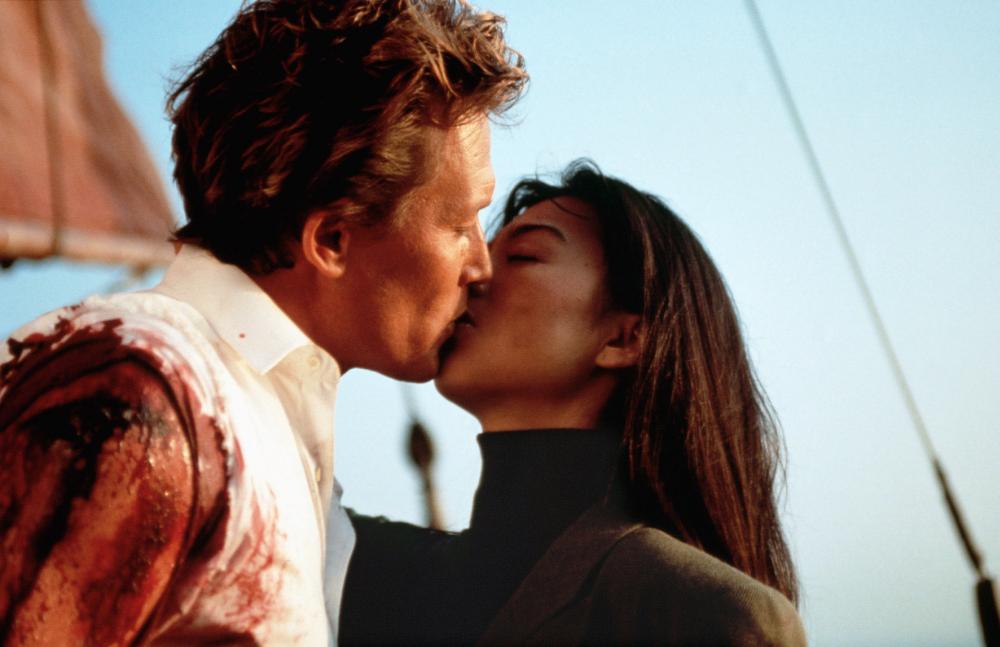
Robert Patrick, who should have become a bigger action star after his roles in Die Hard 2 (1990) and Terminator 2: Judgment Day (1991), makes the best of what little he is given. He is at least given the opportunity to lock lips with both Ming-Na Wen and Selena Mangh, and elevates his character’s scenes with Pyun regular stiffs Divoff, James, and Thomerson. Ming-Yang Li’s role as Katie Chun’s father amounts to nothing more than a glorified cameo. Wen’s performance in Hong Kong 97 is better than it probably warrants, or deserves, but after that year’s big-budget debacle Street Fighter (1994) anything would be a step in the right direction. Divoff does his usual bad guy routine, and it’s hard to gauge how invested he was in the project. The action is as stilted as the dialog that surrounds it – and when Hong Kong 97 concludes it has made no statement about the social, economic, and geo-political changes that the transition of power represents. That the caption at the end gives the wrong date (June 30 instead of July 1) is exactly the sort of error one would expect of a director like Albert Pyun. Oh well.