Opera IX - Veneficium
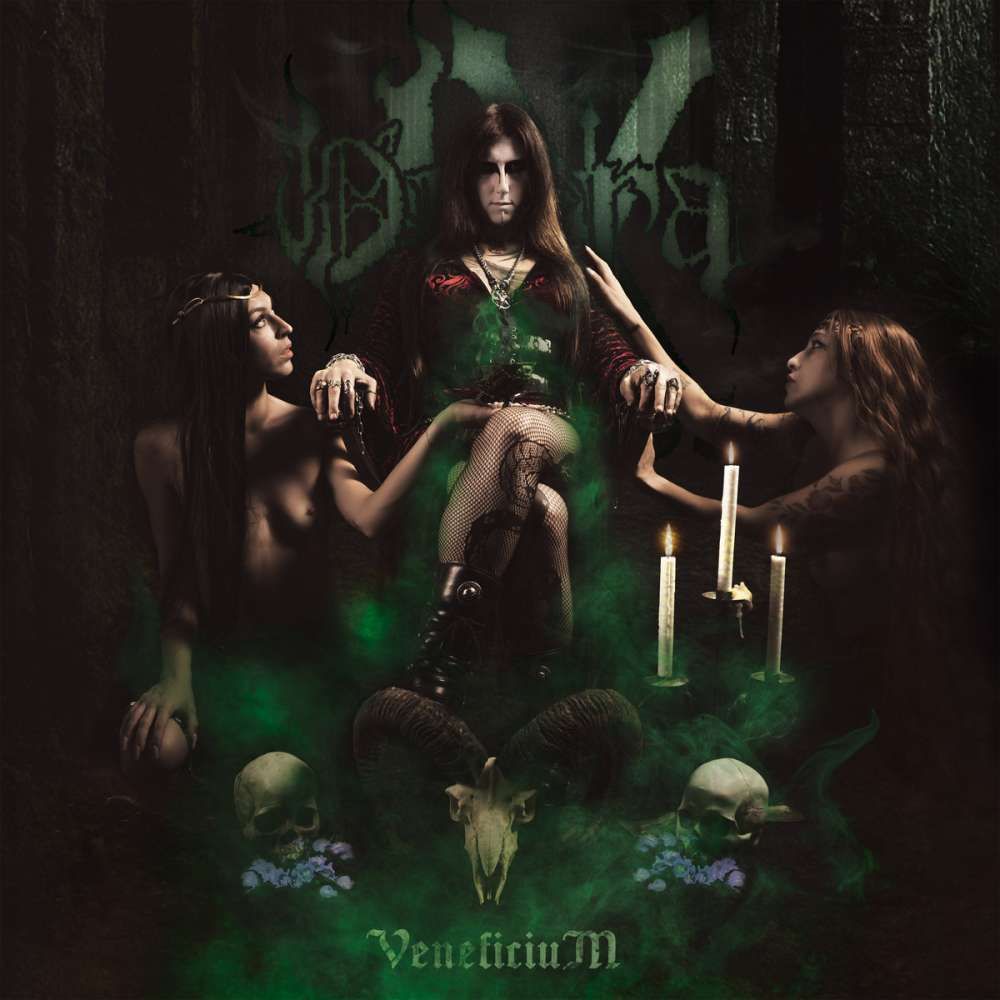
Our on-and-off love affair with Piedmont, Italy-based necromancers of the ancient arts and dark metal pioneers Opera IX has been intense, passionate - if not somewhat turbulent. “Veneficium” arrives after a protracted, eight year absence while it slowly gestated in the mind of its creators. Amassing a respectable 8 proper albums and a slew of demos, splits, and smaller companion releases over 36 years is no small feat. As a curator Ossian D'Ambrosio is more of a preservationist rather than an innovator and his band has remained staunchly loyal to their sound and seemingly impervious to trends, whims, and the pangs of old age. Opera IX has never professed to be the most prolific or productive. They only emerge from their shadowed catacombs when and where they have something of relevance to contribute. “Veneficium” is the first to embark on a semi-conceptual route and their best produced in many a moon.
Forming in the distant days of 1988 in Italy guitarist and main composer Ossian D'Ambrosio went through the usual personnel changes and stylistic explorations before arriving at the prime original line-up. Their debut “The Call Of the Wood” had some similarities to early Rotting Christ, particularly “Thy Mighty Contract” and “Non Serviam” but infused with that sweltering Meditterranean darkness, that sense of drama, and the pomp of classic Italian horror soundtracks. It sounded different yet strangely familiar in terms of arrangements. Theirs was a sometimes uneasy and uneven mix of primitive black, portentous death/doom, and gothic metal symphonics that was completely unique back then and remains so to this day. What D'Ambrosio had conjured up most closely resembled an occult ritual captured on tape. The ensorcelling and enchanting presence of one Raffaella Rivarolo didn’t hurt either as she was both easy on the eyes and in possession of an incredible array of vocal styles. However, it was the following “Sacro Culto” that initiated us into the cult. It was, is, and remains the magnum opus that not even D'Ambrosio himself was able to recreate. “The Black Opera: Symphoniae Mysteriorum in Laudem Tenebrarum” at the dawn of the millennium saw Opera IX at the height of its powers. They were on the verge of breaking into the international metal mainstream – and then they suddenly collapsed.
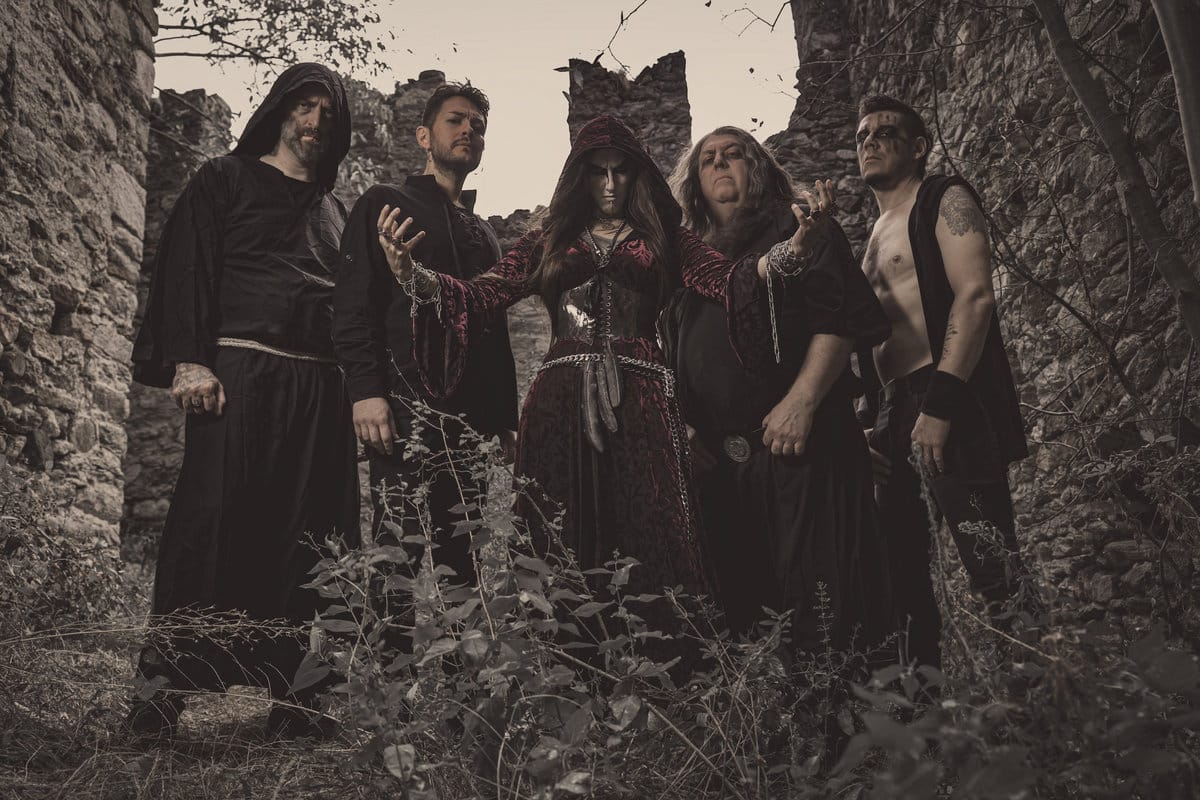
We completely ignored the band and the corresponding three albums ("Maleventum", "Anphisbena", and "Strix - Maledictae in Aeternum") in the ensuing decade from 2002 to 2012 and were content in knowing we didn’t miss much of anything. It wasn’t until three years later when they resurfaced with the re-recording compilation “Back to Sepulcro” and the arrival of Abigail Dianaria that the old flame was rekindled once again. Ossian scored his biggest victory in years by drafting former Riti Occulti frontwoman Serena Mastracco into the band for “The Gospel” in 2018. Not that they haven’t stayed busy. First there was the 2020 "Necromantical Sacraments" split with Black Oath, then the "Samonios" cover EP in 2022 (which yielded the new song ‘Funeral Mist’) and the headscratchingly redundant "Back to Sepulcro MMXXV" re-recording compilation (the 2015 original was already a re-recording of old material) in 2025.
Here we are in 2026 and ageless shaman Ossian has concocted his next pagan mass in the form of “Veneficium.” Once again Ossian and Serena Mastracco have assembled a new group around themselves since their last studio outing eight years ago. Ossian and Mastracco remain from “The Gospel” with Emanuele Telli stepping in for Alessandro Muscio on keyboards, Luigi Corinto is another in a long line of faceless and frankly interchangeable bass guitarists, and Luca Pellegrino replaces Massimo Altomare on drums. Opera IX has seen its share of personnel changes over the years and a new line-up for every album (they appear only once every decade, after all) is now the norm rather than the exception.
As long-time protectors of their native pagan traditions and the olden heretic ways “Veneficium” is described as, “a pilgrimage through the labyrinth of the dark arts” and “a botanical dominion that only the wisdom of women dared to master.“ In other words, this is a loosely conceptual album about witchcraft and the practice of potion-making from the strictly horticultural, herbalist, and feminine/feminist perspective. In a callback to the most of ancient of the demo days all the songtitles are in Italian while the lyrics themselves are largely in English. Only 'Gratidia', 'Sagana', and 'Veia' are entirely in their native tongue, sometimes combined with Latin. The bookending narrated invocations of 'Gratidia' and ‘Veia’ are as pompous and dramatic as you’d want (or expect). The trio of 'Vocatio Mortuorum', ‘Veneficium’, and ‘Asphodelios‘ contain the most gripping combination of harsh – and clean vocals, but seldom do they match original frontwoman and the mother of all witches Raffaella Rivarolo.
’Saturni Arcanum’ and ‘Hortus Sagae’ has the kind of atmospheric and nocturnal opening you’d wish Dimmu Borgir would still be able to conjure. Both are the sort of dirgey, trudging, sometimes waltzing mini-epics that Dimmu Borgir used to specialize in before the 2000s. The keyboards and piano never were this maximalist and overbearing - complete with synthesized choirs and the sort of effects-heavy, substance-free distractions that Dimmu Borgir usually indulges far too often in. Mastracco is a beast of a frontwoman and she once again demonstrates her ferocity here. Original frontwoman Raffaella Rivarolo remains unsurpassed as Mastracco possess the same wide array of vocal styles, but seldom employs them within the same track. Even a quarter of a century after the acrimonious exit from her most famous band her successors (as well has herself) have consistently tried (and repeatedly failed) to live up to the high standard she set. The bitter price of being a trailblazer and a pioneer.
“Veneficium” is by far the most dynamic, richly detailed and pristinely produced effort since the idyllic days of “The Black Opera: Symphoniae Mysteriorum in Laudem Tenebrarum.” While the occult and pagan thematics have always been this band’s bread and butter they never sounded so absent as they do here. Expect no chanting, clapping, acoustic guitars, or tribal percussion here. In the process of streamlining and shortening their once ten-minute-plus epics Opera IX has managed to fully iron out whatever little vestiges of their pagan roots and Italian ethnic identity latently present in their post-2012 discography. All have been replaced with a standard and risk-averse international symfo black metal sound. In other words, “Sacro Culto” (for us the standard-bearer of all things Opera IX) this is most definitely not. The Mediterreanean warmth and continental European naturalist spirit that once was so prevalent is wholly absent. The pointless Black Sabbath is, well, pointless. Ironically, the closing cover comes closest to mirroring Mastracco’s stoner/doom metal alma mater Riti Occulti. This is probably and easily the best Dimmu Borgir record since “Spiritual Black Dimensions.”