Vampyres (1974)
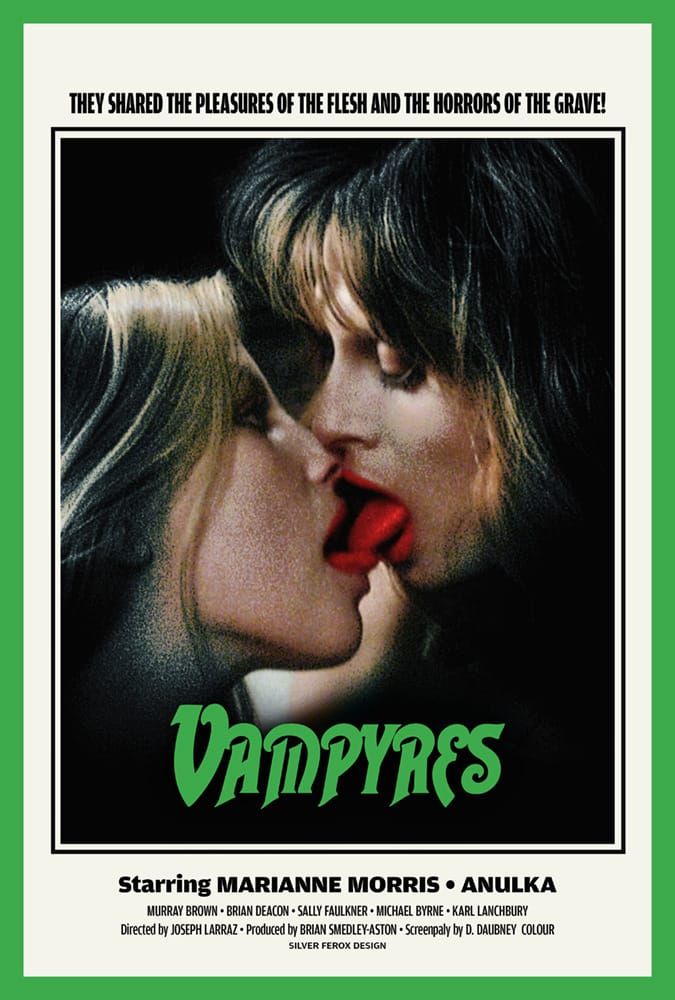
Plot: who or what lurks within the darker bowels of the English countryside?
While its roots lie in Roger Vadim’s Blood and Roses (1960) and Emilio Vieyra’s Blood Of the Virgins (1967) the European vampire film took a marked turn for the erotic (not to mention, the lesbian and bisexual) with Jésus Franco’s psychotronic-pop art feast Vampyros Lesbos (1971) with Soledad Miranda and Ewa Strömberg. There had been earlier attempts with The Playgirls and the Vampire (1960) but none left the kind of immediate and profound impact the way Franco’s finest did. In its wake a veritable onslaught of imitations followed, most notably Daughters Of Darkness (1971) wherein Belgian documentary-maker Harry Kümmel synthesized and perfected Franco’s erratic style for the arthouse. Hammer tried to follow the lead with the Karnstein trilogy with The Vampire Lovers (1970), Lust For a Vampire (1971), and Twins of Evil (1971) – but it was too little, too late. Vampyres is something different. Something wild, to put it mildly. It was released at the height of the Mediterranean gothic horror revival, and comes exploding off the screen with enough liters of blood, bouncing bare bosoms, and sweaty sex to make Emilio Vieyra, Renato Polselli, and Luigi Batzella sit back and take notice. It was exactly the kind of feature to hasten the fall of the noble house of Hammer.
José Ramón Larraz was a Spanish director who mostly worked abroad. He initially worked as a comic book illustrator and fashion photographer before enrolling in a cinematography course under aegis of director Josef Von Stenberg in Brussels. Larraz started out with unconspicuous thrillers Whirlpool (1970) and Deviation (1971), but only would start to develop his own style with Symptoms (1974). In the late seventies and early eighties he filmed the sex comedy ...And Give Us Our Daily Sex (1979) (with Laura Gemser, and Bárbara Rey) and via the psychological horror Stigma (1980) went on to do nudity-heavy romps as Madame Olga's Pupils (1981) (with Cine-S “el destape” superstars Eva Lyberten, Andrea Albani, and Lynn Endersson) and Black Candles (1982). In his twilight years he made a trio of very late slashers in the form of Rest in Pieces (1987), Edge of the Axe (1988), and Deadly Manor (1990). As a director he made what the market demanded without any deviations. As diverse and all over the map as Larraz’ career might be, his legacy in Eurocult circles will forever be enshrined in his Vampyres, a highpoint in erotic horror if there ever was one.
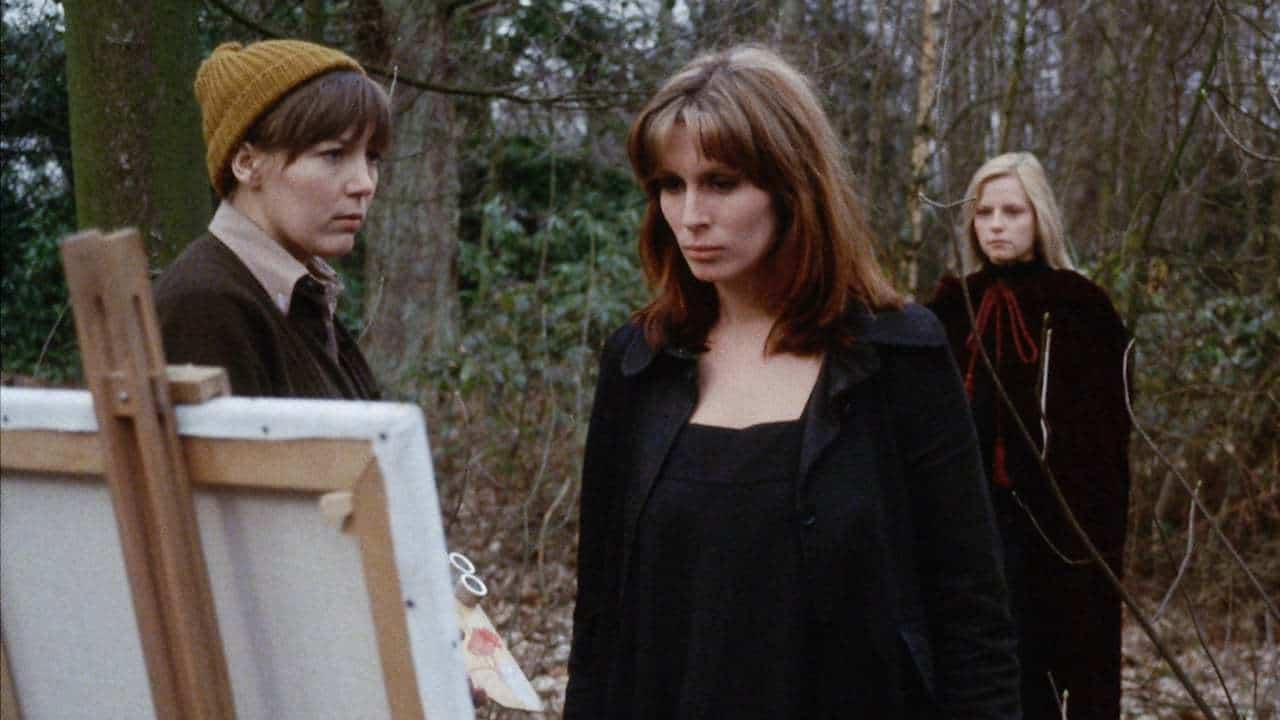
En route to their vacationing spot Harriet (Sally Faulkner) and John (Brian Deacon) spot black cloaked figures skulking around the woodlands mysteriously. Harriet is spooked but John makes nothing more of it than local superstition. In another part of town Ted (Murray Brown) has checked in in his hotel, and decides take his car to explore the environs. He spots Fran (Marianne Morris) wandering along the road, and offers to drive her to wherever she’s going. Fran directs him to a nearby mansion, offering him a drink to relax and immediately starts to seduce him. When he wakes up the following morning he has a nasty gash on his arm. Bewildered he eventually runs into the trailer of John and Harriet who take to looking after his injury. The following night he runs into Fran again, but this time she’s in company of her friend Miriam (Anulka Dziubinska, as Anulka) and a man called Rupert (Karl Lanchbury). When he wakes up the next morning Ted finds it odd to discover the lifeless and naked body of Rupert in what appears to be a car accident. This prompts him to investigate the darker bowels of the aristocratic mansion and somehow manages to get himself locked in the cellar.
The next night Fran and Miriam bring in a playboy (Michael Byrne) to exsanguinate. When they are done with him they discover Ted locked in the cellar, and their weakened guest doesn’t mind the prospect of a potential threesome, even if the two women end up draining him of more than just his seed. After they’re finished with him and he’s in a dazed and confused state of phlebotomized stupor, Fran and Miriam feast on each other. Harriet has experienced goings-on at the mansion and decides to investigate. Her curiosity leads to her to mausoleum beneath the mansion, and the crypts wherein Fran and Miriam reside during the day. John returns from his morning excursion to find Harriet investigating the mansion, and leads her back to their camper moments before she’s bound to find the captive Ted. Fran and Miriam surmise that Harriet and John are posing too much of a threat and hunt them down. It might just be enough for Ted to effectuate his escape. The morning after his escape Ted is woken up by a real estate agent (Gerald Case) and an American senior couple (Bessie Love, and Elliott Sullivan) and learns that the mansion has been abandoned for decades.
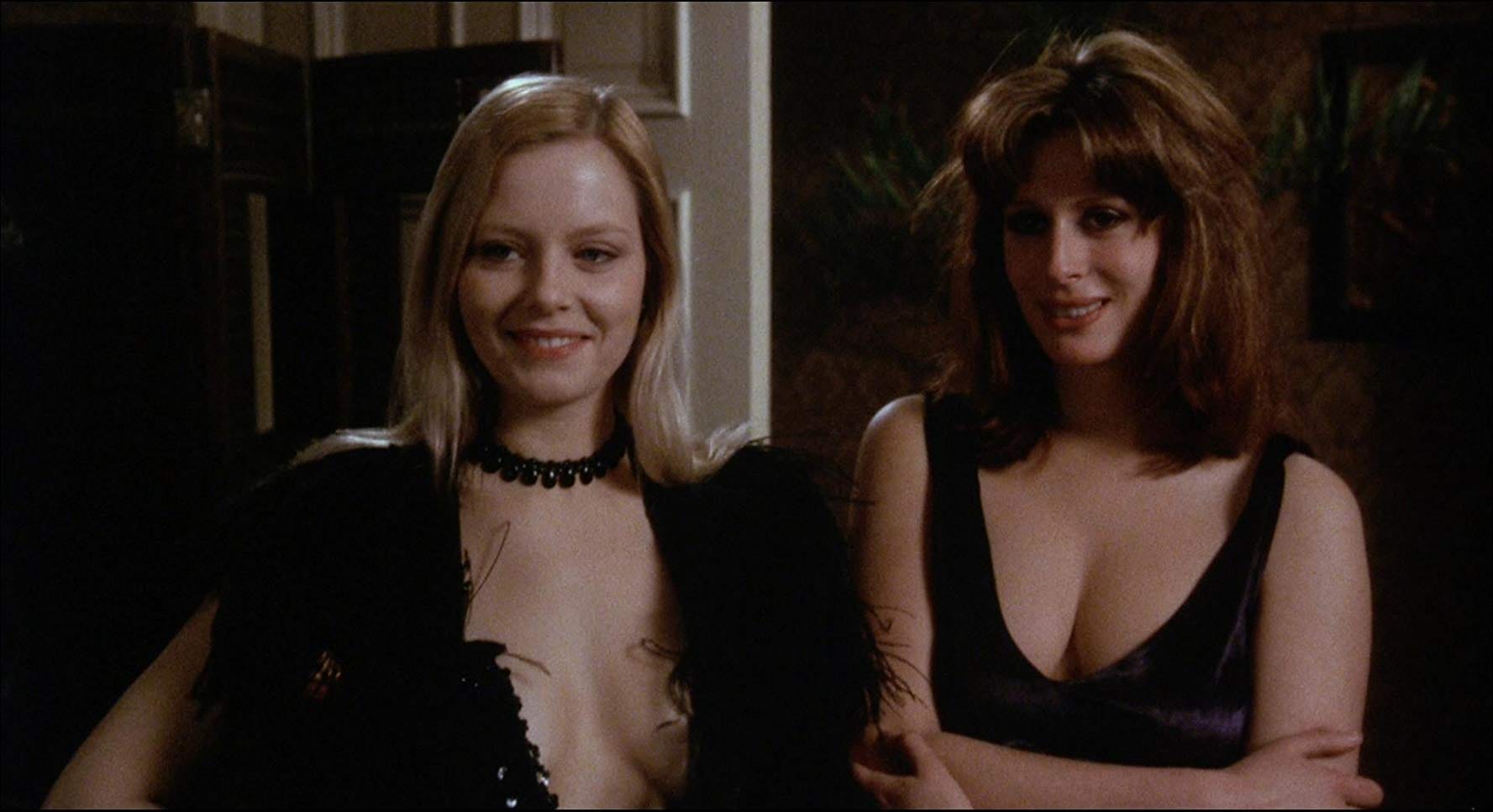
The British cast is headlined by Marianne Morris and Anulka Dziubinska. Morris was the uncredited topless girl in Corruption (1968) (before Peter Cushing’s career revival in the seventies) and was on a billboard in Queen Kong (1976) (with Valerie Leon). Anulka was a finalist in the 1970 Miss United Kingdom pageant, Playboy Playmate of the Month (May, 1973) and would a year later feature in Ken Russell’s Lisztomania (1975). More importantly, Morris and Dziubinska both were professional nude models. Most of the cast were recruited from British television with Gerald Case having a role in David Cronenberg’s The Elephant Man (1980). The biggest stars however are character actor Michael Byrne and silent cinema monument Bessie Love. Byrne is often called upon to play men of the cloth or military roles, and as such he can be seen in The Omen (1976), The Eagle Has Landed (1976), A Bridge Too Far (1977), as Nazi general Vogel in Indiana Jones and the Last Crusade (1989), as well as Braveheart (1995), the Bond film Tomorrow Never Dies (1997), Martin Scorsese’s period epic Gangs of New York (2002), and Harry Potter and the Deathly Hallows: Part 1 (2010). Love’s earliest credits go back to 1915 and she started to work in British television regularly in the mid-fifties. She can also be seen in Children of the Damned (1964), Terence Young’s political disasterpiece Poppies Are Also Flowers (1966), the Bond film On Her Majesty's Secret Service (1969), and Tony Scott’s arthouse horror epic The Hunger (1983).
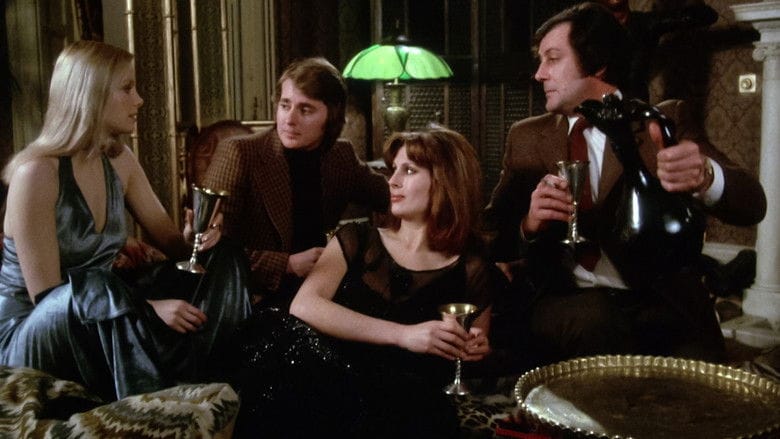
Like any good Spanish fantaterror Vampyres has that thick dreamy atmosphere (which it shares with the French fantastique), that natural British look and it was happy to break with convention. Italy that made pompous period costume gothics with The Devil’s Wedding Night (1973) (with Rosalba Neri) and was one year away from deconstructing the subgenre with Nude For Satan (1974) (with Rita Calderoni) and Renato Polselli upstaged the status-quo with his masterpiece Black Magic Rites (1973). In Spain there was Count Dracula’s Great Love (1973), Horror Rises From the Tomb (1973), the oneiric fantastique The Loreleys Grasp (1973), The Dracula Saga (1973) and its companion piece The Vampires Night Orgy (1973). It took a Spaniard to drag the subgenre screaming into a then-current day setting. A year later Méxican director Juan López Moctezuma did the same with his Mary, Mary, Bloody Mary (1975). Marianne Morris and Anulka Dziubinska were professional nude models but could reasonably act. Or at least better than, say, Danish delight Yutte Stensgaard or Gilly Grant. Its closest ancestor is probably Argentian boobs-and-blood epic Blood Of the Virgins (1964) which mixed two time periods. It was remade semi-faithfully in 2015 by Víctor Matellano (that came with cameos from Spanish exploitation monuments Lone Fleming, Caroline Munro, and Antonio Mayans) but the José Ramón Larraz original stands unsurpassed as the apex of Iberian vampire horror.