The Queen Of Black Magic (1981)
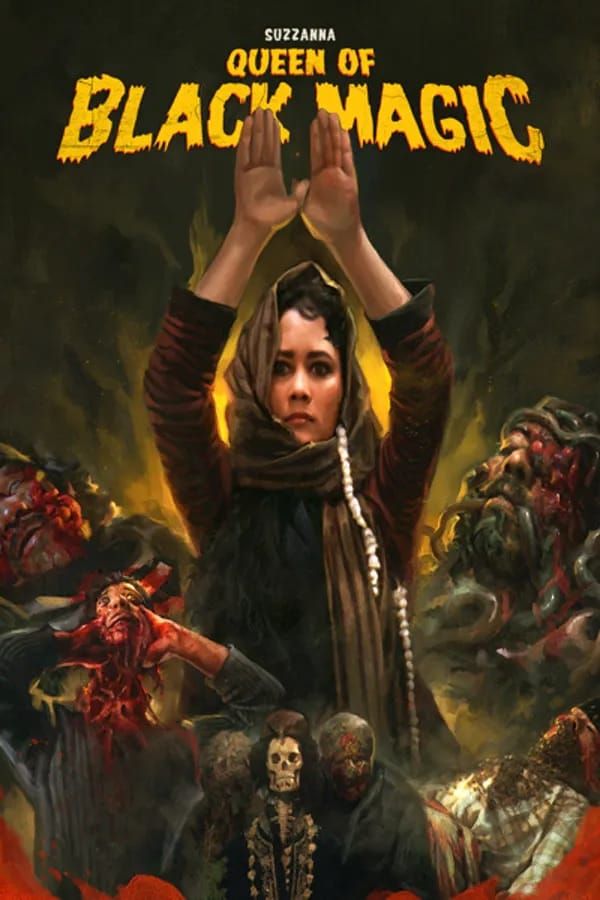
Plot: woman accused of (and killed for) witchcraft haunts her wrongdoers.
Ratu Ilmu Hitam (or The Queen Of Black Magic) was another domestic box office smash for Suzzanna, and the first to gain international traction in some capacity. Perhaps it was inevitable something as universally acclaimed and beloved as Ghost with Hole (1981) was bound to cast a long and ominous shadow obscuring anything and everything directly following, or even before, it. The Queen Of Black Magic was actually Suzzanna’s first hit of 1981 arriving at the multiplexes in early January and thus preceding it by some 7 months. How often does a star eclipse him/herself at the box office? Not often, but Suzzanna was the first in Indonesia to do so. Here do we not only get Suzzanna but also implacable pillars Sofia W.D. and Siska Widowati. In the span of just 12 months there was this and Ghost with Hole (1981). History has remembered that 1981 was an exceptionally strong year for Indonesian horror and The Queen Of Black Magic is no lesser gem even though it was eclipsed by bigger hits.
The everlasting legacy of Indonesian horror queen Suzzanna is indisputable and her filmography is custodian to a number of stone-cold classics and minor gems. Suzzanna provided the archetype with The Longest Dark (1970) some ten-plus years earlier and solified her vengeful (ghost) maiden character with Birth in the Grave (1972) two years later. From there varied roles and genres for the remainder of the 1970s. The Queen Of Black Magic is second only to Ghost with Hole (1981) but is at least equally as legendary. The two mark the second phase of her career. To properly appreciate this particular Suzzanna horror we should have look at the personal history (and tragedy) surrounding it. Her marriage to Dicky Suprapto in 1959 had spawned two children: a son in Ari Adrianus and a daughter in Kiki Maria. First Dicky and Suzzanna went on to have a singing career and Kiki eventually followed. Initially as part of the parental duo and later as a solo artist. Ari Adrianus on the other hand was not so lucky. He dropped out of school, worked on cars and motor as a vocation, but fell in with the wrong element. In 1977 he became a victim of gang-related violence.
As a staunchly devout Catholic woman (and avowed practitioner of rural folkloric mysticism and its attendant customs, traditions, and rituals) in a deeply conservative, paternalistic (and religiously impaired) country filing for divorce was not only next to impossible; it was considered blasphemy to boot. She tried to have the marriage annuled but there never was any paperwork to corroborate that. For all intents and purposes Suzzanna retired from acting was it not for a heartfelt plea from director Sisworo Gautama Putra. The Queen Of Black Magic was Suzzanna’s grand return to the silver screen after her self-imposed hiatus and later that year Putra gave her her single most enduring role with Ghost with Hole (1981). While it may have been Sisworo Gautama Putra that shepherded the second part her considerable career the times Suzzanna worked with Liliek Sudjio weren’t any less memorable.
Sudjio is perhaps best described as a mercenary and a rugged technician who specialized in martial arts, fantasy, action, and horror but who just as easily tackled comedy and costumed superhero features. The Queen Of Black Magic is probably his most enduring work internationally along with something like Blind Virgin (1971) or an Indonesian riff on Lone Wolf and Cub: Sword of Vengeance (1971). Domestically he was famous for the horrors Revenge on Kliwon Friday (1987) and Mystery of the Old House (1987) as well as the Mystery of Mount Merapi (1989-1990) tripartite. Later Suzzanna reunited with with her erstwhile mentor Putra again for the fantasy romance Soundgarden (1982) which would be historic for introducing her to her second husband Clift Sangra.
Sangra (23 years her junior!) had been madly in love with Suzzanna for years and how serendipidous that Soundgarden (1982) was a sprawling epic romance. It in fact would be prophetic in a way that the romance that erupted on the screen spilled over into real life. Suzzanna and Sangra would wed in 1983. Through the rest of the decade and the beginning of the 1990s the Suzzanna-Putra partnership resulted in, among others, The Snake Queen (1982), The Snake Queen's Wedding (1983), Lake Eerie (1984), The Night of Kliwon Friday (1986), The Hungry Snake Woman (1986), Death-Spreading Heirloom (1990), the A Nightmare on Elm Street (1984) inspired Pact with the Forces of Darkness (1991), and The Queen of the South Sea (1991). Few have managed to score one legitimate hit, let alone several ones. Suzzanna, on the other hand, had two veritable classics within the same year! It’s possible to turn deep personal tragedies into imperishable cinematic victories.
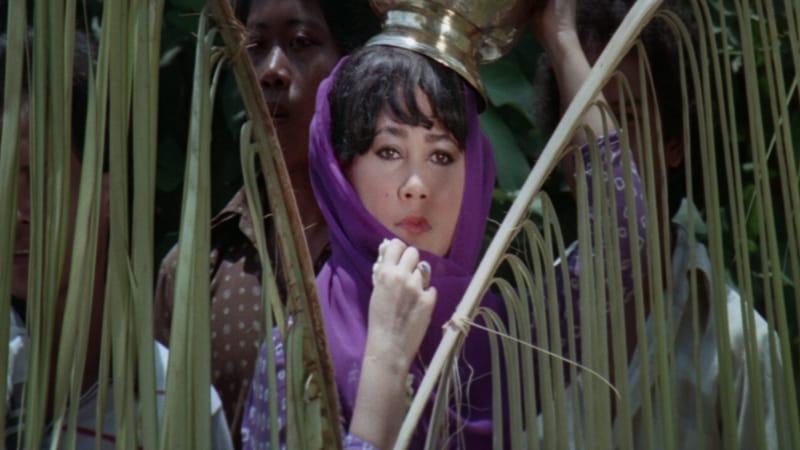
Rich landowner Kohar (Alan Nuary, as Alan Naury) is set to marry his longtime lover Baedah (Siska Widowati). Among the invitees is Murni (Suzzanna) who was engaged in a brief but steamy tryst with Kohar but became the subject of public ridicule and humiliation when he callously cast her aside for his former paramour. The shame of being spurned continues to weigh heavy on her mind and she has withdrawn into detached apathy since that day. As the villagers engage in preparations for the grand ceremony Murni grows increasingly erratic as she experiences hallucinations wherein she sees Kohar and his entourage as demons much to the dismay of her aging mother (Mien Brojo). When the village falls victim to sudden stormwinds and random people start levitating for inexplicable reasons Kohar and the villagers to accuse Murni of practicing sentat (or witchcraft) despite there being not a single shred of evidence to substantiate such outrageous claim. The village head Pak Kades (Doddy Sukma) and his wife (Sofia W.D.) urge the townsfolk to remain calm but their pleading falls on deaf ears.
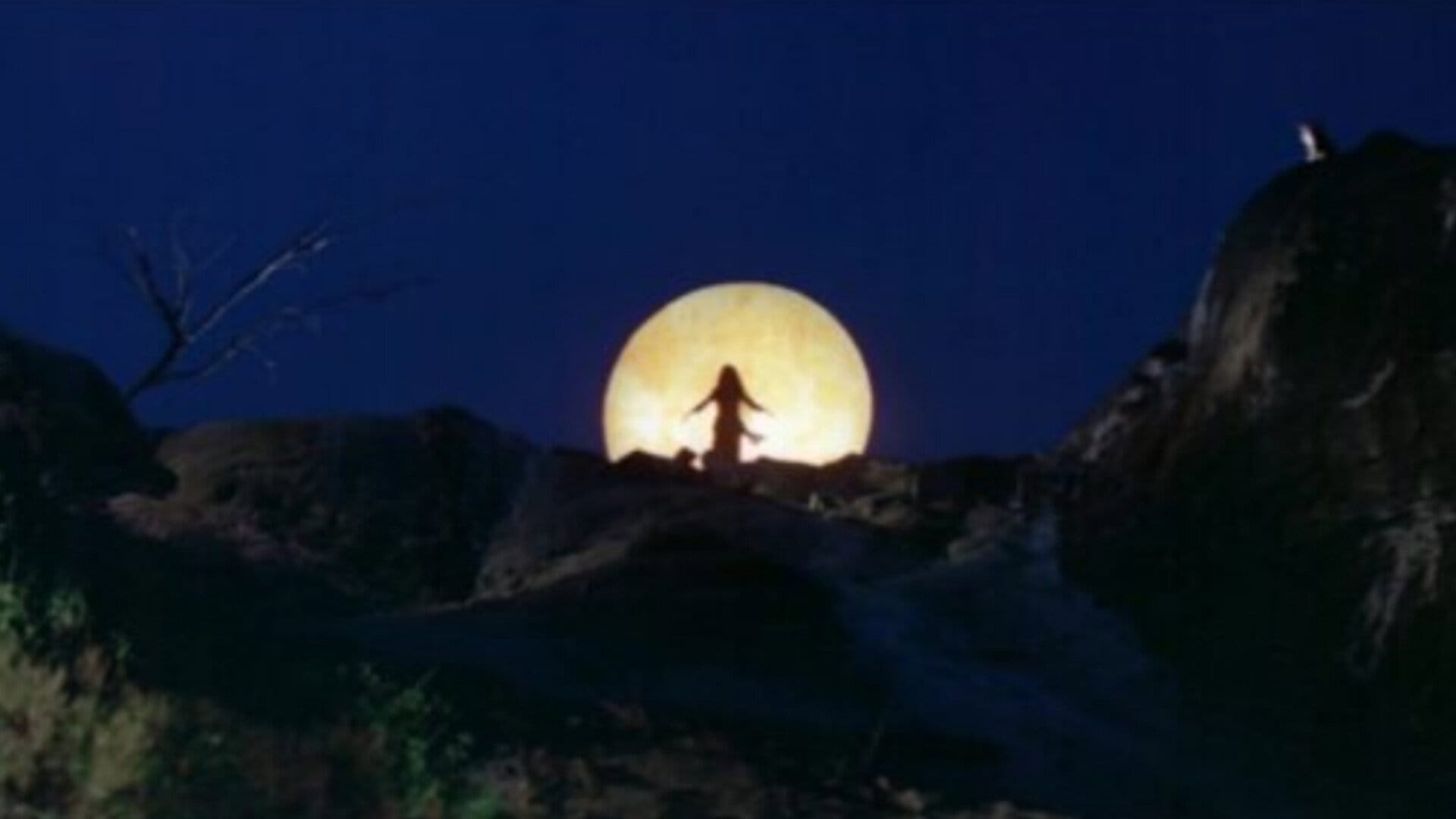
Whipped into a blood-thirsting frenzy by their crippling religious impairment and delusional superstitions a pitchfork – and torch-wielding mob violently descends upon Murni’s dwelling. Blinded by fear and instigated by Kohar the mob casts her off the side of a nearby mountain. Suffering grievous bodily harm but surviving the attempted femicide Murni is nurtured back to health by reclusive, jungle-dwelling dukun (or shaman) Gendon (W.D. Mochtar). During her lengthy revalidation Gendon initiates a sufficiently fragile and malleable Murni into the secrets of the black arts and instructs her to kill her wrongdoers. Meanwhile, the deeply pious Permana (Teddy Purba) arrives on the other side of town searching for his long-lost sister. He witnesses the horrors the superstition has wrought upon the once peaceful and sleepy farm village first hand. He chastises the villagers for seeking comfort in superficial materialism and that it has clouded their collective minds. He urges the villagers to rebuild their mosque and be strong in their faith to exorcise the surge of vile hauntings. Will the pious shaman be able to withstand the mystic’s evil spells and save Murni’s soul from eternal damnation?
Gope Tejoomal Samtani is without a doubt the foremost producer of horror in Indonesia for most of the 1980s. His productions were lush and ambitious and tended to star the biggest name of the day. The Queen Of Black Magic is no different. For this mult-starrer Samtani assembled a team of writer Imam Tantowi, composer Gatot Sudarto, and special effects man El Badrun. Before the camera there were the horror queens Suzzanna, Sofia W.D., and Siska Widowati. Suzzanna was anywhere and everywhere around this time and her reputation was, is, and continues to be well known, domestically and internationally. Sofia W.D. is known around these parts for Mystics in Bali (1981), Fons Rademakers' Multatuli adaptation Max Havelaar (1976), and The Love Story (1970) remake Teenage Bride (1971). Siska Widowati was in the slasher Wolf (1981), the women-in-prison flick Escape from Hellhole (1983), the fantasy Alligator Queen (1983), and the kuntilanak horror Night Woman (1987).
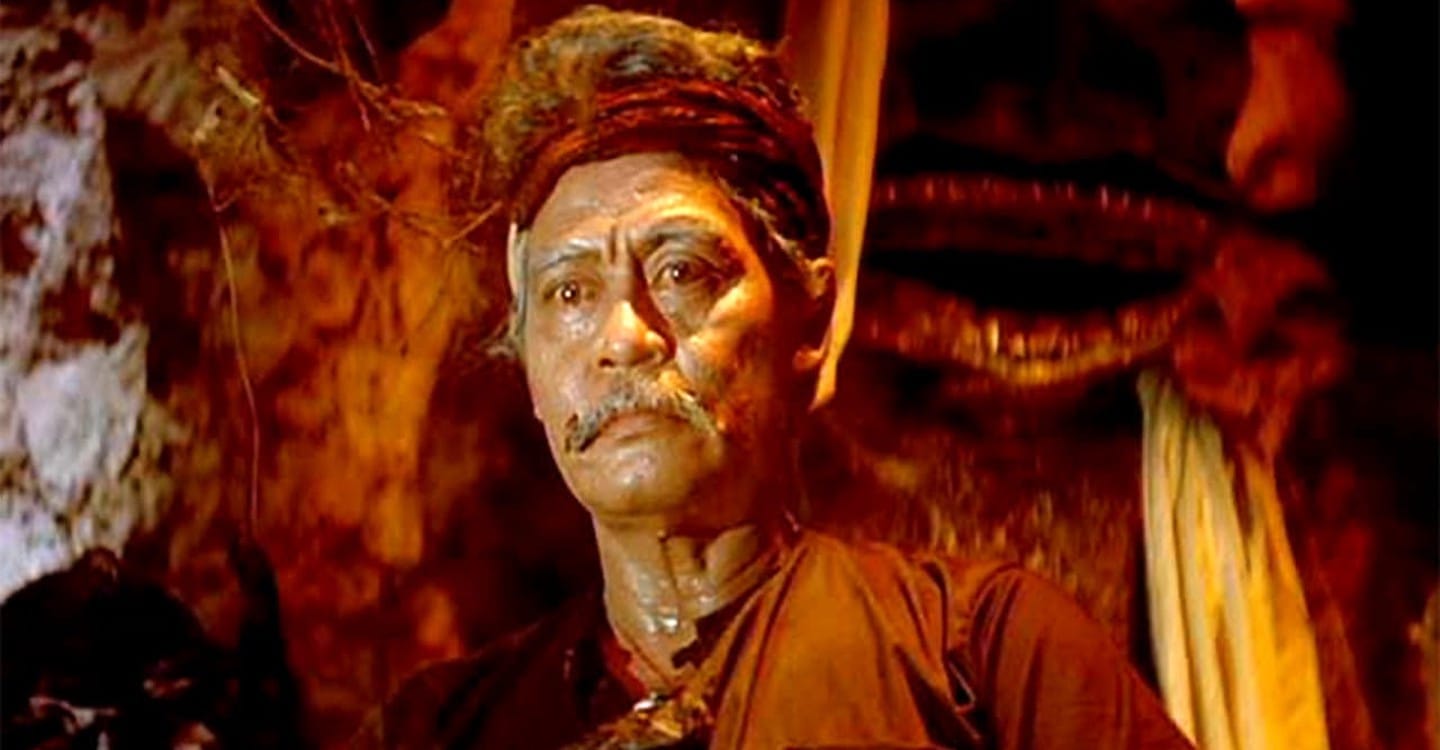
Rounding out the main cast are reliable supporting actors H.I.M. Damsyik and W.D. Mochtar. H.I.M. Damsyik was in Ghost with Hole (1981), the fantasy epic Soundgarden (1882), The Snake Queen (1982) and The Snake Queen's Wedding (1983) (Suzzanna starred in all three and on the latter two occassions she shared the screen with Enny Beatrice). W.D. Mochtar often played mystics and shamans in fantasy, horror, and action features. He was a frequently collaborator of director Liliek Sudjio and starred later in the year in Black Magic Wizard (1981) and Mystics in Bali (1981). The special effects from El Badrun are exactly what you’d expect. They are efficient, splattery and about on par with Spanish - and Italian horrors of the day. Badrun was the artisan of the day and his work could be seen in The Devil's Sword (1984), among others.
That The Queen Of Black Magic isn’t as well known is perhaps not strange. Consider that Black Magic Wizard (1981), and Mystics in Bali (1981) (starring lesser queen Ruth Pelupessy and complete nobody Ilona Agathe Bastian, respectively) were to follow later in the year. While the former has been all but forgotten the latter has proven incredibly resilient and has retroactively became an international hit. Talk of tough choices. Wolf (1981) was in the cinemas on the same day as this. On the other hand The Queen of Black Magic was the first Indonesian horror to secure a North American distribution deal for its home video release. Mystics in Bali (1981) is generally wider known (not only for how mystifying it is most of the time) whereas The Queen of Black Magic is a pretty straightforward horror in the conventional sense. To Western eyes this might not be as outré as more of Indonesia’s more folkloric horror and it helps that it adheres the ghost horror conventions that Suzzanna established before it. In fact its legacy continues to resonate as it was liberally remade in 2019 by director Kimo Stamboel and writer Joko Anwar. It might not carry the weight of, say, a Suzzanna New Generation title but the fact that it was remade signifies its historical importance.