The Other Hell (1981)
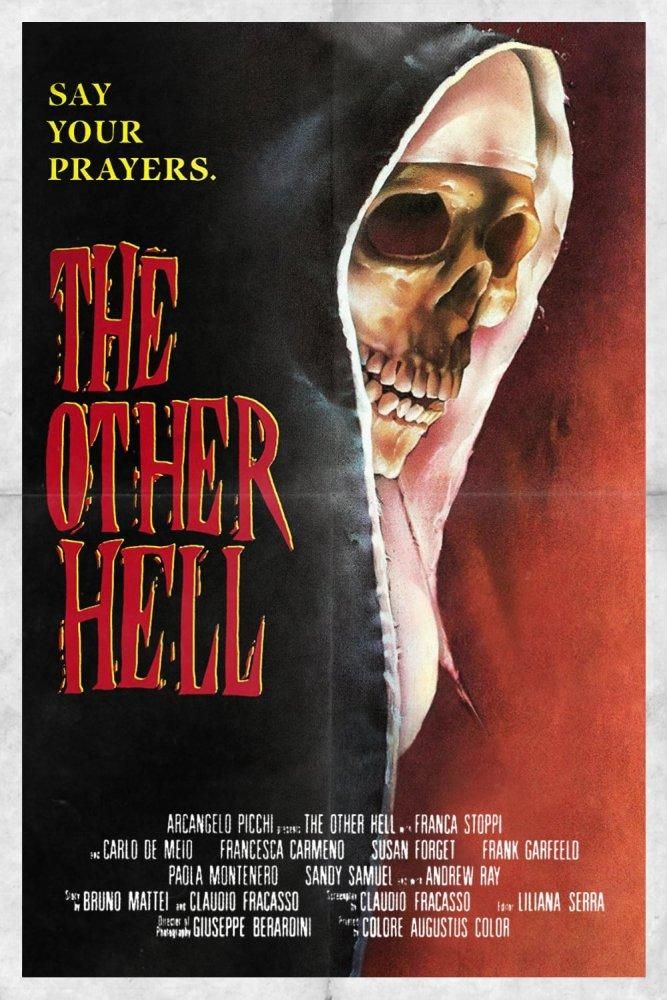
Plot: what evil dwells in the convent or is there a psychopath on the loose?
L'altro inferno (The Other Hell in the English-speaking world) marks the beginning of the Bruno Mattei and Claudio Fragasso partnership after Mattei had spent the prior decade directing a string of sex comedies, mondo documentaries, and women-in-prison productions. It heralded his long-time partnership with Claudio Fragasso and Mattei would soon position himself as the master of the low budget mockbuster and cultivate a well-deserved reputation as the once and future king of counterfeit cinema in the decade when the glory days of Italian exploitation were waning. The Other Hell heralded his long-time partnership with Claudio Fragasso and the undynamic duo would leave an indelible mark on Italian exploitation for the next twenty-odd years. While plenty of crazy on its own The Other Hell is rather tame compared to the later Mattei canon.
Nunsploitation is a uniquely 1970s phenomenon as it was exploitation focusing on the ecclesiastical. It was part of a wider cycle of religious inspired terror such as the Satanic cult, folkloric, and Inquisition horror popular alongside the decade-long gothic horror revival in Mediterranean Europe. Its rise was concurrent with Inquisition horror following The Witchfinder General (1968) and Mark of the Devil (1970). As a genre it is primarily practiced in deeply devout European countries (Italy, Spain) where it existed and evolved parallell with the il sadiconazista (Nazisploitation) and women-in-prison subgenres that were emergent at the time. It typically exists in several branches either focusing on the historical, erotic, or horror aspect with the latter two often co-existing and intermingling. The historic angle was usually reserved for the earlier, more demure or intellectual examples of the form such as the historic arthouse drama Black Narcissus (1947). Historians have pointed to Mother Joan Of the Angels (1961) as the subgenre’s startingpoint with Ken Russell’s The Devils (1971) acting as the catalyst for the European feeding frenzy and Story of a Cloistered Nun (1973) doing the same for the Italian subset. It faded into obscurity towards the late 1970s and early 1980s as women-in-prison movies and American slashers became the de facto standard. As a subgenre it’s pretty much extinct these days, although notable examples such as Sister Death (2023) prove that it has lost none of its shock value if treated with a modicum of intellect.
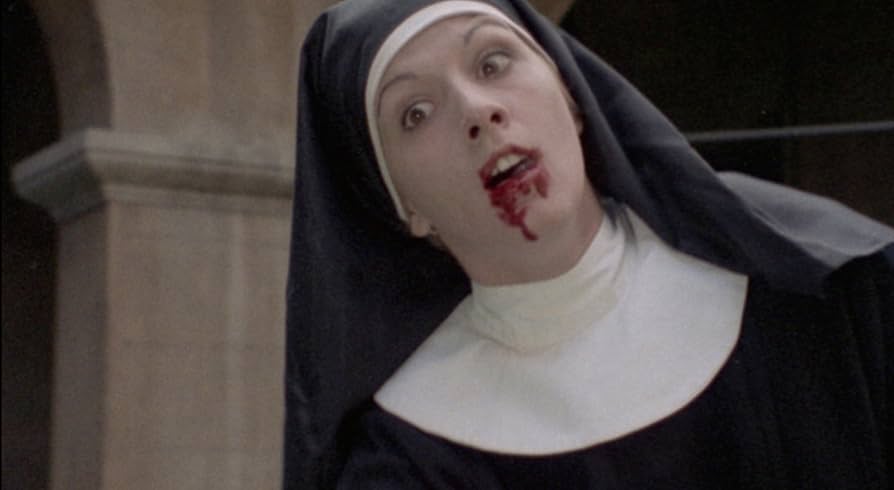
The Other Hell is historic for several reasons, none of them good. It sprung from the mind of Stefano Film producer Nicolò Pomilia, he of Yeti: The Giant of the 20th Century (1977), who commissioned Bruno Mattei to helm an erotic feature set in a convent. This inspired Mattei to hire up-and-coming screenwriter Claudio Fragasso and have him pen his own erotic take on the story of Sister Gertrude from the Alessandro Manzoni novel The Betrothed for The True Story of the Nun of Monza (1980). Whereas the Fragasso feature was a nunsploitation romp treading on the familiar ground of The Devils (1971) and Walerian Borowczyk's Behind Convent Walls (1978), Mattei had something altogether crazier in mind for himself. While Mattei was originally scheduled to direct The True Story of the Nun of Monza (1980) he was inexplicably drawn more to The Other Hell, something that he allegedly described, as “Carrie (1976) in a convent.”
According to chroniclers of the day Mattei has insisted that it was influenced by Dario Argento's Inferno (1980). When confronted with the fact that The Other Hell didn't and doesn’t bear much resemblance to the vastly superior Argento picture he alleged that he was influenced by, “Argento’s concepts.” In fact the Argento influence is centerpiece as the whole thing bathes in your favorite hues of green, blue, and orange/red (Argento was a disciple of Mario Bava, after all) with the long shadows and the charnel atmosphere that defined Italian gothic horror at least since the glory days of Barbara Steele in 1960-65. While all the hallmarks of nunsploitation are present for its main body The Other Hell pilfers The Exorcist (1973) and The Wicker Man (1973) with varying shades of either The Omen (1976) and, to a lesser degree, Rosemary's Baby (1968). By all accounts this is something old wearing the skin of something new.
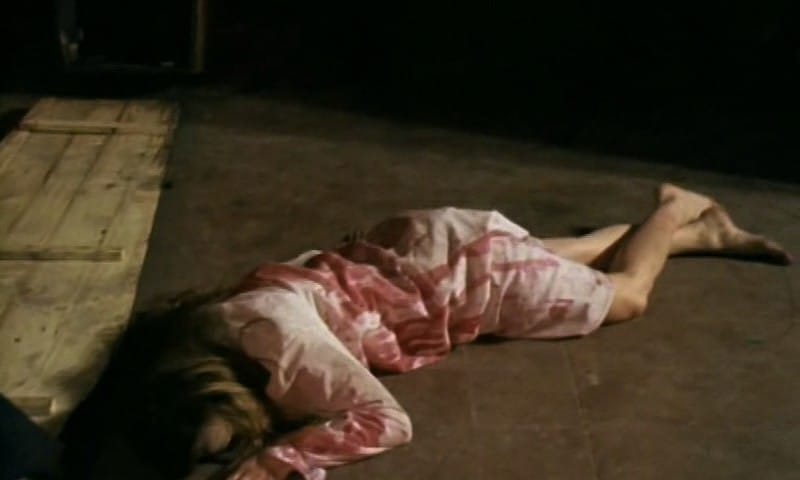
A historical location was secured in the Convent of Saint Priscilla on the Via Salaria that granted the production to access to the lugubrious Catacombs and subterranean ossuary (owned privately by the Acilii Glabriones family). In 1927 architect Paolo Rossi De Paoli began its restoration under direction of the Pontifical Academy of Archaeology. The convent was home of the black-habited Benedictines and later the complex was owned by the FIAT association and is presently in government hands where it houses the Italian Interagency Law-Enforcement Academy of Advanced Studies. As necessity is the mother of invention Mattei was prompted to propose to producer Picchi that they film both features simultaneously over the scheduled five weeks of production. One film would be shot in the morning, and the other the following afternoon with the actors moving from one set to another accordingly. This way they could film two features for the price of one keeping overhead costs to an absolute minimum and making most of what was available. Mattei took a particular shine to Goblin’s synth-rock score for Joe d’Amato’s Beyond the Darkness (1979) that he convinced the producer to lend it to him. He may not have had any real stars (Fragasso at least had Czechoslovakian import and frequent whipping girl Zora Kerova) to sell The Other Hell but he had the good fortune of having special effects artisan Giuseppe Ferranti. He would later that year lend his considerable talents to, among others, Nightmare City (1980), and Anthropophagus (1980). Thus was born the Mattei-Fragasso collaborative axis (frequently, but not always, with Fragasso’s wife Rosella Drudi in tow as a writing partner) that would spawn the Dawn Of the Dead (1979) plagiate Hell Of the Living Dead (1980) next. This partnership lasted about a decade spanning some 15 films. Mattei has always maintained that Fragasso was merely his assisant director while Claudio for his part has insisted that he did solely direct all the movies bearing his name. After Zombi 3 (1988) and the comedy Three For One (1990) Mattei and Fragasso parted ways with each man going their own way. For whatever reason neither of them ever ended up working with either producer Gabriele Crisanti or director Andrea Bianchi.
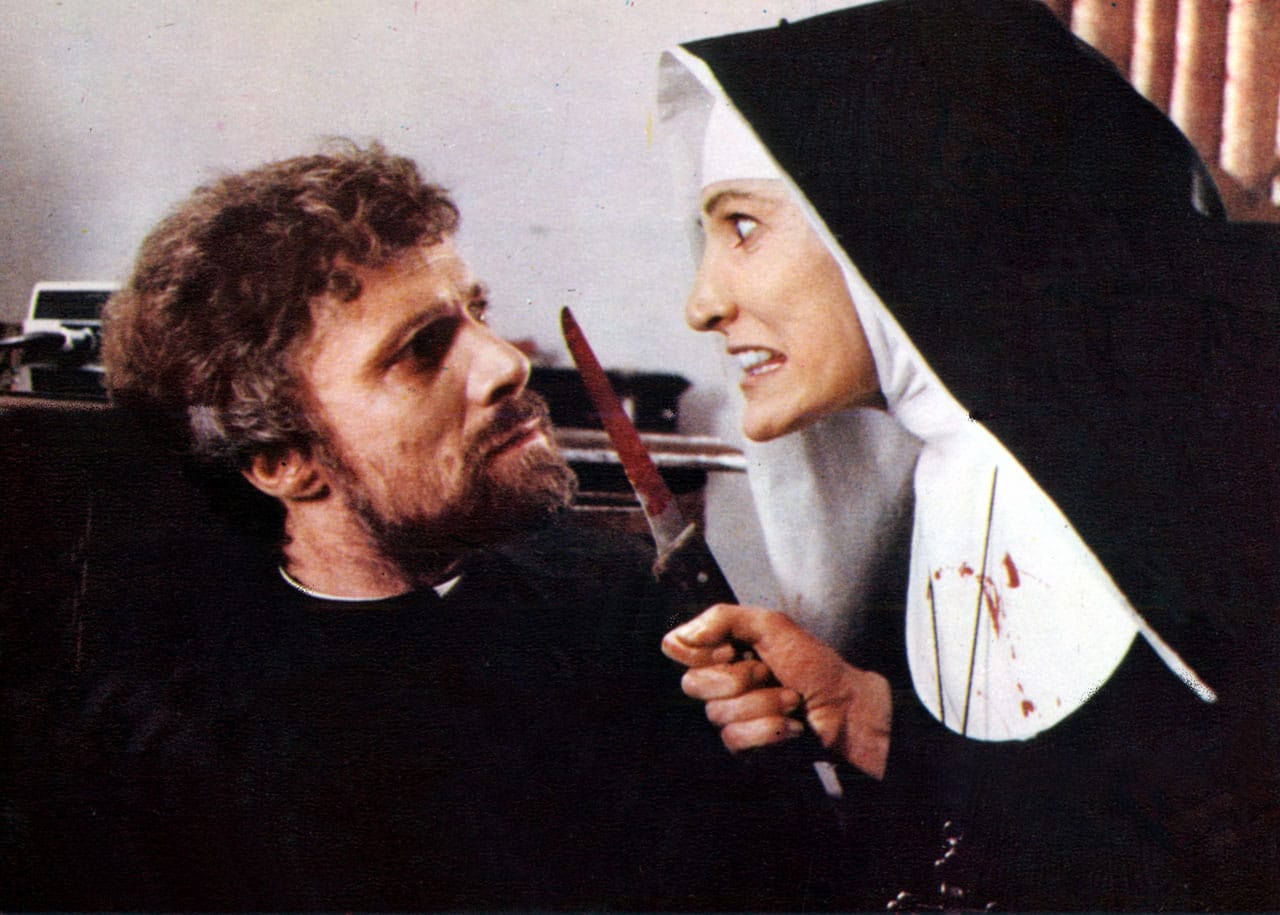
A young nun is lost in the shadowy depths of the catacombs and wanders into an underground laboratory. There Sister Assunta (Paola Montenero) is embalming a nun’s lifeless body. She tells the young nun about the temptations of the flesh and how Satan tempts them with their carnal desires. She also spins a mad tale about the stillborn child of a nun who had consorted with the Devil within the convent walls, and the mysteries surrounding the death of the previous Mother Superior, Sister Fiorenza (Alba Maiolini). She then kills the young nun before dying herself under suspicious circumstances. The current Mother Superior, Sister Vincenza (Franca Stoppi) discovers both bodies but dismisses them as mere and regrettable accidental deaths. At communion superstitious Sister Rosaria (Susanna Forgione, as Susan Forget) is convinced that it is the work of the Devil and is swiftly reprimanded. Sister Rosaria locks herself in her dwelling where she starts to exhibit symptoms of stigmata. Soon too she is dead as well. As reports of the suspicous deaths and rumors of diabolic forces at work in the convent reach the highest echelons of clerical authorities their investigative body instantly springs into action to get to the bottom of these strange going-ons.
The bishop (Tom Felleghy) dispatches Father Inardo (Andrea Aureli, as Andrew Ray) to perform an exorcism at the convent. However, he’s inexplicably engulfed in flames before he’s able to complete his scheduled task. This prompts the bishop to acquire the services of self-proclaimed “ecclesiastic detective” Father Valerio (Carlo De Mejo) to conduct his own investigation into the peculiars surrounding the senseless slayings. While she feigns to support his investigation Father Inardo finds himself thwarted and obstructed at every turn by the stern and stoic Mother Superior. Her iron-fisted regime is best described as dictatorial and she’ll suffer no act of self-expression, and will quell any and all dissent before it can gestate and foment. For a bit Inardo suspects groundskeeper/gardener Boris (Franco Garofalo, as Frank Garfeeld) but he too falls victim to the tenebrous forces within the convent. As full-blown panic and hysteria grips the convent Father Valerio is hardened in his resolve to find the culprit. Is there perhaps any truth to Sister Assunta’s mad tale of what lurks in the ossuary, or is there simply a psychopath on the loose in their midst, and what horrifying secret is Mother Superior trying so desperately to keep from ever seeing the light of day?
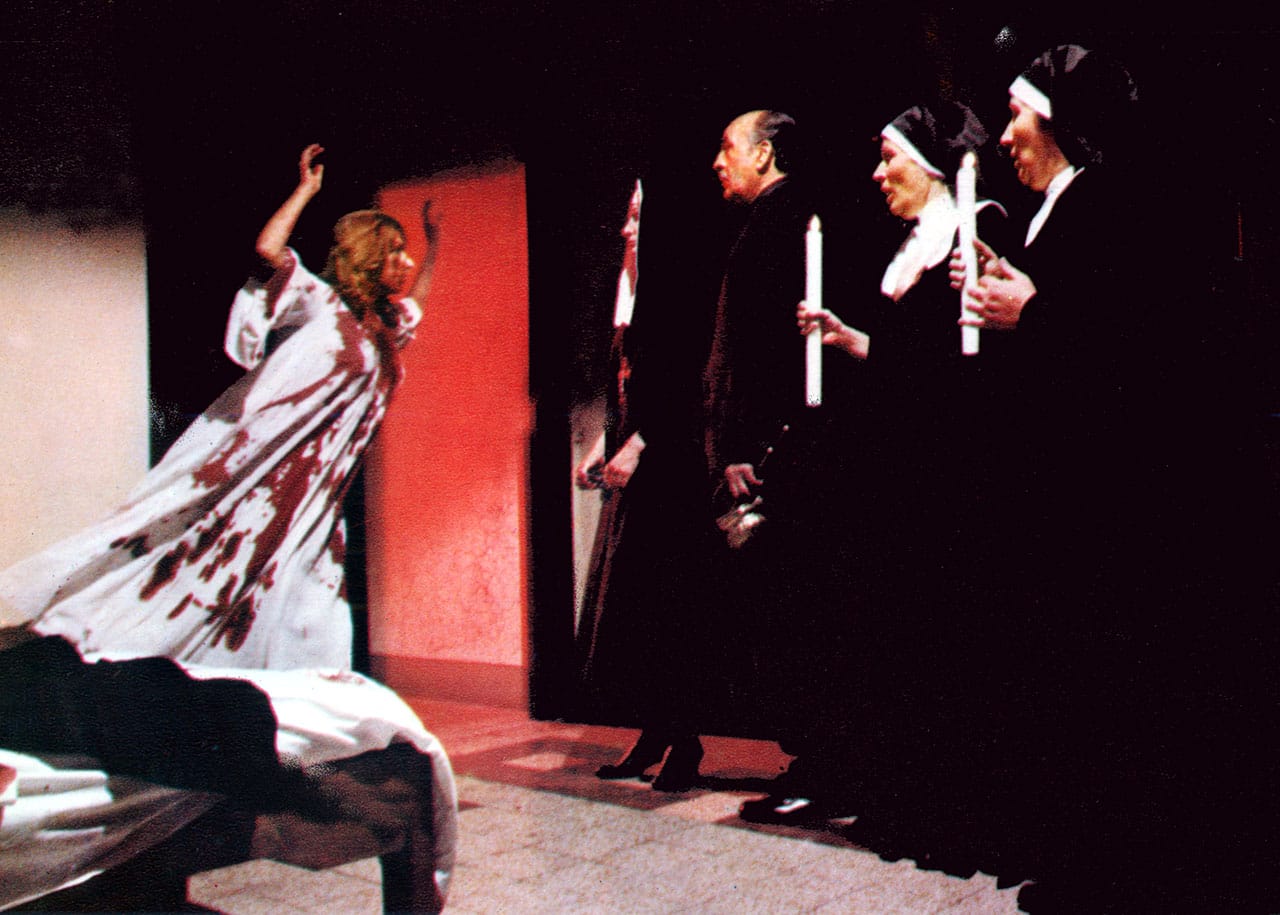
To say that The Other Hell has no stars in not entirely true. While there are two veritable exploitation monuments present the rest of the cast is comprised of respected supporting players here all in lead roles. Franca Stoppi had a career that barely lasted 7 years. She started out with a pair of respectable comedies in 1976 but descended into mucky exploitation with and after Dog Lay Afternoon (1976). Her career nexus probably being Beyond the Darkness (1979). Carlo De Mejo had been in the giallo The Etruscan Kills Again (1972) but was also in Contamination (1980), City Of the Living Dead (1980), The House by the Cemetery (1981), and Manhattan Baby (1982). There’s Franco Garofalo from Eyes Behind the Stars (1978), and Hell Of the Living Dead (1980). The first monument is peplum, Eurospy, spaghetti western, and giallo pillar Tom Felleghy. He was in Caltiki, the Immortal Monster (1959), Argoman the Fantastic Superman (1967), The Cat O' Nine Tails (1971), Four Flies on Grey Velvet (1971), Seven Blood-Stained Orchids (1972), All the Colours of the Dark (1972), The Night Child (1975), Emanuelle and the White Slave Trade (1978), and Nightmare City (1980). Joining him is fellow monument Andrea Aureli. He of Samoa, Queen of the Jungle (1968), Lady Frankenstein (1971), Don't Torture a Duckling (1972), That Malicious Age (1975), and ten years after this, Paprika (1991). Also around are Simone Mattioli and Alba Maiolini. Mattioli was Burial Ground (1980), whereas Maiolini has a long history of playing minor roles. She was in in An Angel for Satan (1966), played a nun in the Gloria Guida sex comedy The Minor (1974), and she famously was the old lady zombie that Sherry Buchanan tore the scalp off in Zombi Holocaust (1980). Francesca Carmeno apparently was the starlet of the day but her career never went anywhere. Not even Sabrina “my ass is bigger than hers” Siani, Janet Ågren, or Mónica Zanchi would or could have lended a degree of legitimacy to something like this.
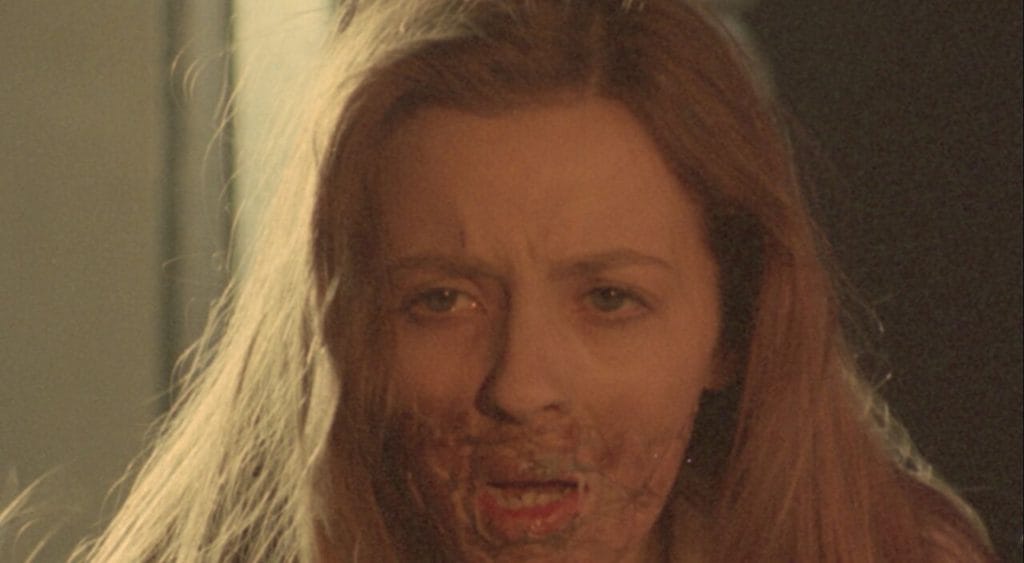
How strange to have a nunsploitation/gothic horror throwback in the decade of the American slasher. The Other Hell wouldn’t be a Bruno Mattei romp if it didn’t break with nunsploitation convention in the sense that it’s closer to from The Exorcist (1973) and The Wicker Man (1973) than to Ken Russell’s The Devils (1971). Stranger still is that it does so with varying shades of The Omen (1976) with various odds and ends borrowed from an even wider scope of popular Satanic exploitation. First and foremost, there’s a demonic possession in the Expulsion Of the Devil (1973) tradition and a red-eyed monstrosity lurking in the catacombs straight out of Satan's Cheerleaders (1977). There’s the Satanic sect in the basement lifted wholesome from All the Colors of the Dark (1972), and Black Magic Rites (1973) in a subplot recycled entirely for the drudge-inducing The Red Monks (1989) that not even Lara Wendel could save from being both terminally boring and relatively bloodless. The catacombs and ossuary look sufficiently creepy and seem to foreshadow the prologue of Burial Ground (1980). Franco Garofalo has his throat torn out by a German shepherd just like Cinzia Monreale in The Beyond (1981). A priest is immolated by a fireplace, a catatonic nun is triggered into sudden eruptions of violence seemingly for no apparent reason, a newborn is thrown into a boiling pot of water, there’s a disembodied head in the tabernacle, and zombies rise. This being Bruno Mattei of course there’s a creepy black cat and a kennel of ravenous dogs. Apropos of nothing, beneath the convent the nuns have a Victorian laboratory from a 1950s/1960s mad science horror. If it weren’t for the inherent strangeness that Mattei always brings (and if you discount the whole supernatural element) this is a precursor to much more tame Convent of Sinners (1986).