India (1960)
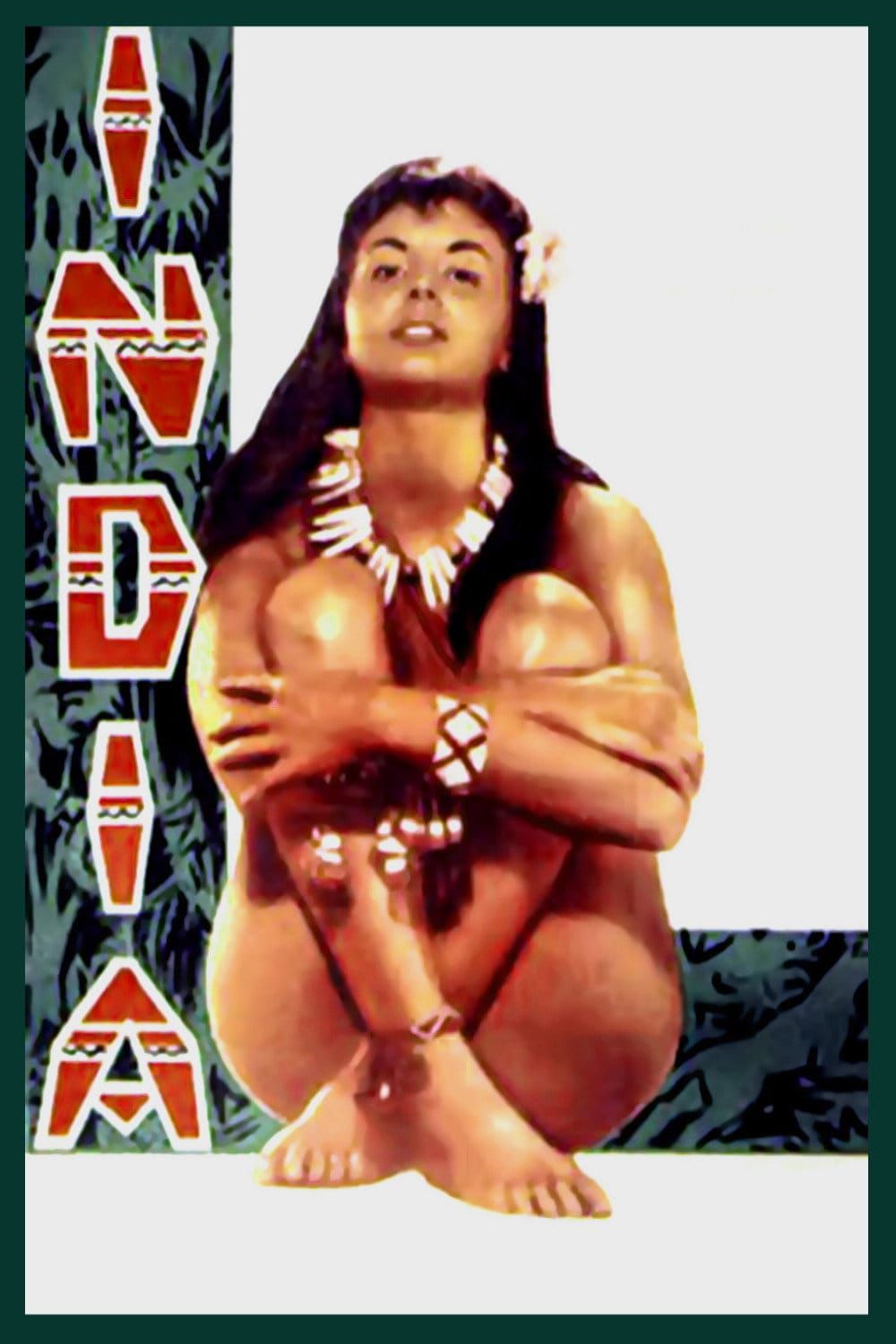
Plot: rugged adventurer is taken in by mestizo natives in Paraguay.
History has remembered Argentine filmmaker Armando Bó, perhaps unjustly, as something of a South American Tinto Brass or Joe D’Amato. Armando was the patriarch in an implacable dynasty in Argentine cinema and popular culture. He’s the father of Victor Bó and the grandfather of producer/screenwriter Armando Bó. The elder Bó started directing in 1939 and had 30+ productions under his belt when he founded the Sociedad Independiente Filmadora Argentina (S.I.F.A.) in 1948. In 1956 he met Miss Argentina 1955 Isabel Sarli on a television show and a year later the two made history together with the social drama Thunder In the Leaves (1957), the first Argentinian production to feature full frontal nudity. In fact the first five Bó-Sarli collaborations are fairly innocuous compared to his later work. It were his dramas … And the Devil Created Men (1960) and the contemplative Leopoldo Torre Nilsson drama Seventy Times Seven (1962) that formed the evolutionary link between his social melodramas of the early years and the grimy sexploitation of the mid-to-late 1960s and 1970s he would be forever associated with. India marks the beginning of the Bó-Sarli sexploitation cycle that wouldn’t be fully realized into its final (and most recognizable) form until Meat (1968) some eight years later. From 1968 onward Sarli would star in her most memorable roles. The Bó-Sarli canon was vigorously panned, censored, and condemned back at home – but were lucrative on the international market, especially in Spanish markets across America and Europe, thanks to a distribution deal brokered with Columbia Pictures. From 1956 to 1981 Bó managed Isabel Sarli and took to carefully curating her sex bomb image.
India was not inspired by that South Asian continent as the title would have you believe, but by a Guarania anthem declared “national song” by the Paraguayan government in 1944. ‘India’ was composed by José Asunción Flores in collaboration with Guairá-native poet Manuel Ortiz Guerrero. Flores was a pioneer in Argentine folk music and the founder of the Guarania genre. For his contributions to Paraguayan music and culture he was awarded the National Order of Merit in 1949. He declined the award after the killing of a student during a government protest as he didn’t want to give the impression that he was supportive of the Federico Chávez dictatorship. The Chávez administration in turn retaliated by branding Flores "a traitor” and had him exiled for the transgression. However, Flores’ music flourished on domestic radio stations and lived on in the hearts and minds of the people. No wonder that Armando Bó, himself somewhat of a dissident as an ardent opponent of government censorship and repression, found a kindred spirit in José Asunción Flores. By this point Bó and Sarli had been targeted by the Triple A (Argentine Anticommunist Alliance). India was filmed not in India but in Paraguay and Misiones, Argentina with Maká natives as extras and is largely spoken in Guaraní-Maká with Spanish subtitles. Needless to say, India was a box office success despite being savaged by media and critics. Long believed to be lost it was recovered in early 2009 by researchers from the Pablo Ducrós Hicken Film Museum when they happened upon a print collecting dust in the museum vaults.
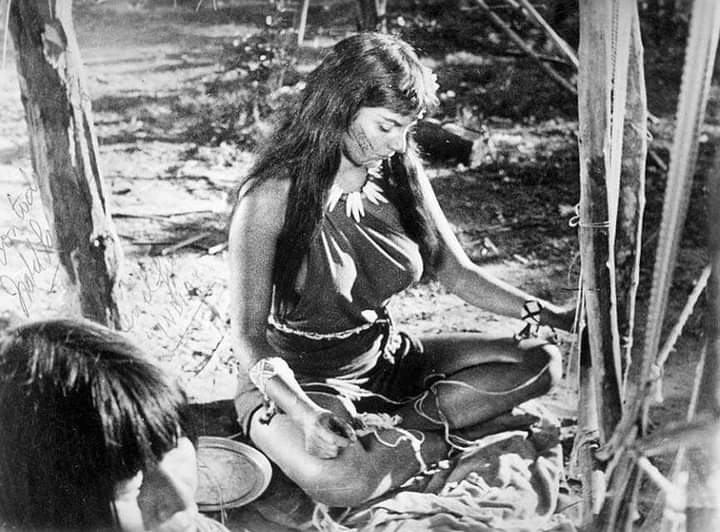
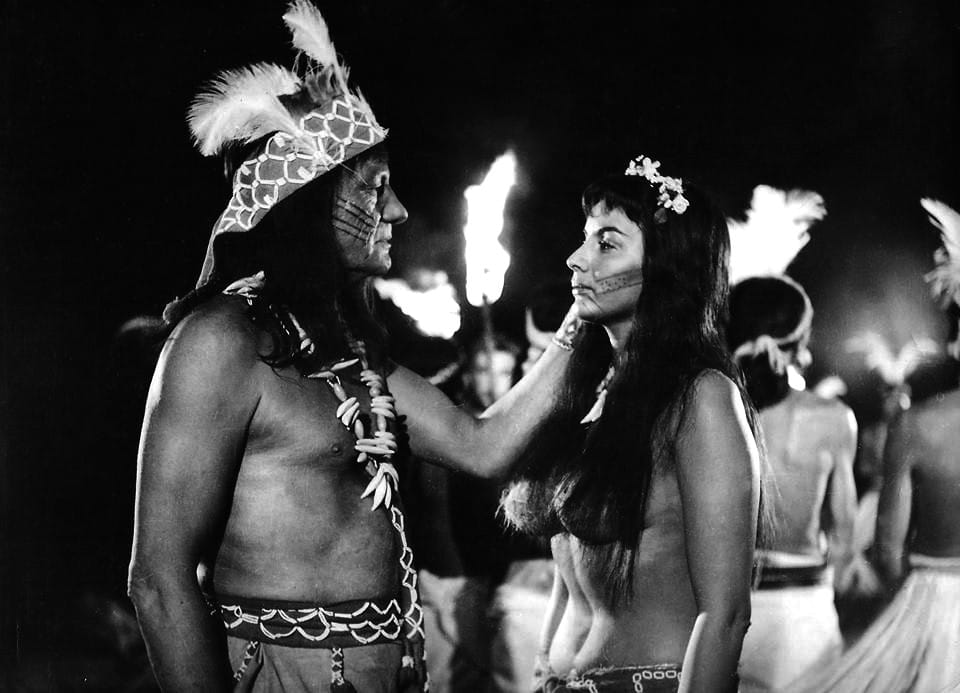
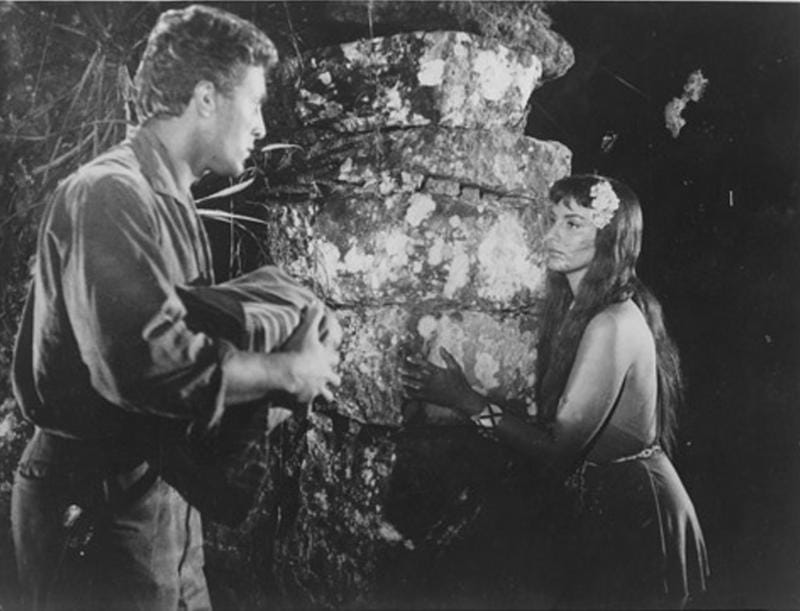
Along the Paraná River a tribe of mestizo Maká natives are living a serene life hidden away in the dense jungles. One day white man Dardo Fernández (Guillermo Murray) washes ashore and they take him to their village on the hills of Ybytyruzú in the mountains of Cerro Tres Kandú in the Guairá Department. There he’s nursed back to health by the tribe’s young queen, Ansisé (Isabel Sarli). Once he comes to the chieftain (and cacique) of the tribe Moraca (Alberto Barcel) and Ansisé’s father instructs that no harm should come to the white man for as long as he’s under Ansisé’s care. As time passes Ansisé starts to comprehend enough of Dardo’s language to understand that he has fled from law enforcement and authorities. Fernández learns of a jewelry treasure hidden within the jungle and sets out to collecting it. That is until Ansisé stops him from capitulating to blinding greed. Dardo’s presence hasn’t gone unnoticed and a rival tribe led by the ambitious Tacasi (Mario Casado) attacks the village taking Ansisé prisoner along the way. Dardo sets to rescuing Ansisé from captivity with the help of a few brave tribesmen. He’s given permission to take Ansisé back to civilization, and after a dangerous trek across Paraná and the Guaíra Falls he does indeed succeed. In the city he has some explaining to do to commissioner Marini (Pedro Laxalt). The question is not so much about Fernández’ past criminality, but whether Ansisé will ever be able to acclimate to life in civilization or that she would rather remain with her people?
To legitimize India in the eyes of his detractors Bó opens with a card explaining that, “this film has been filmed in the same places where the action is, that from the intricate aboriginal jungle the facts, the rites, the mysticism of this aboriginal race come to the screen. This real film that tells in true episodes the story of Ansisé, beautiful India that lives in the Ibitiruzu.” Well, except that before that there’s Isabel Sarli cavorting around in the nude on a riverbank. Bó never passed on a chance to showcase his Isabel and her ample curvature at the earliest possible convenience. India was timely enough to capitalize on the box office success of Liane, Jungle Goddess (1956) and the rise of mondo documentaries. To Western eyes it plays out a lot like a regional riff on the 1950 Dorothy M. Johnson short story A Man Called Horse, which wouldn’t be adapted for the big screen until some twenty years later. In other words, Argentina did the jungle goddess about a decade before the earliest Italian example of the form, Samoa, Queen Of the Jungle (1968) and only a few years removed from the German antecedent. In fact Leo Fleider’s Captive In the Jungle (1969) stole almost the entire second half.
Since coming from a time before the sacred trilogy of Meat (1968), Fire (1969), and Fever (1971) this doesn’t quite limit itself exclusively to the exaltation of Sarli’s divine form. As the Bó-Sarli formula hadn’t fully formed and wasn’t etched in stone as of yet India is more of a genre piece. To its credit India is not a direct imitation of Liane, Jungle Goddess (1956) and did the jungle goddess subgenre earlier than most of the more popular and known Italian antecedents. Being an earlier Bó offering and set in the jungle (and not the cosmopolitan metropole of Buenos Aires or Bariloche) India eschews most of what later would become signature Sarli scenes/moments. None of which changes that India does gloriously indulge itself in the canonization of la Isabel’s generous curves. Even if it remains fairly innocuous compared to later Sarli offerings and is not as singularly obsessed with Isabel’s grandes pechos naturales. Interestingly, as far as we’re aware this is the only instance of Bó-Sarli partaking in cinematic fads of the day. Equally interesting is Bewitched (1969) arriving far too early to the demonic possession feeding frenzy following The Exorcist (1973) and The Omen (1976). Even for a Rosemary’s Baby (1968) cash-in it’s too inherently strange to truly count as such.
While Sarli played a variety of roles most of them can easily be reduced to the ur-character of una mujer or una muchacha. Usually and preferably sin ropas. After Thunder In the Leaves (1957) she appeared in a number of social dramas the most important of which were ... And the Devil Created Men (1960) and Seventy Times Seven (1962). Early on Armando himself played Isabel’s romantic interests and later his son Victor took over. From 1964 to 1980 La Coca (for her love of the American soda and her drool-inducing plus size hourglass figure, lest there be any doubt) starred in nearly thirty sexploitationers filmed in Brazil, Uruguay, Paraguay, Mexico, Panama, Venezuela, and even South Africa with sensationalist porntastic titles as Tropical Lust (1964), The Impure Goddess (1964), The Hot Days (1966), Naked Temptation (1966), Meat (1968), Nude in the Sand (1969), Fire (1969), Bewitched (1969), Tropical Ecstasy (1969), Fever (1972), Intimacies of a Prostitute (1972), The Virgin Goddess (1975), The Insatiable Widow (1979), and A Madcap Widow (1980). No wonder then that La Coca soon was an international sex symbol. She was “The Argentina Fire-Cracker” and “The Cleanest Star of Cinema” for her penchant for frolicking and swimming nude in lakes, rivers, and ponds in most of her movies.
Sequels were far and few as The Mayor's Lady (1967) got a very belated one with A Madcap Widow (1980) some 13 years later. Bewitched (1969) is actually tenuously related to India, unbelievable as it may sound. A salient detail that most critics seem to miss. Oh wait. She even went meta with The Lady Returns (1996) arriving 15 years after Bó’s passing. In other words, la Sarli used her "voluptuosidad al servicio del cine" and the only real competition la diosa trigueña (brunette goddess) had in that regard was la diosa blanca (white goddess) Libertad Leblanc. They were local equivalents of Jayne Mansfield or Anita Ekberg and some rivalry (manufactured or otherwise, regardless it boosted the profiles of both) existed between the two. Compared to them our other two favorite Argentinian mujeres sin ropas Gloria Prat and Susana Beltrán frankly are, and were, nobodies.